Choosing the right Steel Rod size affects strength, fit-up, welding efficiency, and total project cost.
In construction and fabrication, size selection is never only about diameter.
It also involves tolerances, grade, finish, straightness, and compliance with project standards.
A well-specified Steel Rod helps reduce waste, avoid processing delays, and improve structural reliability.
This guide explains common Steel Rod sizes, sizing logic, and practical points for specification review.
Basic Understanding of Steel Rod Sizes
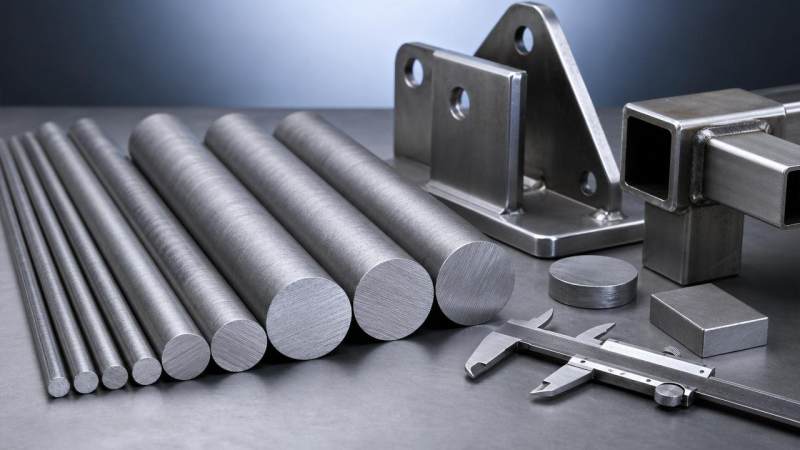
Steel Rod usually refers to round solid steel supplied in straight lengths or coils.
Common measurements include diameter, length, tolerance, weight per meter, and sometimes surface condition.
In structural and fabrication work, diameter is the primary sizing reference.
However, the same nominal diameter may behave differently across grades and standards.
Small diameter Steel Rod is often used for brackets, anchors, bending parts, and general fabrication.
Larger sizes are more common in heavy support members, tie applications, and machined components.
Typical size references
- 6 mm to 12 mm: light fabrication, fasteners, frames, and bent parts
- 14 mm to 25 mm: common for structural accessories and industrial fabrication
- 28 mm to 50 mm: heavier load-bearing or machined applications
- Above 50 mm: specialized engineering and custom processing
These ranges are general references, not universal design rules.
Final Steel Rod selection must match drawings, loads, connection details, and local standards.
Industry Context and Current Specification Focus
Steel projects now demand tighter dimensional control and clearer documentation.
Global sourcing has increased attention on consistency between quotation, mill production, and onsite use.
For Steel Rod, several factors are receiving more attention during technical review.
Many projects also compare Steel Rod by total processing value rather than raw unit price.
A cheaper rod may increase drilling time, machining scrap, or welding rework.
That is why size and quality consistency should be reviewed together.
Why Steel Rod Size Matters in Construction and Fabrication
Correct Steel Rod sizing supports both engineering performance and workshop efficiency.
If the rod is undersized, the section may not meet load or stiffness needs.
If the rod is oversized, material use, cutting effort, and handling cost may rise.
Key business impacts
- Better structural reliability under tensile, shear, or bending conditions
- Improved fabrication accuracy for bending, threading, and machining
- More predictable welding and assembly performance
- Lower waste during cutting and nesting
- Reduced sourcing risk through standard-based specification
For exported steel products, proper Steel Rod specification also improves communication across markets.
Buyers often work with mixed drawing systems, including metric and imperial dimensions.
Clear conversion and tolerance notes help avoid supply mistakes.
Common Steel Rod Size Groups and Their Uses
Different Steel Rod diameters suit different working conditions.
The table below summarizes common size groups used in construction and fabrication.
When comparing Steel Rod sizes, section area increases faster than diameter appears to suggest.
Even a small diameter increase can noticeably change weight and cost.
That is important when quoting large-volume projects.
Specification Details Beyond Diameter
A complete Steel Rod specification should include more than nominal size.
Incomplete requirements often create avoidable disputes during inspection or fabrication.
Important specification items
- Nominal diameter and acceptable tolerance range
- Material grade and standard reference
- Delivery condition, such as hot rolled, cold drawn, or normalized
- Length, straightness, and cutting method
- Surface finish, including black, pickled, bright, or coated
- Inspection documents and test certificate requirements
For machined parts, Steel Rod should include extra diameter allowance if turning is required.
For welded assemblies, chemistry and weldability should be reviewed with the selected process.
For outdoor use, coating compatibility and corrosion resistance deserve equal attention.
Practical Selection Advice for Projects
Selecting the right Steel Rod becomes easier with a structured review method.
The goal is to match engineering need with realistic production capability.
- Start from load, connection type, and fabrication process
- Confirm whether the Steel Rod will be bent, threaded, welded, or machined
- Check standard equivalence before approving substitute grades
- Review mill tolerance against actual assembly clearance
- Request consistent supply batches for visible or precision applications
- Verify packaging and export protection for long-distance shipping
It is also useful to compare theoretical weight with delivered weight.
This helps identify whether the Steel Rod matches the intended dimensional range.
Reliable suppliers usually support this with clear inspection records.
Next-Step Considerations for Sourcing and Specification
Before placing an order, review drawings, standards, and processing expectations together.
That approach improves Steel Rod selection and reduces revision after production starts.
A strong supplier should provide stable dimensions, traceable quality control, and support for customized steel solutions.
For projects that also require sheet-based fabrication, matching rod products with plate materials can improve sourcing efficiency.
One practical option is Carbon Steel Plate, available in grades such as SPCC, SPCD, SPCE, SPCF, and SPCG.
It offers widths from 100 mm to 3000 mm, thickness from 0.1 mm to 400 mm, and customized lengths.
Its smooth surface, formability, and compliance with standards including ASTM, EN, JIS, and ISO support many fabrication applications.
When Steel Rod and plate requirements are aligned early, projects often gain better cost control and production coordination.
Please give us a message


Please enter what you want to find