Why does Steel Rod grade matter so much?
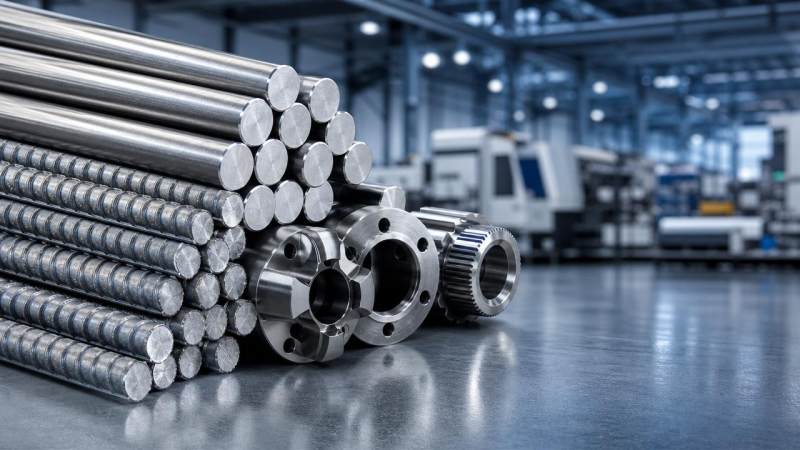
Choosing a Steel Rod is never just about diameter or price.
The grade affects machinability, weldability, strength, ductility, and compliance with design codes.
A poor grade match can slow cutting, increase tool wear, or weaken reinforced structures.
In practical sourcing, the right Steel Rod also reduces rework, delivery disputes, and hidden lifecycle cost.
That is why material selection should start with function, not with the lowest quotation.
For machining, buyers usually focus on surface quality, hardness range, and consistency between batches.
For reinforcement, the priority shifts toward yield strength, bend performance, and standard compliance.
Suppliers with stable process control are especially important when projects involve ASTM, EN, JIS, or GB requirements.
This matters in export trade, where documents, tolerances, and traceability often decide whether goods are accepted smoothly.
Which Steel Rod grades are commonly used for machining or reinforcement?
Searches for Steel Rod grades usually mix two different needs: easy machining and reliable structural performance.
Those needs can overlap, but they are not identical.
For machining, low to medium carbon grades are common because they balance strength and workability.
Examples often include mild steel rods, free-cutting steel, and medium carbon steel for shafts or pins.
For reinforcement, deformed bars and structural grades are selected according to design load and code requirements.
A plain mild Steel Rod may be easy to process, yet unsuitable for high-load concrete reinforcement.
The quick comparison below helps separate common choices.
The most useful question is not “What is the strongest Steel Rod?”
A better question is “What properties does this job actually require?”
How do you choose the right Steel Rod for machining?
When the application is machining, selection usually begins with process conditions rather than final part shape.
Cutting speed, tool material, coolant, tolerance target, and required finish all influence grade choice.
In real production, these checkpoints help prevent expensive mistakes.
- Confirm whether the part needs easy cutting or higher post-machining strength.
- Check hardness range, not just nominal grade name.
- Ask for dimensional tolerance and straightness data.
- Review surface condition if turning marks or coating quality matter.
- Match heat treatment expectations with the actual steel chemistry.
Sometimes a project combines rod machining with sheet or plate fabrication.
In that case, it helps to align material behavior across components.
For example, cold-forming parts may use Carbon Steel Plate in SPCC, SPCD, or SPCE grades.
These materials are valued for formability, smooth surface finish, and broad size flexibility.
Common widths run from 100mm to 3000mm, with thickness from 0.1mm to 400mm.
That comparison reminds buyers to assess the full fabrication route, not only one material line.
What changes when the Steel Rod is meant for reinforcement?
Reinforcement decisions follow a different logic.
Here, the Steel Rod must work inside a structural system, often under long-term load, temperature variation, and site handling.
That means tensile strength alone is not enough.
Yield performance, elongation, bendability, and chemical limits all deserve attention.
A reinforcement grade should also fit the governing standard and project drawings.
This is where experienced structural steel exporters can reduce sourcing friction.
Hongteng Fengda, based in China, supplies structural steel products with strict quality control and export-oriented documentation support.
That background is useful when projects require ASTM, EN, JIS, or GB alignment across multiple steel categories.
More importantly, reinforcement material should be evaluated with these questions:
- Does the Steel Rod meet the specified yield and tensile class?
- Can it tolerate bending without cracking during installation?
- Is traceability clear from mill test certificate to shipment lot?
- Will coating, storage, or transport affect corrosion behavior?
These checks look basic, yet many procurement issues start exactly here.
Where do buyers often misjudge Steel Rod selection?
One common mistake is treating all carbon steel rod products as interchangeable.
Similar appearance does not mean similar chemistry or processing behavior.
Another error is comparing quotations without checking whether testing scope is the same.
Lower price sometimes excludes impact testing, tighter tolerance, or full export certification.
There is also a timing issue.
If the Steel Rod needs special size, heat treatment, or OEM processing, lead time should be confirmed early.
Projects often lose time not because steel is unavailable, but because specifications were incomplete.
The checklist below is useful before placing an order.
How should cost, lead time, and supply stability influence the final choice?
The cheapest Steel Rod is rarely the lowest-cost option after processing and inspection.
A slightly higher-grade rod may cut faster, last longer in service, or reduce rejection rates.
That tradeoff becomes clear when total project cost is measured instead of unit price alone.
Lead time deserves equal attention.
Stable production capacity matters for repeat orders, mixed structural packages, and scheduled export shipments.
Suppliers that handle standard sections, customized components, and consistent documentation usually create fewer interruptions.
This is especially relevant when Steel Rod orders are part of a broader steel procurement plan.
In some manufacturing programs, the same supplier may also support formed sheet needs through Carbon Steel Plate options.
Grades such as SPCC to SPCG can be selected by formability and hardness condition, from annealed to full hard.
That kind of coordination can simplify sourcing and improve consistency across fabricated parts.
If you are narrowing options, start with three points: application load, processing route, and standard compliance.
Then compare Steel Rod offers by measurable data, not by label or price alone.
A well-chosen grade supports machining efficiency, structural reliability, and smoother delivery at the same time.
The next practical step is to map required properties, verify certificates, and confirm tolerances before final approval.
Please give us a message


Please enter what you want to find