Choosing the right steel rebar for construction affects safety, budget, and long-term performance. From comparing steel rebar cost to evaluating grade strength, standards, and application needs, buyers must balance quality with value. This guide helps contractors, engineers, and procurement teams understand which rebar grade fits each project while selecting a reliable steel rebar manufacturer or steel rebar supplier for consistent results.
In practical procurement, rebar selection is rarely only about price per ton. It also involves load requirements, local code compliance, corrosion exposure, fabrication conditions, and supply consistency across project phases that may run for 3 to 18 months. For developers, distributors, site supervisors, and quality teams, the wrong grade can lead to overdesign, avoidable cost, or serious structural risk.
For global buyers sourcing steel from China and other manufacturing hubs, supplier capability matters just as much as material specification. Hongteng Fengda, a structural steel manufacturer and exporter from China, supports international construction and industrial buyers with standardized production, OEM options, and quality control aligned with ASTM, EN, JIS, and GB requirements. That combination is especially important when a project needs both reliable steel rebar supply and related structural steel components under one sourcing plan.
Understanding Steel Rebar Grades and What They Mean on Site
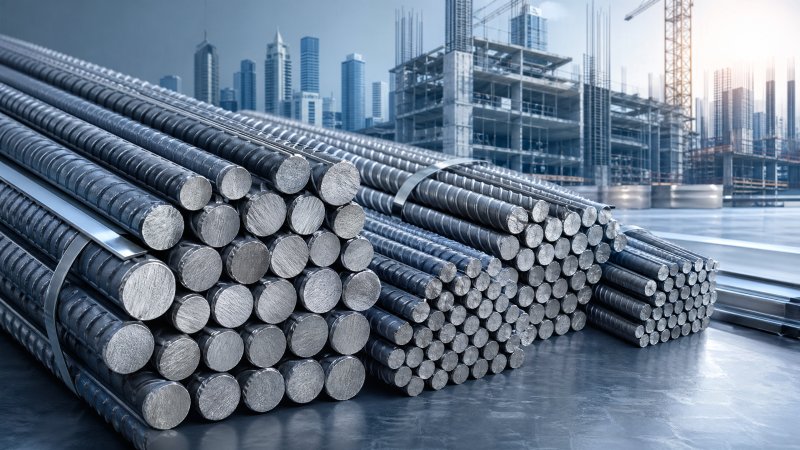
Steel rebar grades indicate the mechanical performance and intended use of reinforcing steel. In many markets, grades are defined by yield strength, tensile strength, ductility, and chemical composition. Common references include ASTM Grade 40, Grade 60, and Grade 75, while other regions may use HRB400, B500, or equivalent systems. Although names differ, the engineering question stays the same: how much load, movement, and environmental stress must the reinforced concrete resist over its design life?
For most commercial and residential reinforced concrete work, Grade 60 or equivalent is widely used because it offers a practical balance between strength, availability, and fabrication efficiency. Lower grades may still be suitable for lighter-duty or legacy designs, while higher grades can reduce steel volume in heavily loaded elements such as columns, transfer beams, deep foundations, bridges, or high-rise cores. However, higher strength does not automatically mean better value if bendability, weldability, or code acceptance becomes more restrictive.
Buyers should also separate nominal grade from actual service performance. Rebar in coastal, industrial, or high-humidity environments may need additional corrosion protection, coating choice, or concrete cover adjustments. A project that performs well inland may require a different material strategy when chloride exposure, freeze-thaw cycling, or splash-zone conditions are present for 10 to 30 years.
Key properties that influence grade selection
Technical evaluation usually starts with four factors: yield strength, tensile strength, elongation, and bond performance. Procurement teams then add practical considerations such as lead time, mill test documentation, bundle marking, and dimensional consistency. On a real project, one missing certificate or one out-of-tolerance batch can delay inspection, bar cutting, and concrete placement by several days.
- Yield strength: determines when permanent deformation begins under load.
- Tensile strength: indicates the maximum stress the bar can resist before failure.
- Ductility: important for seismic zones, impact loads, and crack control behavior.
- Surface profile and rib geometry: affect concrete bond and anchorage performance.
The table below gives a practical comparison framework that engineers and purchasing teams often use during early-stage specification reviews.
The key takeaway is that grade selection should match design demand, not assumptions. In many cases, a mid-range rebar grade is the most economical choice because it is widely stocked, easier to fabricate, and simpler to approve during inspection. Higher grades usually make sense when design optimization, section reduction, or load concentration clearly justify the added material and processing controls.
How to Match Rebar Grade to Project Type, Environment, and Budget
Different structures place different demands on reinforcement. A low-rise warehouse slab, a bridge deck, and a coastal retaining wall may all use steel rebar, but the suitable grade and finish can vary significantly. Project teams should assess at least 5 dimensions before placing an order: structural load, exposure class, bar diameter range, fabrication complexity, and total installed cost.
For residential buildings and standard commercial frames, the priority is usually dependable performance at a controlled steel rebar cost. In these cases, commonly specified grades in the 400–500 MPa range often deliver the best balance. For bridges, industrial platforms, substations, and transport infrastructure, engineers may prefer higher-strength reinforcement or additional protection where fatigue, vibration, moisture, or chemical exposure is more severe.
Budget evaluation should include more than tonnage price. A cheaper rebar batch that causes cutting waste, bending cracks, or delayed approvals may increase total project cost by 3% to 8% once labor, crane time, and concrete scheduling are affected. Procurement teams therefore benefit from comparing landed cost, not mill gate price alone.
Project-based selection logic
A practical way to decide is to link each project category to its most common material priorities. This makes technical discussions easier between engineers, buyers, and financial approvers.
This comparison shows why one rebar specification rarely fits every project. The correct choice depends on where the steel will work, how long it must perform, and how efficiently the site team can install it. For large-volume orders above 500 tons, even a modest reduction in waste or installation delay can produce meaningful savings.
Common buying mistakes to avoid
- Choosing a higher grade without checking bending radius, welding requirements, or local approval conditions.
- Comparing offers only by FOB or EXW price and ignoring testing, packing, and shipment reliability.
- Assuming one standard is directly interchangeable with another without technical review.
- Ignoring environmental exposure, especially in coastal zones, tunnels, and industrial facilities.
A disciplined selection process reduces technical disputes and helps commercial teams defend the procurement decision internally. That is especially valuable when financial approvers need a clear explanation for why a slightly higher unit price can lower lifecycle risk over 5, 10, or 20 years.
Standards, Quality Control, and Related Steel Products That Support Better Outcomes
Rebar performance is only as trustworthy as the quality system behind it. Serious buyers typically request mill test certificates, heat numbers, dimensional inspection records, and confirmation that production follows applicable standards such as ASTM, EN, JIS, or GB. Quality control should cover chemistry, mechanical testing, surface condition, and size tolerance, especially when bars are used in safety-critical structural elements.
For broader construction and infrastructure packages, rebar is often purchased alongside structural steel profiles, steel beams, channels, angles, or fabricated components. This is where a capable manufacturer can add value by simplifying supply coordination. Instead of managing multiple vendors across 2 to 5 material categories, buyers can align specifications, inspection requirements, and delivery schedules under a more controlled sourcing plan.
In some projects, supplementary steel products are selected for corrosion resistance, machining performance, or ancillary structural use rather than direct concrete reinforcement. One example is Galvanized Round Steel, which can be used in electric power towers, communication towers, highway protection systems, street light poles, marine components, and building steel structure components. With a diameter range of 16–250 mm or customized sizes, tensile strength of 570–820 MPa, and standards including ASTM, EN, JIS, GB, BS, and AS, it serves buyers who need anti-corrosion steel for exposed or accessory applications.
This type of galvanized round product is not a replacement for all reinforced concrete rebar needs, but it is highly relevant in integrated project procurement. Its hot galvanizing anti-corrosion surface, long service life, glossy and durable finish, and optional tighter tolerances can support substations, railway works, ancillary steel assemblies, and industrial parts processing. When sourced from a manufacturer with both standard and customized production capabilities, it helps reduce coordination gaps between civil, utility, and steel structure packages.
What quality teams should verify before approval
- Material grade consistency across all bundles, heats, or shipment lots.
- Mechanical values such as yield or tensile range match the project requirement.
- Diameter tolerance, straightness, and surface condition are suitable for fabrication and installation.
- Certificates and markings are traceable from production to shipment.
- Protective treatment, if required, is suitable for the project environment and handling conditions.
These checks are especially important for exporters serving North America, Europe, the Middle East, and Southeast Asia, where acceptance criteria and documentation expectations can differ. A disciplined supplier should be prepared to confirm standards, provide consistent lead times, and support pre-shipment review when the order value or risk level justifies it.
How to Evaluate a Steel Rebar Manufacturer or Supplier Before You Buy
A qualified steel rebar manufacturer does more than produce bars to a nominal grade. It should demonstrate stable production capacity, process control, export experience, and the ability to support communication across engineering, procurement, and logistics teams. For overseas buyers, the evaluation should include at least 6 checkpoints: standards compliance, capacity, customization ability, inspection process, packaging method, and shipment coordination.
Hongteng Fengda focuses on structural steel manufacturing and export from China, supplying angle steel, channel steel, steel beams, cold formed steel profiles, and customized structural steel components for global construction and industrial projects. For buyers consolidating purchases, this matters because schedule risk often comes from fragmented sourcing. If a project requires reinforcement-related materials plus structural sections, dealing with one experienced export partner can shorten communication loops and improve delivery planning by 1 to 2 procurement cycles.
Lead time reliability is another critical factor. A competitive quotation loses value if the supplier cannot maintain shipment timing during peak demand or raw material volatility. Depending on specification complexity and order volume, standard production and export preparation may range from 2 to 6 weeks. Buyers should ask not only for the estimated shipping date, but also for the production slot confirmation, inspection timing, and packing readiness.
Practical supplier evaluation checklist
The following checklist helps procurement and project teams compare offers on a like-for-like basis instead of relying on headline price alone.
A structured review often reveals hidden differences between suppliers offering similar grades. One may provide faster document turnaround, another may be better at OEM fabrication, and another may offer stronger consistency across mixed steel product categories. For project managers and finance teams, that visibility helps protect both schedule and budget.
Questions worth asking before issuing a PO
- Can the supplier match the required ASTM, EN, JIS, or GB standard without substitution?
- What is the usual production lead time for standard sizes versus customized processing?
- How are quality deviations handled if one batch falls outside the agreed tolerance?
- Can the supplier support mixed orders for rebar-related and structural steel items in one shipment?
These questions help reduce sourcing risk before funds are committed and before construction sequencing depends on the shipment date.
Implementation Tips, Common Misunderstandings, and a Short FAQ for Buyers
Once the rebar grade is selected, successful implementation depends on execution discipline. Site teams should verify incoming quantity, bar marking, diameter, rust condition, and bending compatibility before fabrication begins. Even when the material is technically compliant, poor storage or rough handling can create avoidable losses. Keeping rebar elevated, separated by size, and protected from standing water can improve installation efficiency and reduce confusion during peak reinforcement work.
Another frequent misunderstanding is that all “equivalent” grades behave the same in every application. In reality, code interpretation, bend performance, weldability, and acceptance documentation may differ from one market to another. This is why engineers, purchasing staff, and quality control personnel should align on the exact standard, not just the strength number. A 420 MPa class material may still require specific review before substitution in a regulated project.
For distributors and resellers, stock strategy also matters. Fast-moving sizes and common grades can shorten response time to contractors, while special diameters or coated products may be better handled by back-to-back procurement. A mixed strategy often works best: keep 60% to 80% of turnover in standard items and source lower-volume specifications against confirmed orders.
FAQ: questions buyers ask most often
How do I choose between standard and higher-grade rebar?
Start with the structural design and local code. If the project is a standard slab, beam, or footing application, a widely used grade such as Grade 60 or equivalent is often sufficient. Higher grades are more appropriate when load intensity, bar congestion, or design optimization clearly requires them. The technical benefit should be measurable, not assumed.
What should I prioritize when comparing steel rebar cost?
Compare total installed cost rather than price per ton alone. Include test documents, processing suitability, transport terms, coating or protection needs, expected waste, and delivery timing. A difference of 20 to 50 USD per ton may be less important than a 7-day delay on a critical concrete pour sequence.
When is corrosion protection especially important?
Protection becomes more important in marine zones, de-icing salt exposure, chemical plants, tunnels, and humid infrastructure environments. In these conditions, reinforcement strategy should be coordinated with concrete cover, drainage design, and maintenance expectations. Corrosion risk is a lifecycle issue, not just a material issue.
How can I reduce sourcing risk with an overseas supplier?
Use a clear specification sheet, request traceable quality documents, confirm standard references, align on packing and shipment terms, and set inspection checkpoints before dispatch. If the supplier can support both structural steel and customized components, coordination becomes easier and the chance of cross-package delays usually drops.
Selecting the right steel rebar for construction is ultimately a decision about fit, not just strength. The best grade is the one that satisfies design requirements, matches the service environment, supports efficient installation, and arrives with reliable documentation and delivery control. For global buyers looking for dependable steel supply from China, Hongteng Fengda offers standardized production, customized structural steel solutions, and export support designed to reduce sourcing risk and improve project execution. To discuss specifications, compare material options, or get a tailored supply plan, contact us for product details and a customized solution.
Please give us a message


Please enter what you want to find