Choosing the right steel rail grade is critical for track safety, load performance, and long-term cost control. Whether you are comparing steel rail options with related materials such as steel coil, ASTM A36, smls pipe, or galvanised steel sheet, understanding grade differences helps engineers, buyers, and project teams make better decisions. This guide explains key rail grades, standards, and selection factors for modern track projects.
In rail infrastructure, grade selection affects far more than initial procurement. It influences axle load capacity, wear rate, welding behavior, inspection intervals, and replacement budgeting over a service cycle that may extend 10 to 30 years depending on traffic and maintenance quality. For buyers, designers, and project managers, a clear understanding of rail grades reduces specification mistakes and improves commercial control.
For global sourcing teams, the challenge is often not a lack of options but too many partially comparable standards. ASTM, EN, JIS, and GB systems may describe rails differently, while project documents may focus on hardness, chemistry, tensile properties, or profile dimensions. A practical selection approach must connect technical requirements with supply reliability, lead time, and quality assurance.
Understanding Steel Rail Grades and Why They Matter
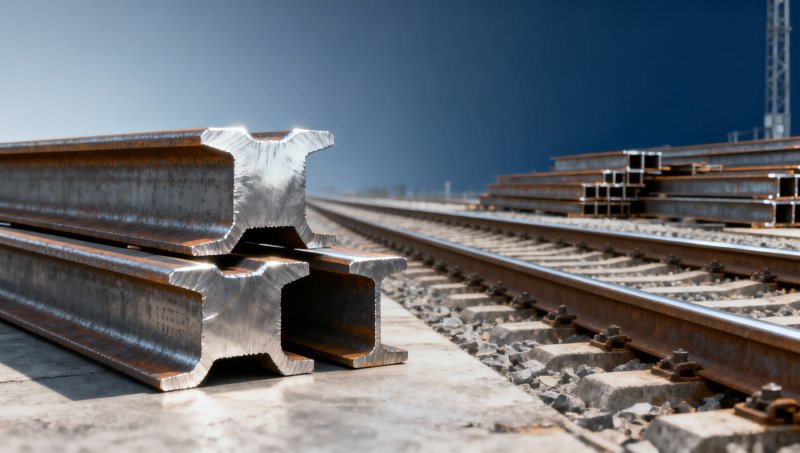
A steel rail grade defines the mechanical and metallurgical characteristics of rail steel used in track systems. In practical terms, it tells engineers how the rail will respond to repeated wheel loading, impact, friction, and environmental exposure. Common grade indicators may refer to tensile strength, hardness, carbon content, manganese level, or heat treatment condition. These details directly affect durability and operating safety.
Rail grade matters because different track environments create different stress patterns. A light industrial siding carrying moderate traffic may work well with a lower-strength rail, while a heavy-haul line with axle loads above 25 tons requires a harder and more wear-resistant grade. Curves with small radii, turnouts, and port logistics yards also tend to demand stronger wear performance than straight, lower-frequency routes.
Another key factor is lifecycle cost. A lower-priced rail may reduce upfront spending by 5% to 12%, but if head wear increases and grinding or replacement cycles shorten, the long-term budget can rise quickly. Procurement teams should therefore compare grade suitability against maintenance frequency, expected tonnage, and downtime cost instead of focusing only on unit price per ton.
For B2B buyers, rail grade selection also connects to sourcing risk. Projects that involve cross-border procurement must confirm standard equivalency, mill test documentation, dimensional tolerances, and batch consistency. Manufacturers with experience in ASTM, EN, JIS, and GB execution can help reduce conversion errors and improve acceptance rates during incoming inspection and site installation.
Core performance indicators used to compare rail grades
When comparing one rail grade with another, technical teams usually review a combination of mechanical and service indicators rather than a single number. The table below summarizes the most common criteria used in rail purchasing and engineering assessment.
The main takeaway is that grade evaluation should combine strength, hardness, dimensional precision, and processing compatibility. A rail that looks acceptable on chemistry alone may still cause problems if profile tolerance or weld response is not aligned with field conditions.
Common Rail Standards, Grade Families, and Service Matching
Steel rail grades are usually specified under regional or international standards. In many projects, buyers see grade references such as EN rail steel categories, AREMA-related rail descriptions, JIS rail requirements, or GB railway rail standards. Even where profiles differ, the engineering question remains the same: how much load, wear, and fatigue must the rail absorb over its service life?
Broadly, rail steels can be grouped into standard carbon rails, higher-strength wear-resistant rails, and heat-treated rails. Standard carbon grades are commonly used in lower-speed or moderate-duty applications. Higher-strength and head-hardened options are more suitable for frequent traffic, high axle load, heavy industrial transport, or tight-curve track where head wear and rolling contact fatigue become serious risks.
Service matching should be based on operating data. If a line carries low daily tonnage and runs at controlled speeds, the project may prioritize cost efficiency and easier availability. If traffic density rises or train intervals tighten, harder grades can reduce wear and extend grinding intervals. In many heavy-duty systems, moving from a standard grade to a heat-treated grade can significantly improve rail life, especially on curves and switch areas.
Procurement teams should also verify that the chosen grade is available in the required rail section, drilling condition, length, and finish. A technically appropriate grade may still be impractical if lead time extends beyond 8 to 12 weeks or if minimum order quantity does not fit the project schedule. This is where experienced structural steel exporters can support cross-standard communication and coordinated supply planning.
Typical grade matching by track scenario
The following table shows a practical way to align rail grade type with service conditions. Exact selection should still be confirmed against design load, local standards, and maintenance strategy.
This comparison helps teams avoid the common mistake of selecting one grade for all sections. In many projects, 2 or 3 grade strategies across different track zones deliver better cost control than a single uniform specification.
Key questions before approving a rail grade
- What is the expected axle load, traffic frequency, and annual tonnage over the next 5 to 10 years?
- Are there curves, junctions, or high-impact loading points that require upgraded wear resistance?
- Which standard system governs acceptance: ASTM, EN, JIS, GB, or a project-specific equivalent?
- What is the acceptable delivery window: 2 to 4 weeks for stock supply or 6 to 12 weeks for mill production?
- Will welding, drilling, or on-site processing impose extra restrictions on chemistry or hardness?
How to Select the Right Rail Grade for Budget, Safety, and Maintenance
A good rail grade decision should combine engineering logic with commercial discipline. The first step is to define operating conditions clearly: train type, axle load, speed range, curve radius, and maintenance resources. Without this baseline, grade selection often defaults to either over-specification, which raises capital cost, or under-specification, which increases wear, replacement, and shutdown risk.
The second step is to compare total ownership cost. For example, if a premium grade costs 8% more but extends rail life by 20% to 35% in a high-wear section, the investment may be justified. On the other hand, using a premium grade on low-frequency plant track may offer limited return. Different zones inside the same project can therefore justify different purchasing strategies.
The third step is quality verification. Buyers should request mill test certificates, chemistry reports, mechanical property data, dimensional inspection records, and surface quality checks. In export projects, packing, marking, anti-rust treatment, and shipping protection also matter. A rail with correct grade but poor handling can still create installation delays or rejection at site.
At this stage, many project teams also compare other steel products used in the same development, such as beams, channels, plates, pipe, and reinforcement. For broader construction packages, sourcing from a supplier familiar with multiple steel categories can improve documentation consistency and shipment coordination. In civil works surrounding track structures, products such as HRB400 Rebar are often specified for construction projects where standard yield strength is no less than 400 MPa and common diameters range from 6 mm to 50 mm under standards such as ASTM, JIS, DIN, BS, EN, and GB.
A practical 5-step rail selection workflow
- Define service conditions, including load, speed, traffic density, and curve geometry.
- Confirm the governing standard and acceptable equivalents for profile and grade.
- Compare at least 2 grade options based on wear life, weldability, and lead time.
- Review inspection documents, surface quality, tolerances, and packaging requirements.
- Approve supply plan, batch traceability, and maintenance assumptions before order release.
Common selection mistakes
One frequent mistake is assuming that higher hardness is always better. Extremely hard rails may improve wear performance but can change welding and maintenance procedures. Another mistake is comparing grades across standards without checking the exact chemistry and mechanical basis. A third issue is ignoring section-specific behavior. Straight track, curves, and turnouts rarely age at the same rate.
Financial approvers should also watch for hidden costs outside the base material price. These can include special rolling lead time, inspection agency fees, protective coating, transport length restrictions, and urgent replacement exposure. A disciplined bid comparison should include at least 4 dimensions: material cost, delivery schedule, documentation quality, and expected service life.
Procurement Control, Quality Assurance, and Supplier Evaluation
For international rail projects, supplier qualification is just as important as grade selection. Buyers should confirm manufacturing capability, standard coverage, production stability, and inspection control before issuing a contract. A reliable steel supplier should be able to explain profile tolerance, grade execution, testing scope, packing method, and shipment planning in a clear and document-based way.
Hongteng Fengda, as a structural steel manufacturer and exporter from China, serves global construction, industrial, and manufacturing projects with products aligned to ASTM, EN, JIS, and GB requirements. While the company is known for angle steel, channel steel, steel beams, cold formed steel profiles, and customized structural steel components, this broader standards capability is also valuable to buyers managing mixed steel packages around rail-related infrastructure.
Quality assurance should include both mill-side and receiving-side controls. Typical checks include chemical composition, tensile properties, dimensional tolerance, straightness, surface defects, and identification marking. For site teams, additional checks may cover drilling location, end finish, length tolerance, and corrosion protection after transport. Even a 2 mm to 3 mm deviation in a critical dimension can slow installation or create fit-up issues in track components.
Delivery planning is another important control point. Standard production and export cycles can vary from 3 to 8 weeks depending on grade, rolling schedule, quantity, and destination. For project managers, early alignment on packing bundles, port arrangements, and inspection hold points can reduce downstream delays and improve budget predictability.
Supplier evaluation checklist
The table below provides a practical framework for procurement, quality, and commercial teams reviewing rail or related structural steel suppliers.
A strong supplier is not simply one that offers a competitive quotation. The more reliable choice is usually the partner that can maintain grade consistency, document clarity, and delivery discipline across the full order cycle.
Maintenance Strategy, Risk Prevention, and Frequently Asked Questions
Even the best steel rail grade will underperform if maintenance assumptions are unrealistic. Rail life depends on grinding practice, lubrication in curves, fastening integrity, ballast condition, drainage, and traffic management. Projects with limited maintenance resources should factor this into grade selection from the beginning rather than expecting material alone to solve every operational issue.
Risk prevention starts with identifying high-wear sections early. Curves, turnouts, loading zones, and impact points should be monitored more frequently than straight sections. In many systems, visual inspection may occur weekly or monthly, while more detailed dimensional and surface assessments are scheduled quarterly or by accumulated tonnage. Matching inspection frequency to grade and service intensity helps reduce unplanned shutdowns.
For after-sales teams and operators, documentation is essential. Records should cover supplied grade, heat number, installation date, location, welding history, and observed wear pattern. Over a 12- to 24-month review cycle, these records help determine whether the selected rail grade is delivering the expected balance between material cost and service performance.
In projects that integrate track with broader civil or industrial structures, coordinated steel procurement can simplify maintenance planning. When rails, beams, channels, and reinforcement follow a documented standards framework and traceable supply process, site quality teams can manage acceptance and replacement more efficiently across the entire project footprint.
FAQ
How do I know if a higher rail grade is worth the extra cost?
Compare the price increase with the expected extension in service life and maintenance interval. If a harder or heat-treated rail extends life by 20% or more in a high-wear location, the extra cost is often justified. In low-traffic sections, however, standard grades may provide better overall value.
What are the most important documents to request from a supplier?
At minimum, ask for mill test certificates, chemistry and mechanical property reports, dimensional inspection records, marking details, and packing lists. For export projects, shipping marks, batch traceability, and pre-shipment inspection arrangements are also important.
Can one rail grade be used across the whole project?
It can, but it is not always the most efficient choice. Many projects achieve better lifecycle performance by using 2 or more grade levels: a standard grade for lower-stress sections and a higher-performance grade for curves, turnouts, or heavy-load zones.
How long is the typical delivery period for rail or related structural steel products?
Typical lead times can range from 3 to 8 weeks, depending on specification complexity, rolling schedule, quantity, and destination. Custom dimensions, special inspection requirements, or mixed-product orders may extend the cycle, so procurement planning should start early.
Selecting the right steel rail grade means balancing mechanical performance, standard compliance, site conditions, maintenance capacity, and commercial risk. The most successful track projects treat grade selection as a lifecycle decision rather than a simple material purchase. If you are evaluating rail-related steel supply, structural components, or broader project steel packages, Hongteng Fengda can support your team with dependable manufacturing, international standard alignment, and practical export coordination. Contact us to discuss specifications, request a tailored quotation, or explore a customized steel solution for your next project.
Please give us a message


Please enter what you want to find