Choosing the right steel plate thickness is not just a design detail—it directly affects structural safety, stiffness, fabrication cost, and compliance. In real construction projects, plate that is too thin may lead to deflection, instability, weld weakness, or shortened service life. Plate that is too thick can increase steel weight, material spend, processing difficulty, and procurement cost without adding practical value. For engineers, buyers, quality teams, and project managers, the key is to match thickness to load, span, connection type, environment, and code requirements rather than choosing by habit or price alone. This guide explains how thickness choices affect safety and how to make better specification and sourcing decisions.
Why steel plate thickness matters more than many buyers expect
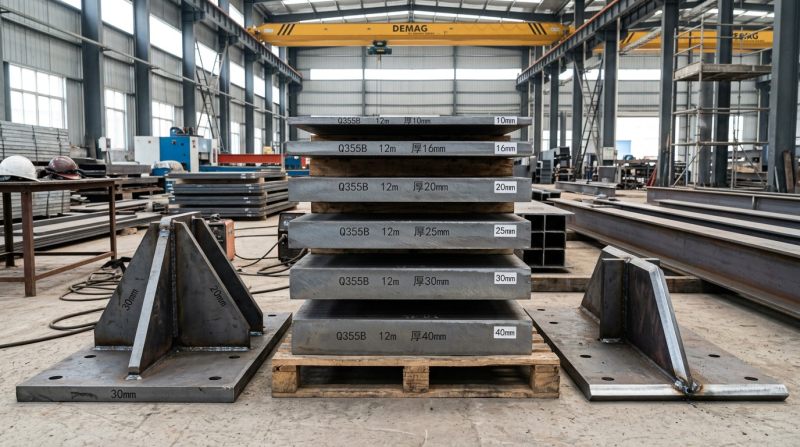
In construction, thickness affects far more than basic strength. It influences:
- Load-bearing capacity: Thicker plate generally resists bending, impact, and concentrated loads better.
- Deflection control: Even when a member does not fail, excessive bending can create serviceability and safety problems.
- Connection reliability: Plate thickness changes weld size, bolt behavior, edge distance, and fatigue performance.
- Stability under real conditions: Thin plate may be more vulnerable to buckling, distortion during welding, or deformation in transport and installation.
- Durability: In corrosive or outdoor environments, extra thickness may provide corrosion allowance and longer service life.
- Total project cost: Material, cutting, welding, handling, transport, and installation costs all change with thickness.
This is why steel plate selection cannot be based only on current carbon steel price or a simple comparison with steel rebar cost. A lower purchase price per ton does not automatically mean lower project cost or lower risk.
What actually determines safe thickness in construction projects
Safe thickness is decided by application conditions, not by a universal rule. The most important factors include:
1. Type of load
Static loads, dynamic loads, impact loads, and repeated fatigue loads do not affect plate the same way. A plate used in a lightly loaded cover plate is very different from one used in a base plate, stiffener, bridge component, equipment platform, or embedded structural part.
2. Span and support condition
A short plate supported on multiple sides may perform well at modest thickness. The same thickness on a longer unsupported span may deflect too much or fail under service load.
3. Strength grade and material quality
Higher-strength steel can improve load capacity, but it does not always solve deflection, weldability, or buckling concerns. Material consistency and compliance with ASTM, EN, JIS, or GB standards also matter.
4. Welding and fabrication method
Very thin plate may distort during cutting and welding. Very thick plate may require more heat input, special welding procedures, or tighter control of residual stress and joint quality.
5. Environment and corrosion exposure
Outdoor structures, marine exposure, industrial plants, and humid environments may require thickness allowance for corrosion over time. Safety should be evaluated over the structure's service life, not just at installation.
6. Local code and project specification
Building codes, client specifications, and third-party inspection requirements often define minimum thickness for certain components. These minimums may be driven by fire, impact, fatigue, or long-term durability concerns.
When thickness is too thin: the most common safety risks
Many field problems begin with underspecified plate. The most common risks include:
- Excessive deflection: The structure may feel unstable or fail serviceability limits even without visible fracture.
- Local buckling: Thin plate under compression can suddenly lose stability.
- Weld zone weakness: Insufficient plate thickness may limit weld size or create heat-affected distortion.
- Punching or bearing failure: Around bolts, anchors, supports, or concentrated load points, thin plate may deform or tear.
- Reduced fatigue life: Repeated load cycles can accelerate cracking in thin sections.
- Damage during transport or erection: Thin material is easier to bend, warp, or dent before installation.
For project managers and quality teams, these risks usually appear later as rework, delayed inspection approval, site modification, or warranty claims.
When thicker plate is not the better choice
Overdesign is also a real issue. Increasing thickness beyond actual need can create hidden costs:
- Higher steel consumption and freight cost
- More difficult cutting, drilling, and welding
- Longer fabrication lead times
- Heavier structures that affect foundations, lifting plans, and installation equipment
- Reduced procurement flexibility if uncommon sizes are specified
In practical sourcing, the safest and most economical choice is usually the thickness that satisfies structural calculations, fabrication realities, and durability targets with reasonable margin—not the maximum possible thickness.
How engineers and buyers can evaluate thickness more effectively
If you are reviewing a design, quotation, or procurement plan, ask these questions:
- What load case controls the design: bending, bearing, compression, impact, or fatigue?
- Is the selected thickness based on calculation, code minimum, or past project habit?
- Will serviceability limits such as deflection govern before yield strength does?
- How will welding, cutting, galvanizing, or coating affect the plate?
- Is corrosion allowance included for the project environment?
- Are the required tolerances and flatness practical for the selected thickness?
- Does the thickness match available mill production and stable supply ranges?
For procurement teams, one of the most effective methods is to compare not only unit price, but also processing cost, scrap rate, lead time, and installation efficiency. This gives a more realistic picture than material cost alone.
Common thickness selection scenarios in real construction work
Different applications have very different thickness logic:
Base plates and column supports
These often need enough thickness to spread concentrated loads, resist bending between anchor points, and maintain bearing performance. Thin plates in these locations can create alignment and settlement issues.
Connection plates and gusset plates
Here, bolt hole arrangement, net section strength, weld access, and force transfer are critical. Thickness must support both structural demand and practical fabrication.
Floor plates, covers, and access platforms
Deflection, local denting, and slip safety can be more relevant than ultimate strength. Repeated foot traffic or equipment movement may require greater thickness than buyers first expect.
Bridge and infrastructure parts
Fatigue, impact, weather exposure, and inspection standards become more important. In these applications, conservative thickness selection is often justified.
Mid-project example: where profile geometry and thickness both matter
In some construction and infrastructure projects, teams evaluate not only flat steel plate but also formed or specialized steel sections that must meet both load and operational demands. For example, in railway and railing-related applications, section geometry, head width, bottom width, height, and thickness work together to affect performance and safety.
A practical case is Rail, which is used in applications such as railway rail, bridge railings/handrails, and deck railings/handrails. Available in materials such as carbon steel and medium manganese steel, it can be supplied in models including U74, U71Mn, PD2, PD3, Q235, 55Q, 50Q, U71, and 45Mn. Typical technical ranges include length from 12m to 30m, thickness from 3mm to 24mm, rail height from 134mm to 170mm, head width from 68mm to 73mm, and bottom width from 114mm to 150mm. This kind of product shows why thickness should never be judged in isolation: safe performance also depends on profile design, load path, application scenario, and manufacturing quality.
For buyers and technical evaluators, this is an important reminder that “thicker” is only one part of the decision. Standards compliance, material grade, dimensional suitability, and supplier reliability are equally important.
How thickness affects compliance, inspection, and long-term liability
From a quality and safety management perspective, thickness is closely tied to traceability and liability control. If actual delivered thickness falls below specified values, the consequences can include:
- Failed inspection or third-party testing
- Site rejection and schedule delays
- Recalculation or redesign costs
- Higher legal and warranty exposure if failure occurs later
This is why reputable structural steel suppliers use strict quality control for dimensional tolerance, chemical composition, mechanical properties, and documentation. For global projects, matching the correct standard—ASTM, EN, JIS, or GB—is essential to avoid hidden compliance gaps.
What smart sourcing teams should ask steel suppliers before ordering
Before placing an order, buyers and project leaders should confirm:
- What thickness tolerance can be guaranteed?
- What standard will the material follow?
- Can mill test certificates and inspection records be provided?
- Is the thickness regularly produced, or is it a special rolling arrangement?
- How will packaging, transport, and export handling protect plate flatness and edge condition?
- Can the supplier support OEM or customized dimensions if the project needs them?
For international buyers, working with an experienced structural steel manufacturer and exporter can reduce sourcing risk, especially when project schedules, quality consistency, and standard compliance all matter.
Final decision rule: choose thickness by risk, function, and total cost
The best steel plate thickness for construction is the one that safely handles the real load conditions, meets code and inspection requirements, supports efficient fabrication, and controls lifecycle cost. If the plate is too thin, safety and durability are at risk. If it is too thick, cost and execution efficiency suffer. Good decisions come from balancing structural calculation, service environment, fabrication practicality, and dependable supply.
For engineers, buyers, and project decision-makers, the most useful approach is simple: do not treat thickness as a commodity detail. Treat it as a safety and performance variable that directly affects project success. When thickness is specified correctly and supplied consistently, construction becomes safer, more efficient, and easier to control from design through installation.
Please give us a message


Please enter what you want to find