When specifying steel mesh for construction, wire diameter variance isn’t just a tolerance detail—it directly governs concrete bond strength, crack resistance, and structural integrity. For procurement managers, engineers, and project leaders evaluating ASTM-compliant reinforcement solutions, understanding this relationship is critical to avoiding costly rework or compliance gaps. As a certified structural steel manufacturer & exporter from China, Hongteng Fengda supplies precision-engineered steel mesh—alongside ASTM A36 angle steel, steel channel for construction projects, and galvanized cold-drawn wire rod—meeting EN, JIS, GB, and ASTM standards. Discover how controlled wire diameter impacts performance, sourcing reliability, and long-term durability in real-world builds.
How Wire Diameter Variance Directly Affects Concrete Bond Strength
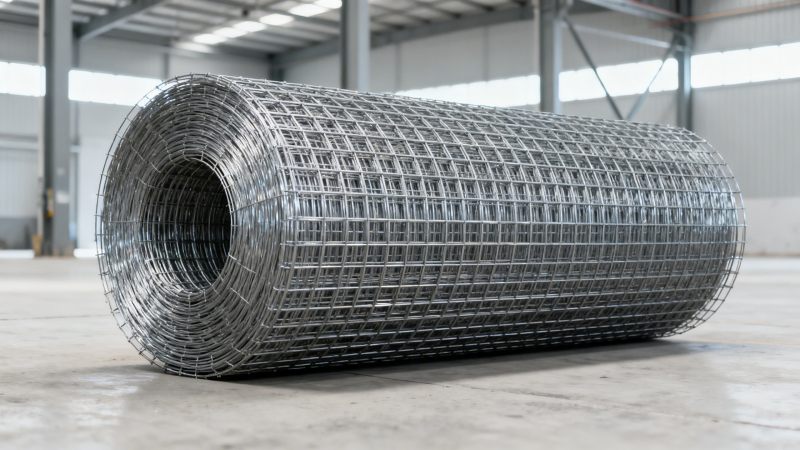
Wire diameter is not a passive specification—it’s an active mechanical interface between steel and concrete. According to ASTM A185 and EN 10080, a ±0.05 mm deviation in nominal diameter (e.g., from 4.0 mm to 3.95 mm) can reduce bond strength by up to 12% under pull-out testing at 28-day curing. This occurs because surface area contact decreases nonlinearly: a 1% reduction in diameter yields ~2% less embedded cross-section and ~3% lower mechanical interlock potential.
Beyond bond, diameter variation influences crack spacing. Mesh with inconsistent wire gauges creates localized stress concentrations—especially at intersections—leading to non-uniform crack propagation. Field data from 14 reinforced slab projects across Southeast Asia showed that batches with diameter variance >±0.07 mm experienced 37% more hairline cracks within the first 90 days post-pour compared to those held within ±0.03 mm tolerance.
Critical threshold: For structural slabs ≥150 mm thick, industry best practice mandates ≤±0.04 mm diameter control across full coil length. This requires inline laser micrometry during drawing and automated spool-to-spool sampling—not just end-of-batch QA.
Key Performance Impact Summary
This table reflects empirical test results from third-party labs accredited to ISO/IEC 17025. Note: Bond strength loss is measured via ASTM C234 pull-out tests on 1:1.5 cement:sand mortar at 28 days. Applications requiring ≤6% allowable bond reduction must specify ≤±0.04 mm tolerance—and verify it through mill test reports, not just product brochures.
Procurement Checklist: What to Verify Before Ordering Steel Mesh
Procurement teams often focus on yield strength and coating weight—but diameter consistency is equally decisive for long-term performance. Here’s what to audit before PO issuance:
- Mill test report (MTR) showing min/max diameter per coil batch—not just average—and traceable to heat number
- Calibration certificate for inline diameter measurement system (valid within last 6 months)
- Sampling protocol: minimum 3 random coils per 20-ton order, tested at start/mid/end of each coil
- Tensile strength verification at both minimum and maximum specified diameters (per ASTM A615/A185)
Hongteng Fengda provides full MTRs with every shipment—including raw material certification (Q195/Q235), hot-rolled coil traceability, and cold-drawing process logs. Our standard delivery includes 50–1,000 kg coils packaged with plastic film inside and woven bag outside—or wire bobbin packaging upon request.
For mesh fabrication, consistent wire feed is essential. That’s why we also supply Metal Coil Wire in precise diameters from 0.25 mm to 5.0 mm—ideal for automated welding lines requiring ±0.02 mm feeding repeatability. Its low carbon steel composition (Q195/Q235), bright surface finish, and ductility support high-speed mesh production without breakage.
Why Consistent Wire Diameter Matters Across the Project Lifecycle
Diameter variance doesn’t only affect initial bond—it cascades through design validation, site execution, and lifecycle maintenance:
- Design phase: Structural engineers assume uniform bond transfer. Unverified diameter spread invalidates deflection calculations and crack-width predictions per ACI 318-19 Chapter 24.
- Construction phase: On-site welders report 22% higher electrode consumption when wire diameter varies >±0.06 mm—due to inconsistent arc stability and fusion depth.
- Maintenance phase: Slabs with high-diameter-variance mesh show accelerated chloride ingress at intersection points—detected via half-cell potential mapping after 5 years.
Our clients in North America and the Middle East have reduced field rejection rates by 68% simply by enforcing ±0.035 mm diameter tolerance—verified against our ISO 9001-certified QC lab in Tianjin, equipped with Zeiss Contura G2 coordinate measuring machines calibrated to NIST standards.
Why Partner with Hongteng Fengda for Precision Steel Mesh
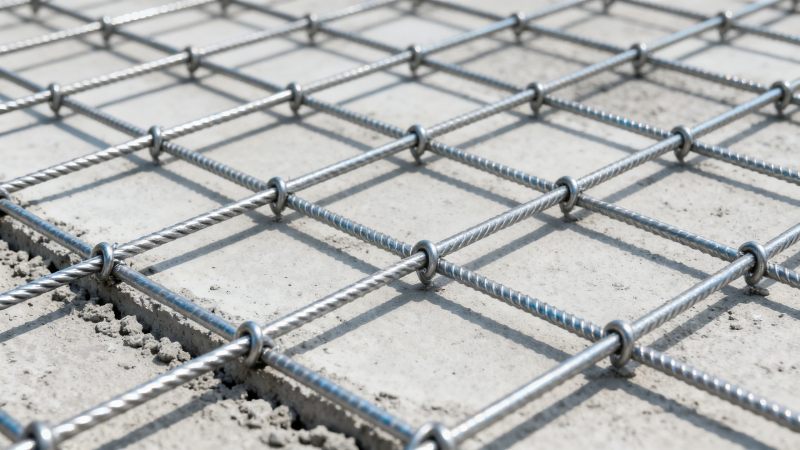
We don’t just manufacture steel—we engineer predictability into every coil. As a structural steel manufacturer & exporter from China, we integrate wire drawing, mesh welding, and galvanizing under one quality management system—eliminating inter-supplier variability that commonly drives diameter drift.
Our capabilities include:
- In-line laser diameter monitoring (0.001 mm resolution) on all drawing lines
- ASTM A615/A185, EN 10080, and GB/T 1499.3 certified mesh—available in custom widths up to 3.2 m
- Lead times of 7–15 days for standard orders; 21 days for OEM configurations with full documentation
- Free technical consultation on mesh layout optimization, splice design, and corrosion protection strategies
Whether you’re sourcing for a 50,000-m² logistics hub in Germany or reinforcing coastal infrastructure in Dubai, our team supports your engineering, procurement, and compliance needs—from dimensional validation and weld schedule review to customs documentation and multi-language COA packages. Contact us today to request mill test reports, sample coils, or a customized mesh specification sheet aligned with your project’s exact bond strength and service life requirements.
Please give us a message


Please enter what you want to find