In steel angle for construction, thickness often affects load capacity, weldability, stability, and long-term safety more than many buyers expect. For engineers, contractors, and procurement teams comparing specifications, understanding how thickness influences performance is essential to reducing project risk, controlling cost, and selecting reliable structural steel for demanding construction applications.
Why does thickness matter so much in construction steel angle selection?
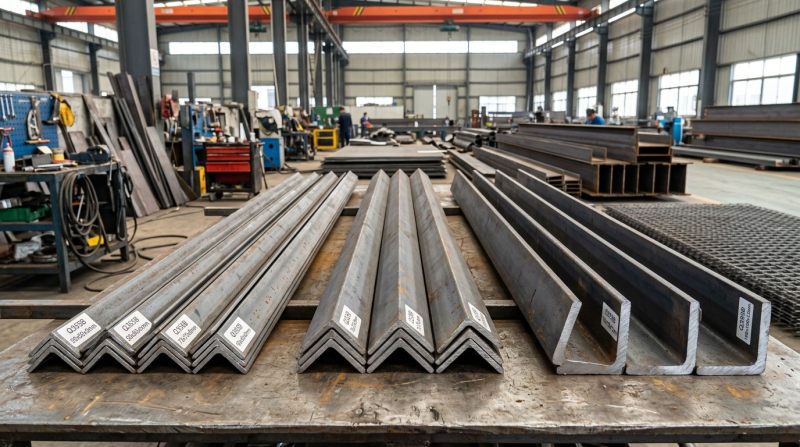
When buyers compare steel angle for construction, they often focus first on leg size, length, or price per ton. In practice, thickness is one of the most decisive variables because it directly changes section strength, stiffness, welding behavior, and how the member performs under dynamic or repeated loading. A 2 mm difference can look small on paper, but in structural use it can strongly affect whether an angle is suitable for support frames, edge reinforcement, brackets, or heavier load-bearing assemblies.
For project managers and technical evaluators, thickness is not only a structural issue. It also affects fabrication speed, hole making, fit-up accuracy, galvanizing response, and transport weight. Thicker angle steel usually brings better resistance to local deformation, while thinner sections may reduce material cost and ease handling. The right choice depends on the actual application range, expected service life, environmental exposure, and the safety margin required by the design code.
In global sourcing, confusion often appears when buyers compare equal angles and unequal angles from different mills. Two products may share the same leg dimensions, yet their actual performance differs because one follows a lighter thickness range and another follows a heavier profile standard. That is why procurement teams should review 3 core indicators together: nominal size, actual thickness tolerance, and applicable standard such as ASTM, EN, JIS, or GB.
For distributors, contractors, and financial approvers, this is also a cost-control topic. Under-specifying thickness can increase the risk of rework, premature distortion, or failed inspection. Over-specifying can add unnecessary steel weight across dozens or hundreds of tons. Good sourcing decisions usually come from balancing 4 factors: load demand, fabrication process, compliance requirement, and delivered cost.
What changes when angle thickness increases?
A thicker steel angle for construction generally provides higher resistance to bending, impact, and edge damage during installation. It also improves performance where bolted or welded joints transfer concentrated force into a small area. In construction sites with frequent lifting, multi-stage assembly, or long spans between fixing points, thicker material can reduce the risk of twist or local buckling.
At the same time, thicker is not always better. More thickness means more weight per meter, more welding heat input, and in many projects, higher logistics and erection cost. In light support applications, machine guards, handrail framing, or secondary bracing, choosing an unnecessarily heavy angle can lower cost efficiency. The best selection is based on service conditions rather than habit or visual preference.
- Load transfer: thicker sections usually handle concentrated stress more safely at connection points.
- Fabrication: heavier thickness may require adjusted welding procedure, cutting method, and drilling time.
- Durability: additional thickness can provide a useful corrosion allowance in exposed environments.
- Budget impact: weight increase affects raw material cost, shipping cost, and on-site handling.
How thickness affects structural performance, safety, and fabrication
From a technical perspective, thickness influences more than basic strength. It affects the section modulus, radius response under load, and the connection quality achieved during fabrication. In many structural assemblies, the angle itself is not the only concern; what matters is how the angle interacts with gusset plates, anchor points, welded seams, or fastening systems over 10–20 years of service.
For quality control and safety teams, one common risk is assuming that two angles with the same outer dimensions behave the same. They do not. If wall thickness is reduced, the angle may be more vulnerable to edge tearing near bolt holes, heat distortion during welding, or local deformation during transport and installation. These issues may not appear during the first week, but they often emerge under repeated service loading or exposure to moisture and temperature change.
The table below shows how thickness usually changes practical performance in construction applications. It is not a substitute for engineering design, but it is a useful screening tool for procurement, technical review, and supplier comparison.
In actual procurement, thickness should be checked together with steel grade, straightness, dimensional tolerance, and surface condition. A well-produced medium-thickness angle that meets the required standard may be a better option than a thicker but inconsistent material. Reliable structural performance comes from the whole specification, not from one dimension alone.
Weldability, drilling, and site assembly
Thickness affects fabrication workflow in at least 3 stages: shop processing, pre-assembly, and site fixing. Thicker carbon steel angles may need more controlled heat input during welding to manage distortion and maintain alignment. For thinner angles, the challenge is often the opposite: avoiding burn-through, edge warping, or uneven weld penetration.
On projects with compressed schedules, these fabrication details matter. A sourcing decision that looks cheaper by unit price can become slower in production if the material is difficult to fit, drill, or weld consistently. For project leaders managing 2–4 week fabrication windows, this can influence delivery reliability as much as the mill price itself.
A useful cross-industry reminder
Even outside structural members, engineers often evaluate thickness, opening, and material grade together. For example, filtration and industrial enclosure buyers may compare 306 Stainless Steel Welded Mesh by wire material, diameter from 0.0008″–0.12″, mesh from 2–635 mesh, and roll width up to 240″. The lesson is the same: dimensions alone do not define suitability; the complete specification determines performance, durability, and value.
Which thickness range fits different construction scenarios?
A practical selection process starts with the application scenario. Steel angle for construction is used in warehouses, industrial platforms, support racks, stair systems, embedded frames, reinforcement assemblies, and equipment foundations. Each use case has different force paths, environmental exposure, and fabrication demands. That is why good selection is scenario-based, not only size-based.
For procurement teams serving multiple regions, another factor is code expectation. In North America, Europe, the Middle East, and Southeast Asia, project documentation often references different design and inspection habits even when the component looks similar. A supplier able to produce according to ASTM, EN, JIS, or GB helps reduce mismatch risk during technical review and order confirmation.
The comparison below helps align thickness decisions with construction use, project stage, and sourcing risk. It is especially useful when engineering, purchasing, and finance teams need one shared view before approving material.
The most common mistake is copying a previous project specification without rechecking actual service conditions. A steel angle that worked well in a dry indoor support frame may not be adequate in a humid coastal environment or an outdoor structure exposed to vibration. Thickness should be reviewed together with coating, drainage design, and maintenance expectation.
5 checkpoints before finalizing the order
- Confirm whether the angle is a primary load-carrying member or a secondary support component.
- Check the required standard and tolerance range, not only nominal dimensions on the drawing.
- Review the joining method: bolting, fillet welding, continuous welding, or mixed connection.
- Estimate the effect of added weight on transport, site lifting, and installation productivity.
- Align corrosion protection with the expected service period, often 5–10 years or longer depending on environment.
These checkpoints are especially important for distributors and sourcing managers who must compare offers from several mills. A low quote can become expensive if the delivered thickness tolerance is inconsistent or if the steel angle requires extra site correction. Clear technical confirmation before production is usually more economical than dispute handling after shipment.
How to evaluate cost, compliance, and supplier reliability together
Price alone rarely gives a safe purchasing decision in structural steel. The more practical question is total project value: does the selected steel angle for construction meet the drawing, pass inspection, arrive on time, and avoid hidden fabrication cost? For procurement and commercial teams, thickness plays directly into all 4 areas because it changes weight, processing effort, and structural confidence.
A reliable supplier should be able to discuss not only standard sizes, but also tolerance control, production scheduling, packing method, test documentation, and export coordination. In cross-border procurement, typical planning windows may include 7–15 days for standard production review, or 2–4 weeks for larger or customized structural steel orders depending on quantity, processing complexity, and shipping arrangement.
Hongteng Fengda supports global buyers as a structural steel manufacturer and exporter from China, supplying angle steel, channel steel, steel beams, cold formed steel profiles, and customized structural components. For buyers who need stable production capacity and consistent quality across repeated orders, this matters because sourcing risk often comes from inconsistency, not simply from the nominal specification on one quotation sheet.
With modern manufacturing facilities and strict quality control, the company supports projects that require reference to major international standards including ASTM, EN, JIS, and GB. For technical assessment teams, that multi-standard capability helps reduce conversion errors and speeds up approval when drawings, fabrication notes, and buyer expectations come from different regions.
A practical procurement framework
If your team is comparing multiple suppliers, use a structured review instead of a price-only spreadsheet. The following 6-item checklist helps align engineering, purchasing, and finance before a purchase order is released.
- Specification match: confirm leg size, thickness, length, grade, and applicable standard.
- Tolerance control: ask how actual thickness and straightness are checked before shipment.
- Processing compatibility: verify whether drilling, cutting, punching, or welding preparation is needed.
- Documentation: identify required mill paperwork, inspection records, and export packing details.
- Lead time: compare standard stock supply versus made-to-order production schedules.
- After-sales communication: confirm who handles technical clarification if there is a drawing or tolerance question.
Where hidden cost usually appears
Hidden cost often appears in 3 places: re-fabrication, delayed approval, and site installation inefficiency. If thickness is underspecified, the angle may need replacement or reinforcement. If overselected, transport weight and handling expense rise. If the supplier cannot maintain consistent dimensions across batches, assembly time increases and project teams lose schedule flexibility.
This is why experienced buyers ask for more than a unit price. They ask about tolerance, standard, production range, and documentation readiness. The same logic applies across industrial metal products. For instance, when buyers source corrosion-resistant screening or filter material such as 306 Stainless Steel Welded Mesh, they review grade options like SS 201, 304, 304L, 316, 316L, and 430 together with mesh, cloth thickness, and application conditions such as chemical industry, architecture, or residences. In structural steel procurement, the complete specification package is equally important.
Common misconceptions and FAQ for steel angle for construction
Many searchers ask simple questions such as “Can I choose the thicker angle and be safe?” or “Is the cheapest same-size angle acceptable if the drawing only shows leg dimensions?” The useful answer is more nuanced. Thickness matters greatly, but it must match the design role, connection method, and standard requirement. A good buying decision connects engineering logic with practical supply conditions.
The questions below reflect common concerns from engineers, operators, procurement teams, distributors, and project decision-makers. They also help search users quickly identify what should be confirmed before asking for a quote.
Does a thicker steel angle always mean better performance?
Not always. A thicker steel angle for construction usually improves local strength and stiffness, but it also increases weight, welding demand, and total material cost. For secondary structures or light support frames, excessive thickness can reduce economic efficiency without adding meaningful project value. The better approach is to select within the required load and code range, then optimize for fabrication and durability.
What should buyers verify first on a quotation?
Start with 5 items: leg dimensions, thickness, grade, standard, and quantity. Then confirm whether the quote includes cutting, drilling, galvanizing, packing, or test documentation. If any of these items is missing, the comparison may not be reliable. For larger project orders, it is also useful to confirm the expected production cycle, often 2–4 weeks depending on processing requirements and order volume.
How important are standards like ASTM, EN, JIS, and GB?
They are very important because they define dimensional expectations, tolerances, material behavior, and inspection language. When different teams work across regions, standard alignment reduces misunderstanding. A supplier familiar with multiple standard systems can help buyers convert drawings, confirm equivalent requirements, and reduce approval delays during technical review.
What are the most common purchasing mistakes?
The most common mistakes are choosing only by unit price, ignoring thickness tolerance, copying old specifications without checking the new loading case, and overlooking fabrication needs. Another frequent issue is failing to coordinate engineering and purchasing teams early enough. A 30-minute technical review before ordering can prevent days of delay later in production or installation.
Why work with a structural steel manufacturer that understands global project demands?
Construction buyers need more than a product list. They need a supplier that can interpret drawings, control production quality, coordinate delivery timing, and support customized structural steel requirements. For angle steel procurement, this becomes especially valuable when projects involve mixed standards, repeat orders, or multiple item categories such as channel steel, beams, and cold formed profiles in one shipment.
Hongteng Fengda serves global construction, industrial, and manufacturing projects with standard specifications and OEM solutions. For companies in North America, Europe, the Middle East, and Southeast Asia, dependable lead times and consistent quality help reduce sourcing risk and improve project planning. This is particularly useful for project managers balancing budget approval, installation sequence, and contractor deadlines across several procurement stages.
If you are comparing steel angle for construction and want clearer guidance on thickness selection, the most efficient next step is a specification review. Share your required size range, steel grade, standard reference, quantity, destination market, and whether processing such as cutting or drilling is needed. Based on that, the supplier can help confirm a practical thickness choice instead of leaving the decision to guesswork.
You can contact the team for 6 specific topics: parameter confirmation, angle steel selection, standard matching, lead time planning, customized structural steel solutions, and quotation support. If your project also requires sample evaluation, export packing discussion, or multi-item sourcing coordination, those points should be clarified early so procurement, technical, and finance teams can move faster with fewer revision cycles.
Please give us a message


Please enter what you want to find