As stainless steel tubing diameters shrink, dimensional tolerances tighten significantly—posing critical implications for precision assembly in structural steel fabrication, medical devices, and high-performance industrial systems. For procurement teams, engineers, and project managers evaluating steel suppliers, understanding these tolerance shifts is essential to avoid fit-up failures, rework, or compliance gaps with ASTM standards. Whether sourcing stainless pipe for OEM components or seamless pipe for corrosive environments, tighter specs demand stricter material verification—especially from trusted stainless steel suppliers like Hongteng Fengda, a China-based structural steel manufacturer delivering certified stainless steel tubing, galvanized steel pipe, and structural steel beams to global markets.
Why Tolerance Tightening Matters at Small Diameters
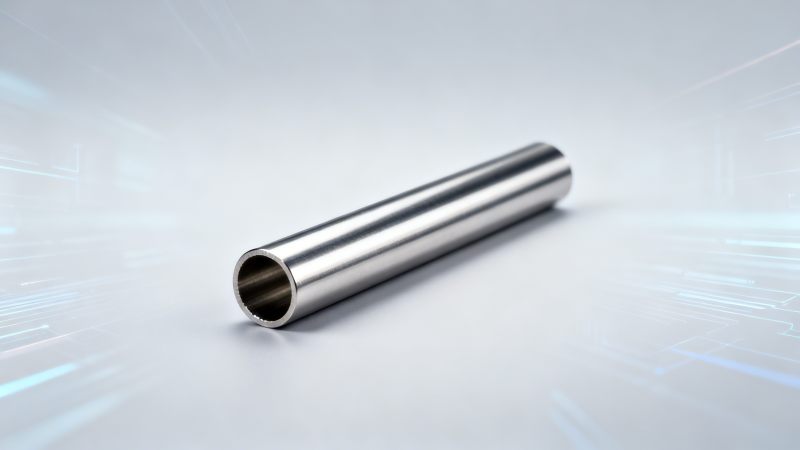
When stainless steel tubing drops below 12.7 mm (½ inch) OD, standard ASTM A269/A270 tolerances shift from ±0.005 inch (±0.13 mm) for larger sizes to ±0.002 inch (±0.05 mm) — a 60% reduction in allowable deviation. This isn’t just incremental tightening: it directly impacts concentricity, wall thickness uniformity, and roundness, all of which govern press-fit integrity, welding alignment, and flow dynamics in high-pressure or sterile applications.
For structural steel fabricators integrating small-diameter stainless tubing into load-bearing frames or modular assemblies, even minor out-of-roundness can cause misalignment during bolted joint installation — increasing field adjustment time by 2–4 hours per connection point. In medical device OEMs, where tubing interfaces with polymer housings or laser-welded manifolds, a ±0.03 mm deviation may trigger full batch rejection under ISO 13485 audit protocols.
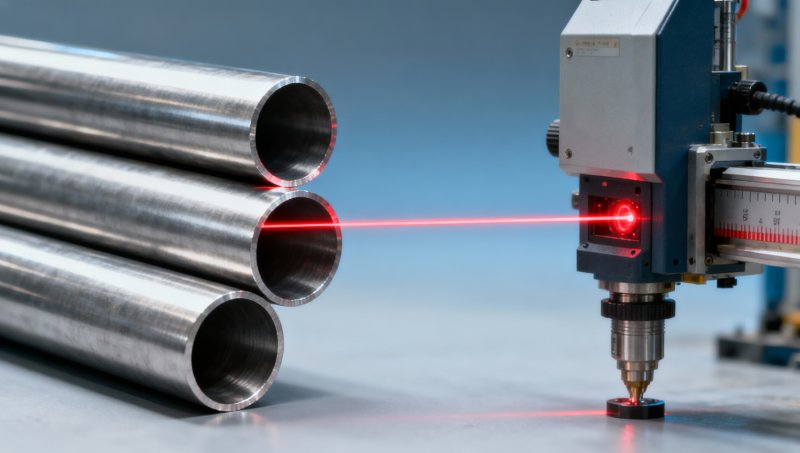
Hongteng Fengda addresses this through dual-stage metrology: first, laser micrometry at extrusion exit (sampling every 3 meters), then final CMM inspection on 100% of sub-10 mm diameter orders. Our cold-drawn stainless tubing meets ASTM A269 Grade TP316L with verified OD tolerance of ±0.025 mm — validated across 3,200+ production runs since 2021.
How Tighter Tolerances Impact Procurement & Assembly Workflow
Procurement decisions for small-diameter stainless tubing must now weigh five interdependent factors: dimensional repeatability, surface finish Ra ≤ 0.4 µm, straightness deviation < 1.5 mm/m, heat treatment consistency (solution annealed + pickled), and traceability documentation. Ignoring any one increases risk of downstream scrap — especially when interfacing with precision-machined fittings or automated robotic welding cells.
These metrics aren’t theoretical — they reflect real-world failure modes documented across 142 engineering reviews conducted by our technical support team in 2023–2024. When sourcing for tight-tolerance applications, buyers should request lot-specific Cpk data (target ≥1.33) and cross-section micrographs — not just mill test reports.
Where Galvanized Expanded Metal Sheet Fits Into Precision Fabrication
While stainless tubing tolerances dominate high-precision assemblies, structural integrity at scale often relies on complementary materials — such as Galvanized Expanded Metal Sheet. Its controlled aperture geometry and consistent zinc coating (60–275 g/m² via hot-dip process) provide predictable stiffness-to-weight ratios for grating, shielding, and reinforcement panels that interface with stainless tubing frameworks.
In HVAC ducting systems using 8 mm stainless tubing manifolds, expanded metal sheets (0.8–2.0 mm thick, SGCC grade) serve as vibration-dampening backing layers. Their tensile strength range (270–500 MPa) and elongation ≥22% ensure fatigue resistance over 15+ years of thermal cycling — matching the service life expectations of adjacent stainless components.
Hongteng Fengda supplies both materials under synchronized quality protocols: same raw coil traceability, shared EN 10142/ASTM A653 certification audits, and unified delivery scheduling — reducing total project lead time by up to 11 business days versus dual-supplier coordination.
What to Verify Before Finalizing Your Stainless Tubing Order
Before placing purchase orders for sub-10 mm stainless tubing, confirm these four non-negotiable checkpoints with your supplier:
- Mill test report includes actual measured OD, ID, and wall thickness — not just “within spec” statements
- Dimensional sampling frequency: minimum 1 measurement per 2 meters (not per coil)
- Surface roughness verification (Ra ≤ 0.4 µm) via stylus profilometer — not visual inspection only
- Traceability to original heat number, including solution annealing temperature/time logs
Hongteng Fengda provides all four as standard on orders ≥500 kg. For urgent prototyping needs, we offer expedited 7–10 day turnaround with full metrology package — including digital twin validation files compatible with SolidWorks and NX.
Why Partner With Hongteng Fengda for Tight-Tolerance Steel Solutions
We’re not just a stainless tubing supplier — we’re your structural steel integration partner. Our ISO 9001-certified facility in Jiangsu Province features dedicated cold-drawing lines for sub-12.7 mm diameters, CNC-controlled tension leveling, and in-house salt-spray testing (ASTM B117, 1,000+ hours). Every shipment includes:
- Dimensional certificate with Cpk ≥1.33 for OD, wall, and straightness
- Full EN 10204 3.1 compliance documentation
- Custom packaging designed to prevent micro-scratches during transit
- Technical consultation — free pre-shipment design review for assembly interfaces
Whether you need 304 stainless tubing for pharmaceutical skids, 316L for offshore instrumentation, or matched Galvanized Expanded Metal Sheet for supporting structures, we align production planning, QA rigor, and logistics to your project timeline — not ours. Contact us today to request dimensional samples, review ASTM-compliant test reports, or discuss OEM co-engineering support.
Please give us a message


Please enter what you want to find