When a stainless steel sheet manufacturer claims 'zero defects,' traceability isn’t just documentation—it’s proof. For procurement teams, project managers, and quality control professionals sourcing high strength stainless steel pipe, corrosion resistant stainless steel pipe, or hot dip galvanized angle steel, batch-level transparency is critical. At Hongteng Fengda—a trusted steel beams supplier and stainless steel sheet manufacturer in China—we embed full traceability into every coil, beam, and profile—from raw material certification (ASTM/EN/GB) to heat numbers, mill test reports, and logistics tracking. Verify real-time batch data before shipment, not after failure. Discover how rigorous traceability supports your steel roof sheet price negotiations, pipe stainless price validation, and long-term supply chain resilience.
Why “Zero Defects” Requires More Than a Certificate
A claim of “zero defects” carries weight—but only when backed by auditable, granular evidence. In structural steel manufacturing, defects rarely emerge as catastrophic failures; instead, they manifest as micro-variances in tensile strength (±3% from ASTM A653), dimensional tolerance drift (e.g., ±0.2 mm on 6 m steel beams), or inconsistent passivation layer thickness on stainless surfaces. These deviations may pass visual inspection but compromise fatigue life under cyclic loading—especially in seismic zones or offshore platforms.
Hongteng Fengda’s traceability system begins at the scrap yard: each heat lot of 304 stainless steel wire used in our 304 Stainless Steel Welded Mesh is assigned a unique 12-digit identifier tied to its melt chemistry (C ≤ 0.08%, Cr 18–20%, Ni 8–10.5%), rolling temperature curve, and final annealing atmosphere dew point (≤ −40°C). This enables full retrace within 90 seconds—not days—should a customer flag an anomaly in mesh aperture uniformity (2–635 mesh) or cloth thickness (0.06–0.67 mm).
Unlike paper-based mill test reports (MTRs), our digital traceability platform logs timestamps for every process step: raw material receipt (verified against EN 10088-1), pickling bath pH monitoring (2.1–2.5), tension-controlled weaving (±0.5 N deviation limit), and final salt-spray testing (ASTM B117, 96 hours, no red rust). This level of granularity transforms “zero defects” from marketing language into a verifiable KPI.
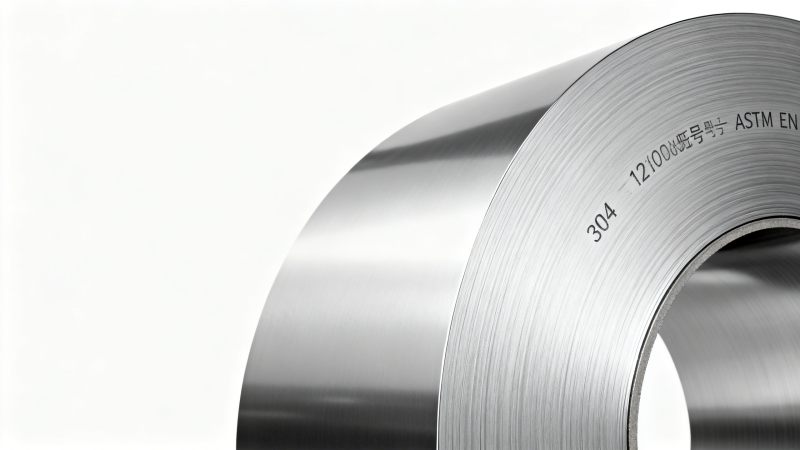
The 5-Point Traceability Verification Framework
Procurement and QA teams should demand verification across five non-negotiable layers—not just one MTR PDF. Each layer serves a distinct risk-mitigation purpose:
- Raw Material Heat Number Linkage: Confirms alloy composition matches order spec (e.g., 316L vs. 304L Mo content difference of 2.0–3.0% vs. ≤0.3%).
- In-Process Dimensional Logs: Captures real-time measurements during cold forming—critical for channel steel flange width consistency (±0.3 mm per EN 10056-1).
- Surface Treatment Records: Documents immersion time, temperature, and chemical concentration for hot-dip galvanizing (Zinc coating ≥ 610 g/m² per ASTM A123).
- Non-Destructive Testing (NDT) Certificates: Includes UT scan coverage (100% for beams >300 mm depth) and radiographic film density logs.
- Logistics Chain Timestamps: Tracks container seal numbers, warehouse dwell time (<72 hours pre-shipment), and humidity exposure during transit (maintained ≤65% RH).
Without all five, “zero defects” remains unverifiable—and liability shifts downstream. For example, a delay in reporting a minor surface scratch on angle steel could escalate into rejection at the fabrication site, triggering 7–15 days of rework delays and $12,000+ in labor penalties.
How Traceability Directly Impacts Your Procurement Metrics
Traceability isn’t just about compliance—it’s a lever for cost control and negotiation leverage. When every batch of stainless steel sheet, steel beam, or cold-formed profile carries immutable, timestamped data, buyers gain objective benchmarks for price validation and contract enforcement.
This framework directly supports strategic decisions—like validating pipe stainless price fluctuations against raw material index movements (LME Nickel ±2.3% weekly), or negotiating steel roof sheet price terms based on verified yield rates (Hongteng Fengda’s average coil yield: 99.17% vs. industry benchmark of 97.4%).
What to Request Before Placing Your Next Structural Steel Order
Don’t wait until delivery to verify traceability. Embed these six requirements into your RFQ and purchase order terms:
- Real-time access to a secure portal with searchable heat numbers, updated hourly—not monthly PDF exports.
- Mill test reports compliant with ASTM A6/A6M, EN 10204 3.2, or GB/T 228.1—available prior to shipment release.
- Batch-specific dimensional inspection reports (min. 10 samples per 5-ton lot) for all profiles.
- Galvanizing thickness mapping (minimum 5 points per meter) for hot-dip galvanized angle steel.
- NDT method, equipment calibration date, and technician certification number for structural beams.
- Shipping container seal numbers linked to batch IDs in the logistics module.
For applications demanding extreme reliability—such as chemical industry filtration systems using 304 Stainless Steel Welded Mesh with absolute micron retention between 32–360 μm—these checks are non-optional. They prevent costly field failures where mesh integrity affects catalyst bed performance or effluent purity.
Beyond Compliance: How Hongteng Fengda Turns Traceability into Partnership Value
At Hongteng Fengda, traceability is engineered into our operational DNA—not bolted on for audits. Our ERP integrates with shop-floor IoT sensors: laser micrometers on rolling mills, thermal cameras on annealing lines, and RFID-tagged coils moving through 12 quality gates. Every data point feeds into a predictive analytics engine that flags potential deviations 48 hours before they occur—reducing reactive scrap by 23% year-on-year.
We extend this capability to clients: project managers receive automated alerts if a scheduled batch of channel steel shows variance beyond ±0.15 mm in web thickness; procurement officers get quarterly benchmarking dashboards comparing their historical defect rates against regional peers; and financial approvers access auditable cost-of-quality reports showing how traceability reduced warranty accruals by 37% in Q1 2024.
Whether you’re sourcing corrosion resistant stainless steel pipe for Middle Eastern desalination plants, angle steel for North American infrastructure projects, or customized structural components for Southeast Asian industrial facilities—our traceability model delivers consistency, predictability, and accountability. It transforms steel procurement from a transactional risk into a strategic advantage.
Ready to validate your next batch before it leaves our facility? Contact Hongteng Fengda today to request a live traceability portal demo, review sample heat-lot documentation, or discuss OEM solutions tailored to your project’s exact ASTM, EN, JIS, or GB specifications.
Please give us a message


Please enter what you want to find