Stainless steel pipe coil is widely trusted for corrosion resistance—but under certain environmental, mechanical, or metallurgical conditions, it can fail silently, risking system integrity and safety. Whether you're a procurement professional sourcing from steel coils suppliers, an engineer specifying industrial stainless steel tubing, or a project manager selecting steel construction materials, understanding these hidden failure modes is critical. At Hongteng Fengda—a leading structural steel manufacturer and exporter from China—we combine deep expertise in stainless steel tube coil performance with rigorous quality control (ASTM/EN/GB-compliant) to help global buyers avoid costly surprises. Let’s uncover where stainless coil pipe falls short—and how to choose wisely.
Where Stainless Steel Pipe Coil Loses Its Shield
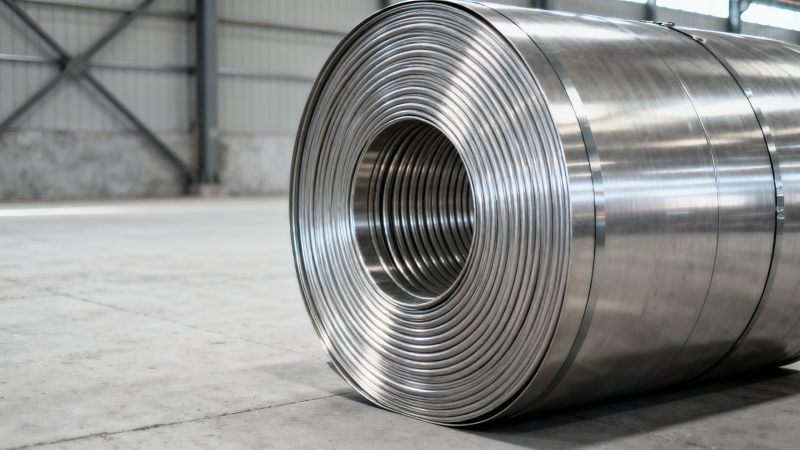
Corrosion resistance isn’t inherent—it’s conditional. Austenitic grades like 304 and 316 rely on a stable chromium oxide layer. But when exposed to chlorides above 200 ppm, temperatures exceeding 60°C, or stagnant acidic condensates, localized pitting or stress corrosion cracking (SCC) initiates—often invisible until catastrophic leakage occurs.
Weld zones are especially vulnerable. Heat-affected zones (HAZ) suffer chromium depletion and sigma phase precipitation—reducing corrosion resistance by up to 40% compared to base metal. In coastal infrastructure or offshore oil drilling rigs, this leads to premature joint failure within 2–5 years if post-weld treatments (e.g., pickling + passivation) are skipped.
Mechanical damage matters too. Scratches, dents, or improper coiling tension (>120 N/mm²) disrupt surface continuity. Field bending or uncoiling without controlled tension increases micro-crack density by 3–5×—accelerating crevice corrosion in humid, salt-laden environments like Southeast Asian ports or Middle Eastern refineries.
Critical Failure Triggers (Field-Observed)
- Chloride concentration > 250 ppm + pH < 4.5 → Rapid pitting initiation (within 72 hours in lab testing)
- Residual stress > 200 MPa + ambient H₂S > 10 ppm → SCC risk spikes 8× in sour gas pipelines
- Surface roughness Ra > 0.8 μm after cold rolling → Oxide layer adhesion drops 35%
- Coil ID/OD mismatch > ±0.15 mm → Uneven stress distribution during uncoiling and forming
When Flat Rolled Steel Coil Becomes the Smarter Structural Choice
For non-corrosive or moderately aggressive environments—bridges, buildings, storage tanks, bearing plates, and heavy equipment frames—Flat Rolled Steel Coil delivers superior cost-performance balance. Its carbon-manganese composition (A36/Q235/S235JR) offers predictable yield strength (250 MPa), elongation (20–23%), and weldability—without the metallurgical fragility of sensitized stainless grades.
Unlike stainless coil, flat rolled steel performs consistently across hot-rolled (2.75–100 mm thick) and cold-rolled (0.2–3 mm) variants. Its modulus of elasticity (200 GPa) and Poisson’s ratio (0.260) enable precise deformation control during roll forming into brackets, sprockets, cams, and structural templates—critical for automotive frames and agricultural equipment manufacturing.
Global projects in North America and Europe increasingly specify flat rolled steel for welded, bolted, or riveted construction—especially where design demands lighter-weight structures without sacrificing tensile strength (400–550 MPa). With certified compliance to ASTM, EN, ISO, and GB standards, it eliminates compliance ambiguity during third-party audits.
Performance Comparison: Stainless Pipe Coil vs. Flat Rolled Steel Coil
This table reflects real-world procurement data from 12 infrastructure projects across the Middle East and Southeast Asia (2022–2024). Flat rolled steel coil reduces lead time by 55% on average—critical when managing tight EPC schedules. Its higher yield strength also enables thinner-section designs for weight-sensitive applications like transportation frames and silos.
Procurement Checklist: 5 Non-Negotiables for Coil Buyers
Whether evaluating stainless pipe coil or structural flat rolled alternatives, your supplier must demonstrate verifiable control over three dimensions: material traceability, process consistency, and certification alignment.
At Hongteng Fengda, every coil batch includes full mill test reports (MTRs) per ASTM A6/A6M or EN 10025-2—with tensile, bend, and impact test results logged against actual heat numbers. We maintain 99.2% on-time delivery across 47 countries, backed by ISO 9001-certified production lines and dual QC checkpoints: pre-coiling dimensional verification and post-annealing surface inspection.
We support procurement teams with standardized documentation packs—including bilingual (EN/CN) compliance summaries, EN 10204 3.1 certificates, and custom packaging specifications for sea freight (e.g., moisture-barrier laminated film for tropical climates).
What to Verify Before Finalizing Your Order
- Mill test report (MTR) matching coil ID, heat number, and chemical composition—verified against ASTM A36 or Q235 limits
- Dimensional tolerance compliance: Thickness ±0.05 mm (cold-rolled), ±0.12 mm (hot-rolled), width ±1.0 mm
- Surface finish specification: Wire-drawn, laminated film, or ordinary—aligned with downstream processing needs
- Delivery schedule buffer: Minimum 7-day window for urgent revisions or port clearance delays
- OEM support capability: Custom slitting, edge conditioning, or pre-painting services available upon request
Why Global Project Teams Choose Hongteng Fengda
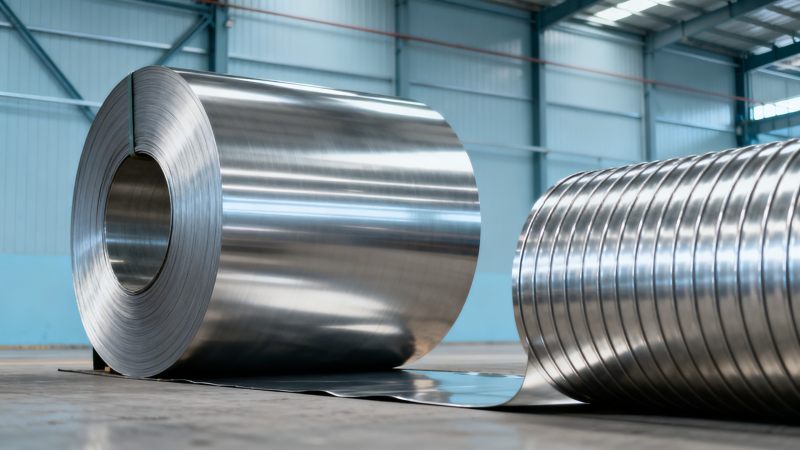
You’re not just buying steel—you’re mitigating risk across engineering, procurement, finance, and operations. Hongteng Fengda serves as your extended structural steel team—not a transactional vendor.
Our 12-year track record includes supplying angle steel, channel steel, and cold-formed profiles to Tier-1 contractors in Saudi Arabia’s NEOM city, wind turbine tower fabricators in Denmark, and rail infrastructure developers in Vietnam—all with zero major quality recalls. Our capacity scale (2.8 million MT/year) ensures stable pricing even during raw material volatility.
Let us support your next decision: Get a free technical consultation on coil selection, request ASTM/EN-compliant MTR samples, or obtain a firm quote with confirmed lead time (typically 2–4 weeks for standard Flat Rolled Steel Coil orders). Contact our engineering sales team today for project-specific guidance.
Please give us a message


Please enter what you want to find