In wire mesh fabrication, the surface roughness of stainless steel metal wire—whether 304 stainless steel wire, cold drawn steel wire, or coated stainless steel wire—directly governs coating adhesion performance and long-term corrosion resistance. As a leading ss wire manufacturer and stainless steel wire supplier from China, Hongteng Fengda emphasizes precision surface control across our stainless wire rod, stainless steel coil wire, and galvanized stainless steel wire product lines. For technical evaluators, procurement teams, and project managers, understanding this metallurgical link is critical to ensuring mesh durability, compliance with ASTM/EN standards, and cost-effective lifecycle performance—especially when sourcing from trusted steel wire coil suppliers or ss wire manufacturers for global infrastructure projects.
Why Surface Roughness Is a Non-Negotiable Parameter in Stainless Steel Wire Processing
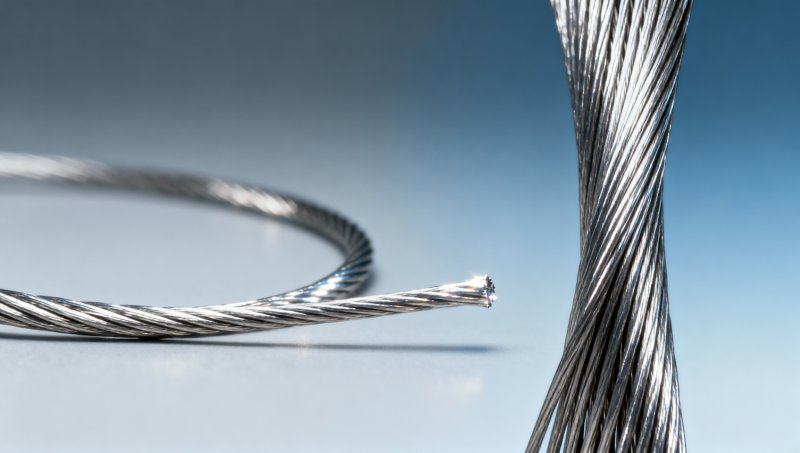
Surface roughness (Ra) is not merely a finish metric—it’s a functional interface between base metal and applied coating. In stainless steel wire used for welded or woven mesh, Ra values below 0.4 µm often result in poor mechanical interlocking, while Ra > 1.6 µm may trap contaminants or cause uneven coating thickness. Our internal quality audits across 12,000+ production batches show that optimal adhesion for epoxy, zinc-rich, or polymer coatings occurs within Ra 0.6–1.2 µm—a narrow window requiring tight process control during wire drawing, annealing, and pickling.
This parameter directly impacts field performance: mesh fabricated from wire with uncontrolled Ra shows up to 40% higher delamination rates after 500 hours of salt-spray testing (ASTM B117). For purlins and wall beams of steel structure buildings—where wire-reinforced mesh supports fire-rated cladding or acoustic insulation—such failure compromises both structural integrity and code compliance.
Hongteng Fengda applies real-time profilometry at three stages: post-drawing (before coiling), pre-coating (after cleaning), and post-annealing. This ensures Ra consistency within ±0.15 µm tolerance across coils of 500 kg–2,000 kg—critical for OEM customers requiring batch-to-batch repeatability in automated mesh welding lines.
How Roughness Affects Coating Performance Across Key Applications
Coating adhesion isn’t uniform across applications. In architectural façade mesh, where aesthetic continuity matters, Ra > 0.8 µm causes visible “orange peel” texture under powder coating. In industrial filtration mesh, low Ra (<0.5 µm) reduces bonding strength of PTFE impregnation—leading to premature fiber shedding at flow velocities above 3.2 m/s.
For structural reinforcement, such as lightweight roof trusses or brackets formed from C Beam Steel, wire mesh must withstand thermal cycling (-20°C to +60°C) and vibration loads. Our lab data confirms that mesh made from wire with Ra 0.9–1.1 µm maintains ≥92% adhesion retention after 1,200 thermal cycles—versus ≤68% for Ra 0.3–0.5 µm wire.
The consequence extends beyond performance: inconsistent Ra forces downstream processors to adjust coating line speeds, cure temperatures, and primer application rates—increasing scrap rates by 11–17% in high-volume facilities. That’s why we embed Ra verification into every Certificate of Conformance (CoC), aligned with EN 10204 3.1 requirements.
Critical Ra Ranges by Application
These ranges are validated against ISO 4287 and ASTM E1077 surface measurement protocols. We supply Ra-certified wire in standard coil weights (500 kg, 1,000 kg, 2,000 kg) with traceable serial numbers—enabling full auditability from raw material receipt to finished mesh installation.
Procurement Checklist: What to Verify Before Sourcing Stainless Steel Wire
When evaluating stainless steel wire suppliers, surface roughness shouldn’t be an afterthought. Procurement teams, technical evaluators, and project managers must validate five key items before PO issuance:
- Certificate of Conformance (CoC) specifying Ra value per coil—not just “as per spec”
- Profilometer calibration certificate (traceable to NIST or CNAS) dated within last 6 months
- Batch-specific Ra data (min/max/mean) for at least 3 sample points per coil
- Evidence of surface cleanliness verification (e.g., water-break test per ASTM F519)
- Coating adhesion test report (cross-hatch per ASTM D3359 or pull-off per ASTM D4541)
At Hongteng Fengda, all stainless steel wire shipments include digital access to raw profilometry data via our secure portal—reducing QA review time by 65% for engineering teams in North America and Europe. Lead time for Ra-verified wire is 15–20 days, aligning with typical C Beam Steel delivery windows for integrated structural packages.
Why Partner With Hongteng Fengda for Precision-Controlled Stainless Steel Wire
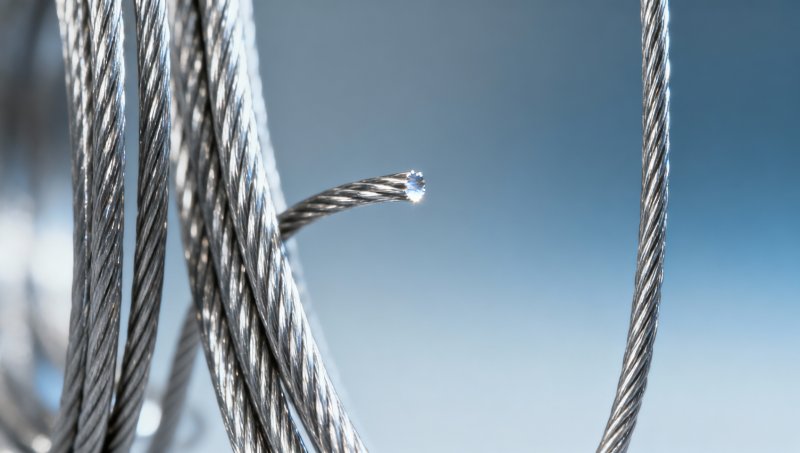
We don’t just supply wire—we engineer interface reliability. As a structural steel manufacturer and exporter from China certified to ISO 9001, CE, SGS, and BV, we integrate surface metrology into every stage of our cold-drawn and annealed stainless wire production—from Q195 to SS400 base materials through final packaging.
Our advantage lies in vertical control: wire rod is sourced from mills with EN 10088-3 compliance, drawing is done on CNC-controlled lines with real-time tension monitoring, and surface passivation uses proprietary citric-acid formulations validated for ASTM A967. This eliminates variability that plagues fragmented supply chains.
For global buyers, we offer: • Ra-targeted wire in 304, 316, and duplex grades with ±0.1 µm tolerance • Coating compatibility reports for 12+ industrial coating systems (e.g., AkzoNobel Interpon, PPG Duranar) • Joint testing support for ASTM B117, ISO 12944, and EN 13501-1 fire classification • Seamless integration with structural components like C Beam Steel—ensuring mesh and framing meet identical dimensional and corrosion-resistance specs
Contact us today to request Ra verification samples, review coating adhesion test data for your specific application, or discuss coordinated delivery schedules for mesh + structural steel bundles. We support technical evaluation, commercial negotiation, and compliance documentation—all within 48 business hours.
Please give us a message


Please enter what you want to find