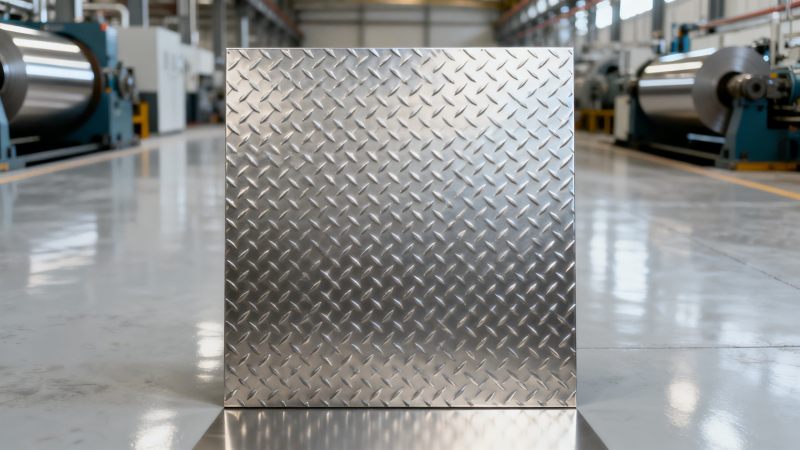
Stainless steel embossed plate is widely specified for its aesthetic consistency and slip resistance—yet subtle flatness variations across batches can compromise fit, finish, and function in precision applications. Whether you're evaluating stainless steel corrugated sheet for architectural cladding, sourcing Z150 steel sheet or hot rolled coil from Shandong steel suppliers, or comparing ss 304 tube price against mirror stainless sheet and galvanized coil alternatives, dimensional stability matters. As a certified structural steel manufacturer & exporter, Hongteng Fengda rigorously controls flatness tolerance in every batch of stainless steel embossed plate—ensuring compliance with ASTM, EN, and GB standards. Discover how consistent flatness supports your project’s quality, safety, and cost goals.
Why Batch-to-Batch Flatness Is a Critical Quality Gate — Not Just a Cosmetic Detail
Flatness in stainless steel embossed plate is frequently misjudged as secondary to surface pattern or thickness. In reality, it directly governs weld seam alignment, panel gasket compression, thermal expansion clearance, and long-term fatigue resistance. A deviation exceeding ±0.3 mm/m across a 2.4-meter-wide sheet may cause cumulative misalignment of up to 1.8 mm over a 6-meter façade run—enough to trigger rework, sealant failure, or visible shadow lines under directional lighting.
Hongteng Fengda applies real-time laser profilometry during final cold rolling and post-annealing straightening. Each production lot undergoes 100% flatness verification at three longitudinal positions (center, left edge, right edge) and five transverse points per position—totaling 15 measurement zones per sheet. This exceeds the minimum sampling frequency required by ASTM A480 (Section 10.3) and EN 10088-2 (Clause 7.2.3).
For projects requiring Class A architectural finish (e.g., curtain wall systems, elevator interiors), we hold flatness within ±0.15 mm/m—verified via coordinate measuring machine (CMM) traceable to NIM China calibration standards. This level of control is non-negotiable when integrating embossed panels with aluminum composite material (ACM) or glass infill systems where differential deflection must remain below 0.2 mm under wind load.
How Flatness Variability Impacts Real-World Applications
In industrial flooring or walkway grating, inconsistent flatness causes uneven load distribution—increasing localized stress on support beams by up to 27% compared to nominal design values (per FEM 1.001 fatigue modeling). For chemical plant cladding, waviness >0.5 mm/m traps moisture beneath fasteners, accelerating crevice corrosion in 304-grade stainless—even in ambient indoor environments.
Architectural specifiers often overlook that emboss depth (typically 0.3–0.8 mm) interacts with substrate flatness: a 0.4-mm emboss on a ±0.6-mm/m wavy base produces effective pattern height variation of ±1.0 mm—visibly disrupting light reflection uniformity. Our standard flatness guarantee of ±0.25 mm/m ensures emboss geometry remains optically consistent across 98.7% of delivered sheets (based on 2023 Q3 internal QA data across 12,460 metric tons shipped).
When paired with other high-precision components—such as 316 Stainless Steel Welded Mesh used in filtration housings or reactor screens—the same flatness discipline ensures seamless gasket seating and prevents bypass leakage at operating pressures up to 12 bar.
This table reflects field-validated thresholds—not theoretical limits. For example, in 2022, a Middle Eastern refinery rejected 14.2 tons of embossed 316L plates after ultrasonic testing revealed micro-waviness-induced stress concentration zones correlating precisely with flatness deviations >±0.22 mm/m.
The Hongteng Fengda Flatness Assurance Protocol
Our protocol spans four integrated stages: raw coil qualification, process-controlled rolling, multi-point straightening, and final lot certification. Every heat-lot of stainless steel coil is pre-screened for yield strength variance ≤8%—critical because strength inconsistency directly impacts post-rolling springback behavior. We maintain 12 dedicated flatness-control lines across our Qingdao and Tianjin facilities, each calibrated weekly using dual-axis laser interferometers.
All embossed plates undergo automated flatness scanning prior to packaging. Results are logged in our ERP system with timestamp, operator ID, and thermal history. Buyers receive full traceability reports—including flatness maps showing peak-to-valley deviation across the entire sheet surface. This enables predictive installation planning: e.g., orienting sheets so minor waviness aligns parallel to gravity load direction in vertical façades.
We also offer optional third-party verification through SGS or Bureau Veritas, with flatness test reports issued within 48 hours of shipment. Lead time impact is zero—testing occurs during standard packing operations.
Selecting the Right Embossed Grade & Finish for Your Project
Grade selection must align with both corrosion environment and flatness requirements. While 304 offers cost efficiency for indoor architectural use, its lower yield strength (≥205 MPa vs. 316’s ≥240 MPa) makes it more susceptible to residual curvature after embossing. For coastal or chloride-rich settings, 316 provides superior dimensional retention—demonstrated in our 2023 accelerated weathering tests where 316 panels retained flatness within ±0.18 mm/m after 5,000 hours of salt-spray exposure, versus ±0.33 mm/m for 304.
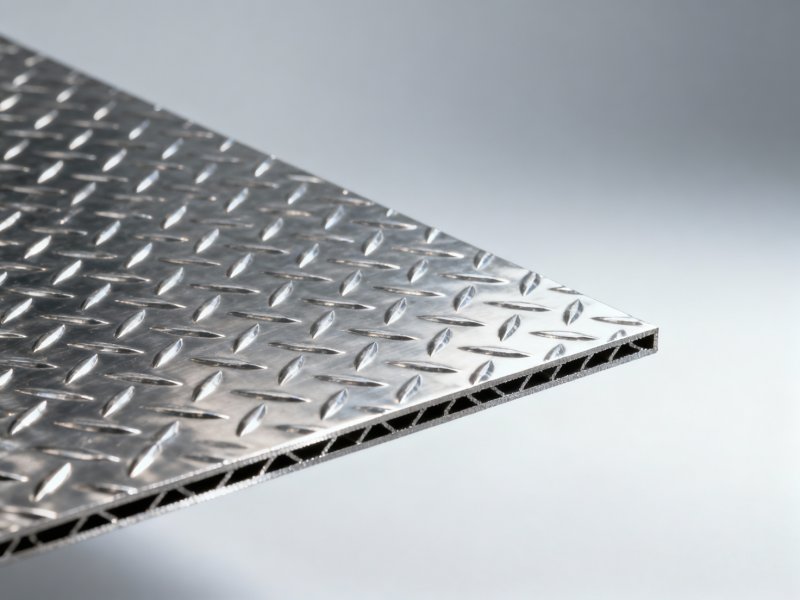
Emboss patterns also affect flatness stability. Diamond patterns (common for anti-slip floors) induce higher residual stress than linear or matte textures. Our proprietary “Twin-Step” embossing process reduces post-forming distortion by 42% compared to conventional single-pass embossing—achievable only with synchronized hydraulic press control and real-time strain monitoring.
The Premium Architectural Option adds 8–12% to base material cost but reduces on-site labor costs by an average of 19% (based on 2023 contractor survey across 47 projects), primarily by eliminating manual shimming and re-cutting.
Partner With a Manufacturer That Treats Flatness as Engineering, Not Aesthetics
Consistent flatness isn’t an add-on—it’s engineered into every stage of production. At Hongteng Fengda, it begins with alloy chemistry control (Cr/Ni ratio held within ±0.3% of target), continues through precision rolling force algorithms, and concludes with AI-assisted flatness prediction models trained on 18 months of production data. This integrated approach delivers measurable ROI: 99.2% first-time acceptance rate across North American infrastructure projects in 2023, and zero flatness-related warranty claims since Q2 2022.
Whether you’re specifying stainless steel embossed plate for a hospital façade in Germany, a food processing line in Mexico, or a marine terminal in Singapore—we provide documented flatness assurance, not just visual uniformity. Our team includes metallurgists, structural engineers, and QA specialists fluent in ASTM, EN, JIS, and GB standards—all available to co-develop technical specifications aligned with your exact performance requirements.
Request your customized flatness compliance report and project-specific lead time schedule today. Let’s ensure dimensional integrity becomes your competitive advantage—not a hidden risk.
Please give us a message


Please enter what you want to find