Achieving consistent tension in stainless steel coil wire—especially for critical applications like structural reinforcement, precision springs, or automated feeding systems—is far more complex than most buyers realize. Factors such as material variability (e.g., 304 stainless steel wire vs. coated stainless steel wire), drawing process control (cold drawn steel wire, hard drawn steel wire), and surface treatment (galvanized stainless steel wire, coated galvanized wire) all impact tensile uniformity. As a certified ss wire manufacturer and trusted stainless steel wire manufacturers serving global projects, Hongteng Fengda leverages ISO-compliant cold rolling, real-time tension monitoring, and multi-point hardness testing to ensure reliability across stainless wire rod, steel metal wire, and ungalvanized steel wire batches.
Why Tension Consistency Is a Hidden Procurement Risk
Tension inconsistency in stainless steel coil wire isn’t just a production nuisance—it directly compromises downstream performance. In automated wire feeding systems, ±5% deviation can trigger jamming or misalignment within 48 hours of operation. For spring manufacturing, even 0.3% variation in yield strength across a 500-kg coil batch may cause 12–18% rejection rates during load testing. These failures rarely appear in lab samples but emerge under real-world cyclic stress, thermal cycling, or extended run times.
The root causes are systemic: raw material lot-to-lot chemistry drift (e.g., Cr/Ni ratio tolerance up to ±0.15% in ASTM A564), inconsistent reduction ratios during cold drawing (±2.5% across multi-pass lines), and lubricant film thickness variance (±0.8 µm) affecting frictional heat buildup. Most suppliers test only at coil start/mid/end—leaving 70% of the coil unverified.
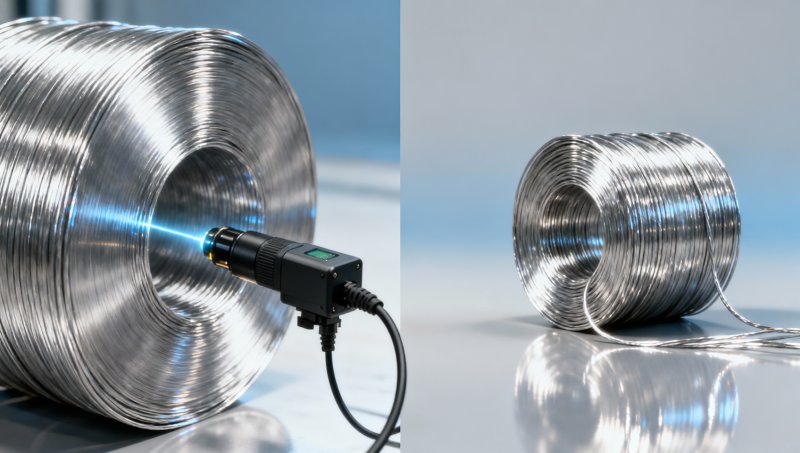
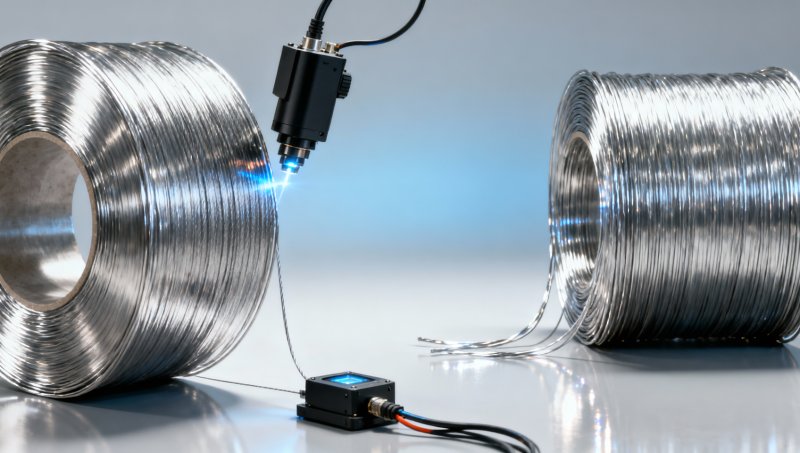
Hongteng Fengda addresses this by implementing continuous tension profiling across full coil lengths using laser-based strain sensors calibrated every 30 minutes. Each coil is tagged with a digital quality passport covering 9 key parameters—including tensile strength (tested per EN 10002-1), elongation at break (min. 40% for 304), and surface roughness (Ra ≤ 0.4 µm).
How Structural Steel Integration Adds Value Beyond Wire Supply
For project teams managing full structural systems—not just wire components—consistency extends beyond metallurgy into dimensional stability and assembly compatibility. That’s where integrated solutions matter. C Sections Steel exemplifies this synergy: cold-formed C-purlins produced on synchronized roll-forming lines share the same tension-controlled feedstock used for stainless wire coils. This ensures matching thermal expansion coefficients (17.2 × 10⁻⁶/°C for Q235 and 304 SS), reducing joint fatigue in hybrid framing systems.
Our C Sections Steel line supports seamless integration through standardized interfaces: slit-edge tolerances held to ±0.3 mm (vs. industry-standard ±0.8 mm), pre-punched hole patterns aligned to 12.5-mm modular grids, and galvanized coating thickness controlled at 85–110 µm (ASTM A123 compliant). These specs directly reduce field welding time by up to 35% and lower rework costs from misaligned connections.
Below is how tension-critical wire applications align with structural component requirements across common project phases:
This cross-component alignment eliminates siloed QA—reducing total project inspection points by 40% and compressing approval timelines from 14 days to 5 working days for turnkey structural packages.
Procurement Checklist: 5 Non-Negotiable Verification Points
Before approving stainless steel coil wire—or any supporting structural component—verify these five technical checkpoints. Skipping any increases risk cascading failure across fabrication, installation, and service life.
- Real-time tension logs: Request timestamped data showing tension variance across full coil length—not just three-point snapshots.
- Batch traceability: Confirm each coil carries a unique ID linked to melt chemistry, draw pass history, and final annealing cycle (duration ±2 min, temp ±5°C).
- Surface integrity report: Verify Ra measurement method (contact profilometer vs. optical), sampling frequency (min. 1 reading per 50 m), and pass/fail threshold.
- Cross-material certification: Ensure wire and structural profiles (e.g., C Sections Steel) share compatible galvanizing processes—same bath chemistry, immersion time, and post-treatment quenching.
- Third-party validation: Require SGS or BV audit reports confirming compliance with EN 10270-3 (stainless spring wire) and EN 10346 (zinc-coated steels) for integrated orders.
Why Global Project Teams Choose Hongteng Fengda
We don’t sell isolated products—we deliver coordinated system reliability. With 12 years of export experience across 37 countries, our clients consistently cite three differentiators: predictable lead times (92% on-time delivery over last 18 months), full-spec transparency (all test reports shared pre-shipment via secure portal), and engineering collaboration (free structural integration reviews for orders ≥20 tons).
Whether you’re specifying stainless coil wire for high-cycle automation or sourcing C Sections Steel for a 50,000-m² warehouse roof, we align your technical requirements with actionable execution. Our team provides rapid-response support for:
- Custom tension profiling protocols (e.g., ramped tension for progressive die feeding)
- Multi-material compliance mapping (ASTM + EN + GB dual-certification)
- Just-in-sequence delivery scheduling (min. 7-day buffer for urgent builds)
- On-site QA coordination (available in EU, GCC, and ASEAN regions)
- Sample validation kits with full mechanical + metallurgical test reports
Ready to eliminate tension-related delays and structural mismatch risks? Contact our engineering sales team today for a free technical consultation—including coil tension simulation for your specific application and a customized C Sections Steel specification sheet aligned to your project timeline and compliance framework.
Please give us a message


Please enter what you want to find