For procurement teams, a low stainless steel 304 coil price can look attractive—until quality issues disrupt delivery, processing, or end-use performance.
In global steel sourcing, price gaps often reflect differences in raw materials, thickness tolerance, surface finish, and production control.
Understanding these signals helps reduce sourcing risk, improve cost comparisons, and protect long-term project value.
Why stainless steel 304 coil price gaps are becoming more visible
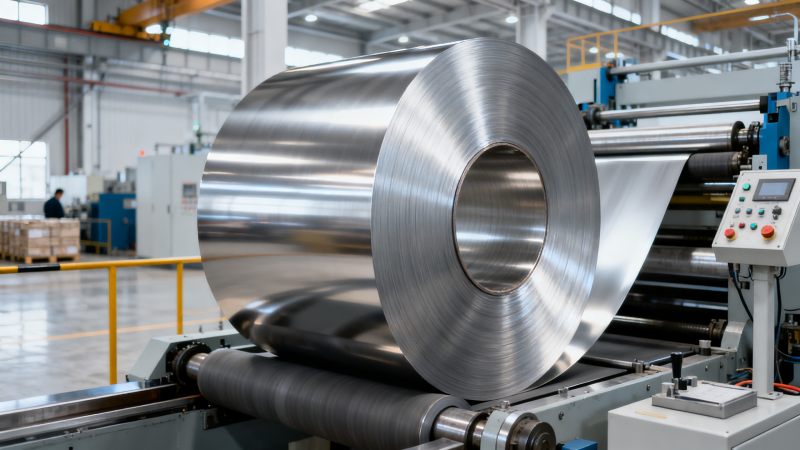
The market for stainless steel 304 coil has become more transparent, but not always easier to judge.
Online quotations appear similar at first glance, yet final material performance can differ sharply.
That gap matters more as projects demand stable welding, forming, polishing, and corrosion resistance.
A lower stainless steel 304 coil price may indicate efficient production, but it may also reveal hidden compromises.
These compromises often appear later, during slitting, bending, stamping, fabrication, or outdoor service.
As global buyers compare suppliers across regions, quote variation has become a practical quality signal.
The strongest trend signals behind stainless steel 304 coil sourcing decisions
Several market changes now influence how stainless steel 304 coil should be evaluated.
Price alone no longer explains total purchasing value.
What usually drives the quality difference behind a lower quote
The biggest price differences in stainless steel 304 coil usually come from four areas.
1. Raw material chemistry and base metal consistency
304 grade depends on controlled chromium and nickel content, plus stable melting practice.
Cheaper input material can weaken corrosion resistance, formability, and surface quality consistency.
2. Thickness tolerance and coil flatness
A low stainless steel 304 coil price sometimes reflects loose rolling tolerance.
Even small deviations can affect part weight, assembly precision, and stamping behavior.
Poor flatness also creates feeding problems during automated processing.
3. Surface finish and defect control
Finish quality matters for kitchenware, panels, equipment covers, and visible fabricated components.
Scratches, roller marks, edge defects, or inconsistent film protection can increase waste.
4. Production control, testing, and packaging
Reliable stainless steel 304 coil requires controlled annealing, pickling, slitting, and final inspection.
Weak packaging can also damage coil edges during export transport.
How these differences affect downstream cost beyond the stainless steel 304 coil price
A low initial number often looks favorable on a spreadsheet.
The real test comes after the material enters production or installation.
- More trimming and correction due to poor edge quality
- Lower stamping yield from unstable thickness
- Extra polishing because surface finish is inconsistent
- Delivery delays caused by replacement claims
- Higher maintenance risk in corrosive environments
This is why stainless steel 304 coil should be assessed through total applied cost, not quote alone.
The same logic applies across coated and structural steel categories.
For projects needing durable roofing or cladding, Color Coated Galvalume Steel Sheet PPGL shows how specifications shape service life.
Its 55% aluminum, 43.3% zinc, and 1.6% silicon base improves corrosion resistance and heat performance.
Available in 0.2mm-1.2mm thickness and RAL-based finishes, it fits agricultural, residential, commercial, and public buildings.
The example matters because coated steel and stainless steel both reward buyers who compare technical value, not only entry price.
Where stainless steel 304 coil quality gaps show up first
In many cases, quality issues appear early and can be checked before full use.
What should be checked before accepting a stainless steel 304 coil offer
A practical comparison method can make different quotations easier to judge.
- Confirm standard and actual grade declaration
- Request thickness tolerance and width tolerance ranges
- Define finish type, protective film, and acceptable defect level
- Check hardness, mechanical properties, and application fit
- Review test certificates and traceability details
- Clarify packing standard for sea transport
- Ask for sample coils or processing trial data
When these points are missing, a very low stainless steel 304 coil price deserves closer attention.
How reliable steel exporters respond to tighter quality expectations
Global projects increasingly require stable quality, clear standards, and dependable delivery windows.
This affects not only stainless products, but structural and coated steel supply chains as well.
Hongteng Fengda, as a structural steel manufacturer and exporter from China, supports this shift through controlled production and standard-based supply.
Its product range covers angle steel, channel steel, steel beams, cold formed profiles, and customized structural components.
Compliance with ASTM, EN, JIS, and GB helps reduce sourcing uncertainty across international projects.
That same discipline is useful when evaluating stainless steel 304 coil suppliers.
A better way to judge stainless steel 304 coil in the next buying cycle
Price gaps are not random.
They usually reflect measurable differences in chemistry, tolerance, finish, inspection, and packaging.
The most effective response is to compare stainless steel 304 coil offers with a structured checklist.
Treat the quote as one part of the decision, not the whole decision.
When quality expectations are defined early, stainless steel 304 coil sourcing becomes more predictable and more cost-effective.
The next step is simple: align technical requirements, request comparable documents, and test whether the low price still holds value after processing.
Please give us a message


Please enter what you want to find