Choosing the right stainless plate sheet sizes can improve cutting efficiency, reduce waste, and simplify fabrication on the shop floor. For operators and project teams, understanding how size, thickness, and tolerance affect processing helps prevent delays and control costs. This guide explains practical stainless plate sheet options that work better in fabrication and support more reliable production results.
How do stainless plate sheet sizes affect fabrication efficiency?
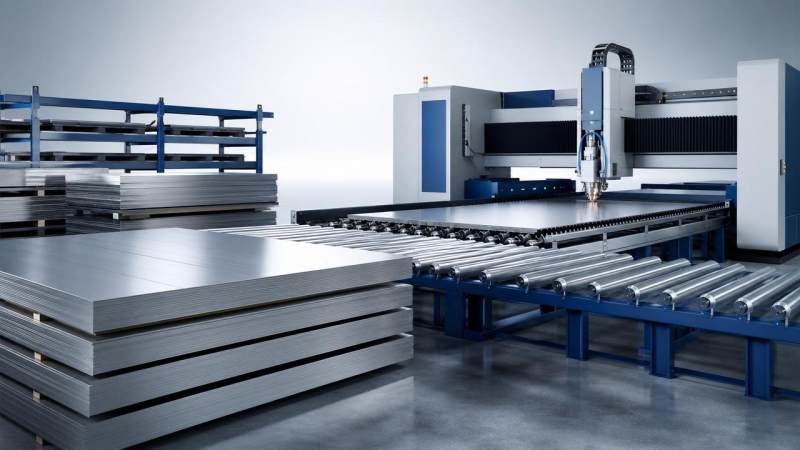
In fabrication, stainless plate sheet selection is not only about grade or corrosion resistance. Size has a direct effect on nesting, handling, machine setup, edge quality, and the number of secondary operations required.
Operators often face practical problems when sheets are too wide for available tables, too long for stable transfer, or too thick for the planned cutting method. A poor size decision can create scrap, slow line speed, and increase rework.
For steel processing teams, the best stainless plate sheet size is usually the one that matches actual fabrication flow rather than the largest format available from the market.
- Larger sheets can reduce the number of joints, but they may require heavier lifting equipment and more careful storage.
- Smaller sheets are easier to handle, but they may increase weld seams, alignment work, and material loss from offcuts.
- Thickness tolerance affects bending repeatability, hole accuracy, and press brake settings.
What operators usually care about first
On the shop floor, operators usually start with four questions: Can the material be loaded safely? Will it fit the machine bed? Does thickness stay consistent across the sheet? Can the size reduce cutting steps without causing handling problems?
These questions sound basic, but they are often more important than price alone. In many steel projects, a lower-cost stainless plate sheet may become more expensive once waste, downtime, and extra labor are included.
Which stainless plate sheet sizes work better in common fabrication scenarios?
The most suitable stainless plate sheet dimensions depend on the product type, cutting process, and downstream forming steps. The table below shows common size logic used by fabrication teams when balancing throughput and waste control.
This comparison shows that there is no single universal stainless plate sheet size for every task. Better results come from matching dimensions to machine capacity, labor method, and final part geometry.
Typical shop-floor size preferences
For many operators, standard stock sizes simplify purchasing and shorten replenishment time. Custom cut sizes can reduce waste further, but only when demand is stable and drawing control is clear.
- Standard dimensions are often easier to source quickly in global supply chains.
- Cut-to-size material works well for repetitive parts and project-based production.
- Mixed-size purchasing can be practical when one job includes both large panels and small brackets.
What thickness, tolerance, and flatness should you check before ordering?
When buyers talk about stainless plate sheet, they often focus on width and length first. However, fabrication problems are just as likely to come from poor flatness, thickness variation, edge condition, or unclear surface finish requirements.
This is especially important in steel fabrication where laser cutting, punching, forming, and assembly all depend on dimensional stability. A sheet that looks acceptable in stock can still create delays during production if its tolerance is unsuitable for the application.
The table below gives a practical pre-order checklist for stainless plate sheet used in fabrication environments.
For operators, clear tolerance control means fewer adjustments during shifts. For procurement teams, it reduces claims, scrap, and uncertainty when importing steel materials across regions.
A useful rule for choosing practical thickness
Choose thickness based on function first, then machine capability, then handling efficiency. If the plate is thicker than needed, fabrication costs rise. If it is too thin, distortion, vibration, or weld issues may appear later.
How can buyers reduce waste and sourcing risk in steel projects?
Waste reduction starts long before material reaches the workshop. It begins with nesting review, standard size planning, and communication between design, procurement, and production. Stainless plate sheet orders should reflect actual fabrication patterns, not only drawing dimensions.
Experienced steel suppliers can support this process by recommending practical dimensions, supply standards, and cut-to-size options. For project teams working across construction, industrial, and manufacturing sectors, that support can lower both schedule pressure and sourcing risk.
Procurement checks before confirming stainless plate sheet
- Verify whether the planned sheet size fits cutting tables, forklifts, cranes, and storage racks.
- Confirm required standards and documentation for your market, especially when export compliance matters.
- Check whether standard stock or cut-to-size supply gives the better balance between lead time and scrap rate.
- Review packaging and protection requirements if surface quality is important after long-distance transport.
In some projects, stainless material is only one part of the broader steel package. Buyers may also need carbon steel or cold-formed products for structures, supports, covers, or formed components. In that case, sourcing from a manufacturer with broad processing understanding can simplify coordination.
For example, High Carbon Steel Plate can be relevant in applications where high tensile strength, resistance to deformation, stamping, bending, or deep drawing performance are key considerations. Available specifications include Width100mm-3000mm, Length1m-12m, and Thickness0.1mm-400mm, with common standards such as AISI, ASTM, ASME, DIN, BS, EN, ISO, JIS, GOST, and SAE. For buyers managing mixed-material fabrication, understanding when stainless plate sheet is needed and when a high-strength carbon steel option is more suitable helps control cost without losing performance.
Standard stock or custom cut stainless plate sheet: which is better?
The choice between standard stock and custom cut stainless plate sheet depends on order volume, repeatability, and waste sensitivity. Both approaches are valid, but they solve different production problems.
The table below compares these two sourcing paths for fabrication teams.
A mixed strategy is often the most practical for fabrication plants. Standard sheets keep production moving, while custom sizes are used where nesting data clearly shows measurable savings.
Why do standards and supplier capability matter so much?
For importers and project buyers, stainless plate sheet is not only a material item. It is also a documentation and consistency item. The correct dimensions lose value if the supply does not align with the required standard or arrive with unstable quality.
This is where supplier capability matters. A manufacturer with modern facilities, strict quality control, and experience serving different regions can help buyers manage standards, lead time expectations, and product consistency more effectively.
What a capable structural steel partner should support
- Clear communication on dimensions, thickness tolerance, finish, and packaging requirements.
- Ability to work with common international standards such as ASTM, EN, JIS, and GB.
- Stable production planning that helps reduce delays on construction, industrial, and manufacturing projects.
- Support for OEM or customized steel solutions when standard sections alone are not enough.
Hongteng Fengda serves global buyers with structural steel manufacturing and export experience, covering angle steel, channel steel, steel beams, cold formed steel profiles, and customized structural steel components. For buyers who need both standard specifications and tailored solutions, this combination is useful when project schedules are tight and sourcing errors are costly.
FAQ: practical questions about stainless plate sheet in fabrication
How do I choose the right stainless plate sheet size for laser cutting?
Start with machine table size, part nesting pattern, and loading method. If sheets are too large, handling becomes slower and flatness issues become harder to manage. If they are too small, you may lose nesting efficiency. The best choice usually balances material yield with stable machine operation.
Is a larger stainless plate sheet always more economical?
Not always. Larger sheets may reduce seam count, but they can increase handling risk, require stronger lifting equipment, and create more unusable offcuts if the part layout is irregular. Total fabrication cost matters more than raw sheet price per ton.
What should operators check when receiving stainless plate sheet?
Check dimensions, thickness consistency, flatness, edge condition, surface damage, and packaging integrity. If the order is tied to a standard or export specification, confirm that the documentation matches the purchase requirement before material enters production.
When should I request custom sizes instead of standard stock?
Request custom sizes when the part family is stable, order volume is predictable, and nesting data proves lower scrap. For one-off jobs or urgent replenishment, standard stock is often safer and faster.
Why choose us for steel sourcing and fabrication support?
Choosing stainless plate sheet sizes that work better in fabrication requires more than a catalog decision. It requires practical understanding of processing, standards, delivery control, and cross-border supply. That is where a capable steel manufacturing partner can make a real difference.
Hongteng Fengda supports global buyers with stable production capacity, strict quality control, and experience across construction, industrial, and manufacturing applications. We help customers compare standard and OEM options, align materials with ASTM, EN, JIS, or GB requirements, and reduce sourcing risk through clearer specification review.
If you are evaluating stainless plate sheet for fabrication, you can contact us for dimension confirmation, thickness and tolerance review, product selection support, delivery lead time discussion, certification-related questions, sample feasibility, and quotation communication for standard or customized steel solutions.
Please give us a message


Please enter what you want to find