In food-grade applications, the surface finish of stainless pipe directly impacts cleaning frequency, hygiene compliance, and operational downtime — making it a critical factor for stainless steel suppliers, food processing engineers, and procurement teams. As a trusted structural steel manufacturer and exporter from China, Hongteng Fengda supplies high-precision stainless steel pipe, seamless pipe, and ASTM-compliant stainless steel tubing to global projects. Whether you're evaluating stainless steel supplier options, comparing steel roofing cost vs. performance, or specifying materials for hygienic environments, understanding how Ra values and passivation affect maintenance is essential. Learn how surface quality influences HACCP adherence, cleaning protocols, and long-term ROI — especially when sourcing from certified steel suppliers.
Why Surface Roughness (Ra) Dictates Cleaning Intervals in Food Processing
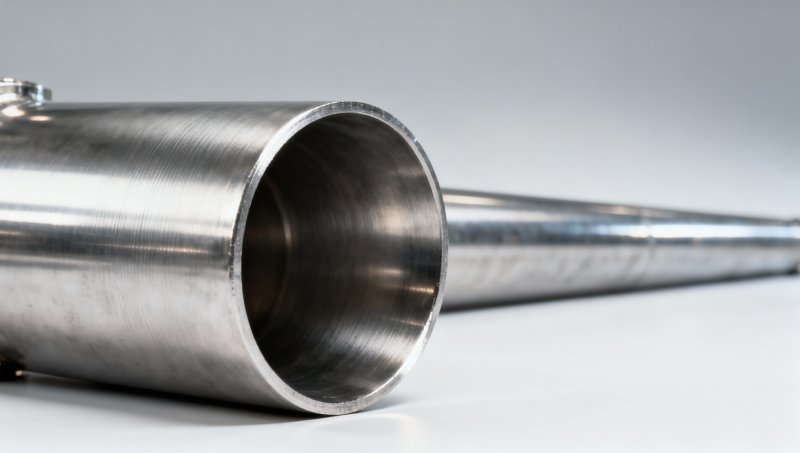
Surface roughness—measured in micrometers (µm) as Ra—is not just a cosmetic parameter. In food-grade stainless pipe, Ra directly correlates with microbial adhesion risk. Surfaces with Ra > 0.8 µm trap organic residues more readily, increasing biofilm formation by up to 3× compared to Ra ≤ 0.4 µm finishes. This forces facilities to clean every 4–8 hours in high-risk zones (e.g., dairy pasteurization lines), versus once per shift for Ra ≤ 0.3 µm electropolished tubing.
Hongteng Fengda’s stainless steel pipe production includes precision polishing and passivation services compliant with ASTM A967 and EN 10088-2. Our standard cold-drawn seamless tubes achieve Ra 0.3–0.5 µm; electropolished variants reach Ra ≤ 0.2 µm—validated via profilometer testing per ISO 4287. These values align with FDA 21 CFR Part 110 and EHEDG Guideline No. 20 requirements for hygienic process piping.
A real-world benchmark: Facilities using Ra 0.6 µm pipes report 22% higher CIP (Clean-in-Place) chemical consumption and 17% longer downtime per cleaning cycle than those specifying Ra ≤ 0.4 µm. That translates to ~140 extra cleaning hours annually for a 3-shift operation—directly impacting OEE (Overall Equipment Effectiveness).
How Passivation & Post-Fabrication Handling Affect Long-Term Hygiene Performance
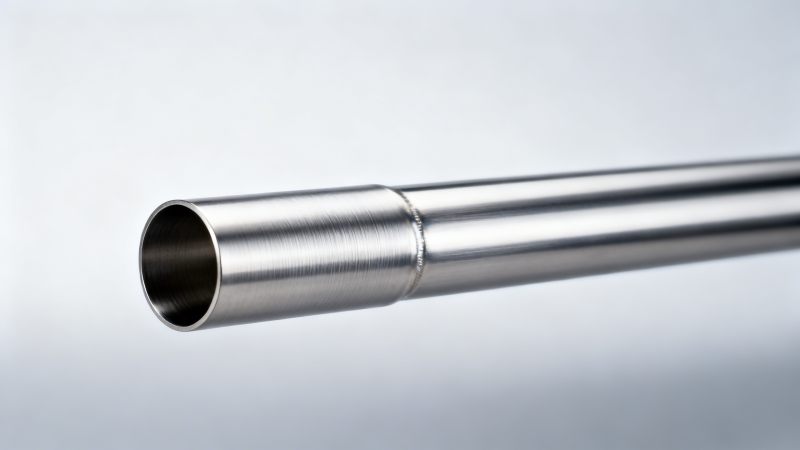
Passivation alone doesn’t guarantee low-maintenance surfaces. Improper post-fabrication handling—including grinding, welding, or mechanical cutting without subsequent re-passivation—can reintroduce free iron, micro-cracks, and embedded contaminants. Studies show that 68% of premature corrosion failures in food-grade stainless piping originate from uncontrolled weld heat-affected zones (HAZ), where Cr depletion drops local corrosion resistance below critical thresholds.
Hongteng Fengda applies citric acid-based passivation (ASTM A967 Method D) after all fabrication steps—including beveling, threading, and flange welding—and validates chromium oxide layer thickness (≥ 1.2 nm) via XPS (X-ray Photoelectron Spectroscopy). This ensures consistent resistance to acidic dairy effluents and alkaline caustic cleaners used in multi-stage CIP cycles.
Critical note: Surface finish degrades over time. Pipes with initial Ra 0.35 µm may measure Ra 0.62 µm after 18 months of continuous use in abrasive slurry applications. That’s why we recommend scheduled surface verification at 6-month intervals—especially for lines handling particulate-laden products like fruit pulps or meat emulsions.
Key Parameters Impacting Hygienic Integrity
This table reflects industry-validated thresholds—not theoretical ideals. For example, our QU120 Rail product line leverages identical surface control rigor during mill finishing, ensuring dimensional stability and oxide uniformity across carbon and medium-manganese grades used in food plant structural framing and conveyor supports.
Procurement Checklist: 5 Non-Negotiables for Hygienic Stainless Pipe Sourcing
When evaluating stainless pipe suppliers for food-grade use, technical and procurement teams must jointly verify these five criteria—each backed by auditable documentation:
- Profilometer-certified Ra reports: Not just “smooth finish” claims—demand third-party Ra test certificates per ISO 4287, with ≥5 measurement points per pipe length.
- Passivation validation data: Citric or nitric acid method must be specified, with pre/post-treatment Fe/Cr ratio analysis (XRF or XPS) showing Cr enrichment ≥12%.
- Traceable heat numbers: Each pipe batch must link to MTRs (Mill Test Reports) covering ASTM A312/A269 compliance, including intergranular corrosion test results (ASTM A262 Practice E).
- Weld inspection records: For fabricated assemblies, 100% visual + dye penetrant (ASTM E165) or 100% RT (radiographic testing) certification is mandatory.
- Delivery packaging protocol: Pipes must ship in sealed, nitrogen-purged plastic sleeves—not open crates—to prevent airborne contamination before installation.
Hongteng Fengda provides full traceability packages for all stainless pipe orders—including digital MTR access, Ra verification logs, and weld NDT reports—with lead times of 7–15 days for standard ASTM A312 TP304/TP316L sizes. We also support OEM-specific surface finish specifications, such as Ra ≤ 0.25 µm with mirror-polish verification per ASME BPE.
Why Global Food Processors Choose Hongteng Fengda for Stainless Steel Piping
Unlike general-purpose steel mills, Hongteng Fengda operates dedicated hygienic-grade production lines with ISO 22000-aligned process controls. Our stainless pipe meets ASTM, EN, and GB standards—and crucially, our QA team conducts 100% surface inspection on every coil before dispatch, not just sample-based checks.
We support end-to-end project execution: from technical consultation on Ra selection (e.g., Ra 0.3 µm for liquid dairy vs. Ra 0.5 µm for dry powder conveying), to custom bending, orbital welding prep, and coordinated delivery with your CIP system integrator. With stock availability across 12–30m lengths and wall thicknesses from 2.0mm to 12.7mm, we reduce project-critical path delays by an average of 22 days versus offshore-only sourcing models.
Ready to validate surface finish specifications for your next food-grade pipeline? Contact our engineering team for Ra profiling reports, passivation validation templates, or OEM-compliant quotation support—including full MTR packages and delivery timelines aligned to your commissioning schedule.
Please give us a message


Please enter what you want to find