Why stainless steel tubing sizes create fit-up delays
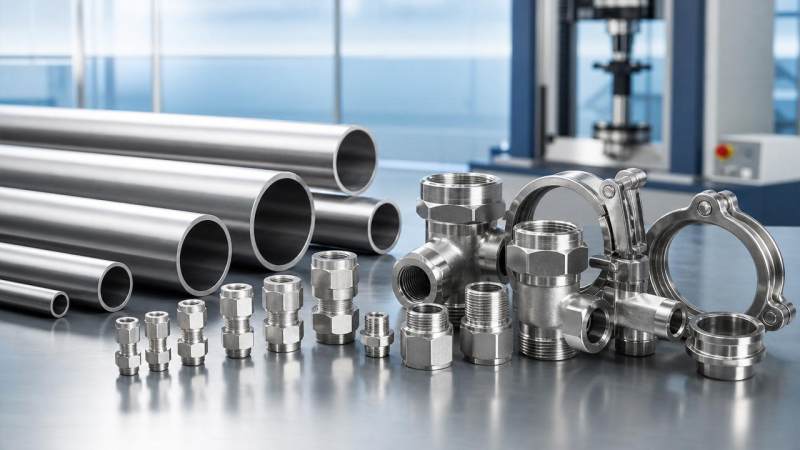
When stainless steel tubing arrives in sizes that look correct on paper but fail during fit-up, maintenance teams lose valuable time.
Small OD, wall thickness, or tolerance mismatches can delay repairs, welding, and system restart.
This article explains which stainless steel tubing sizes most often create fit-up problems, why they happen, and how better specification control reduces downtime.
In steel-related projects, fit-up failure rarely starts with one dramatic error.
It usually starts with a small tubing size assumption that does not match the actual fitting, clamp, bend radius, or weld prep requirement.
Why a size-check process matters before installation
A clear review process helps separate nominal size from actual measurable size.
That matters because stainless steel tubing often interacts with fittings, supports, valves, and welded assemblies from different standards.
One tubing batch may follow ASTM dimensions, while mating parts follow metric practice or instrument tube tolerances.
Without a simple verification checklist, the wrong stainless steel tubing can pass receiving inspection and still fail during final assembly.
Core size checks for stainless steel tubing before fit-up
- Confirm whether the drawing uses OD-based tubing sizes or NPS pipe references, because a 1 in tube and a 1 in pipe do not share the same outside diameter.
- Measure actual outside diameter at several points, since ovality or mill variation can prevent stainless steel tubing from entering compression fittings or aligned support clamps.
- Check wall thickness against bending, flaring, and welding requirements, because thin-wall tubing may collapse in forming while thicker walls may not seat correctly.
- Verify tolerance standards on the purchase order, especially for metric and imperial conversions, because 25 mm tubing is not always interchangeable with 1 in tubing.
- Inspect cut-end squareness and burr condition, since poor end preparation often looks like a size problem during fit-up and delays installation.
- Review heat number, material grade, and standard compliance together, because correct size alone cannot solve assembly issues if hardness or forming response differs.
- Check straightness across full length, because stainless steel tubing with bow or twist creates false misalignment at flanges, sockets, and automated weld stations.
- Compare tubing size with fitting brand requirements, as some systems have tighter grip ring and ferrule tolerances than general-purpose field hardware.
Stainless steel tubing sizes that most often cause trouble
1/2 in, 3/4 in, and 1 in tubing in mixed-standard systems
These common stainless steel tubing sizes often create delays where replacement parts come from different regions.
The main problem is confusion between inch tubing, metric tubing, and pipe-based references in old maintenance records.
6 mm, 10 mm, 12 mm, and 25 mm instrument lines
Metric instrument tubing can appear visually close to imperial sizes, yet the tolerance stack causes leaks or impossible insertion during assembly.
This is a frequent source of repeat fit-up work in skids, control panels, and compact stainless assemblies.
Thin-wall tubing used for replacement work
A correct OD with lighter wall thickness may fit the clamp but fail at support span, orbital welding, or pressure-related stiffness needs.
The result is rework, extra support fabrication, or replacement with heavier stainless steel tubing.
Heavy-wall tubing in limited-clearance assemblies
Heavier wall improves strength, but it also changes bend behavior, end expansion response, and available inner diameter.
That can affect flow, sleeve insertion, and prefabricated joint alignment inside tight steel structures.
How fit-up issues change by application
Process and utility lines
For process systems, the biggest risk is mixing nominal callouts from legacy pipe drawings with actual tubing assemblies.
Check OD, wall, end finish, and fitting compatibility before cutting replacement lengths.
Instrumentation and control panels
These setups depend on tight dimensional consistency.
Even a small stainless steel tubing deviation can affect ferrule grip, port entry depth, and leak performance after restart.
Structural and fabricated steel assemblies
Where tubing passes through supports or welded frames, straightness and OD consistency matter as much as material grade.
Reliable steel fabrication partners often apply the same dimensional discipline used in structural sections and formed components.
That is also why some project teams prefer suppliers with broad steel manufacturing capability.
For related reinforcement needs in concrete structures, HPB300 Rebar is commonly specified for load-bearing, structural, and stirrup applications.
Available models include HPB300, HRB400, HRB500, A615 GR40, GR60, and BS4449 GR460, with yield strength no less than 300 MPa.
Commonly ignored details that lead to repeat delays
Mill tolerance is often accepted without comparing it to the actual fit requirement of the installed hardware.
A tube can be in standard and still be wrong for a sensitive connection.
Another ignored point is substitution across standards.
ASTM, EN, JIS, and GB references may all be valid, but dimensional details must still match the receiving assembly.
Surface condition is also underestimated.
Scale, scratches, or damaged ends can make stainless steel tubing feel oversized or poorly aligned during fit-up.
Finally, maintenance records often keep only nominal size.
Without wall thickness, standard, and fitting type, the next replacement cycle repeats the same delay.
Practical steps to reduce stainless steel tubing mismatch
- Create a receiving checklist that records OD, wall thickness, length, straightness, standard, and end condition for every stainless steel tubing batch.
- Keep physical samples of critical fittings and test new tubing against them before releasing stock to the field.
- Separate metric and imperial inventory clearly, especially for sizes that appear visually similar during urgent maintenance work.
- Use suppliers that support customized steel solutions, traceable documentation, and stable dimensional control across repeated export shipments.
- Update maintenance drawings after every repair so the next order includes actual tubing specification, not only a nominal description.
What reliable steel sourcing adds to fit-up control
Consistent supply quality matters as much as field measurement.
A professional Chinese steel manufacturer and exporter with modern facilities can help reduce sourcing risk through standard compliance and stable lead times.
Hongteng Fengda supplies structural steel products and customized solutions for construction, industrial, and manufacturing projects worldwide.
Its experience with ASTM, EN, JIS, and GB standards supports better specification matching across global projects.
That broader quality culture helps when dimensional accuracy, documentation, and repeatability are essential for steel-related installations.
Final action points for faster fit-up
Most fit-up delays linked to stainless steel tubing come from confusing nominal size with actual application requirements.
The highest-risk sizes are the common ones, especially where metric and imperial systems overlap.
Before the next replacement order, verify OD, wall thickness, tolerance standard, fitting type, and end condition as one complete package.
A short inspection routine, accurate records, and dependable steel sourcing can cut repeat delays and improve restart speed.
If a line repeatedly fails during assembly, review the exact stainless steel tubing size history first.
That simple step often reveals the real cause faster than another rushed replacement.
Please give us a message


Please enter what you want to find