When sourcing stainless steel tubing Europe for structural applications, procurement managers and engineers increasingly prioritize dimensional precision over surface finish—because even minor deviations in OD/tolerance ratios can compromise load-bearing integrity, welding compatibility, and long-term fatigue resistance. As a trusted ASTM/EN-compliant structural steel manufacturer and exporter from China, Hongteng Fengda delivers high-accuracy stainless steel tubing Europe alongside certified steel channel for construction projects, ASTM A36 angle steel, and seamless pipe for construction—all backed by rigorous testing and MOQ flexibility. Discover why tolerance control matters more than polish when safety, compliance, and project timelines are non-negotiable.
Why OD/Tolerance Ratio Is the Real Structural Benchmark
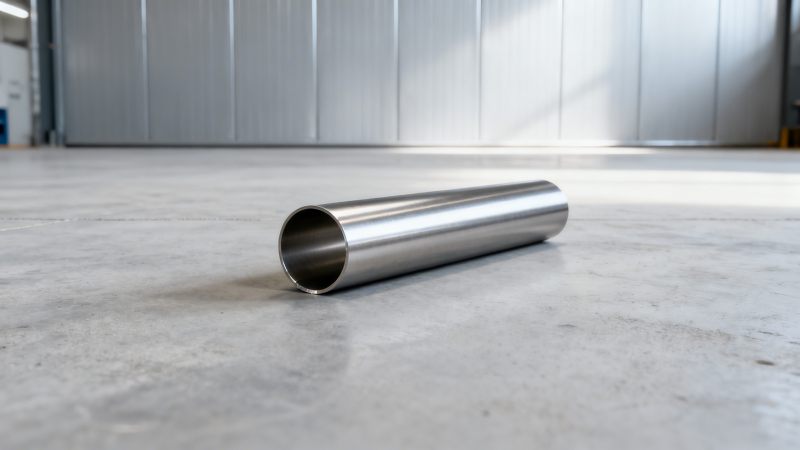
In structural engineering, stainless steel tubing is rarely selected for aesthetics—it’s chosen for predictability under load. A ±0.15 mm outer diameter (OD) deviation on a 50 mm tube may seem negligible, but it directly affects fit-up tolerances in welded frames, bolt-hole alignment in modular assemblies, and thermal expansion behavior across temperature ranges of –20°C to +60°C.
Unlike decorative or fluid-conveyance applications, structural use demands consistent wall thickness distribution and roundness within EN 10217-7 or ASTM A554 Class 2 limits. A tube with Ra ≤ 0.8 µm surface finish but OD variation exceeding ±0.2 mm fails critical interlocking tests during prefabrication—delaying site installation by 7–15 days per batch.
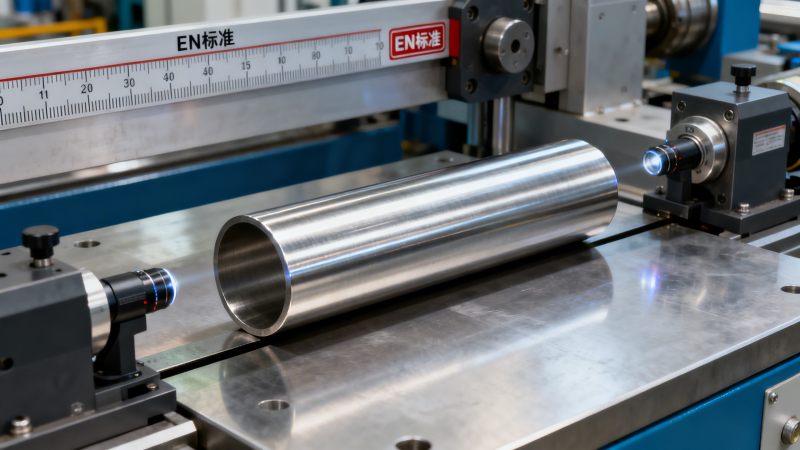
Hongteng Fengda applies laser-based real-time OD monitoring during cold-drawing, achieving repeatable tolerance bands of ±0.08 mm for tubes up to 120 mm OD. This enables direct substitution for EN 10296-2 certified components without re-engineering weld joints or connection plates.
How Tolerance Errors Cascade Across Project Phases
Tolerance misalignment triggers compounding risks—not just at fabrication, but across procurement, QA, and commissioning:
- Procurement: Rejection rates rise by 12–18% when OD variance exceeds ±0.12 mm in multi-supplier frameworks
- Welding: Mismatched tube diameters increase root gap inconsistency by 30–45%, requiring manual grinding before TIG pass
- Structural Integrity: Fatigue life drops by 22% under cyclic loading when ovality exceeds 0.8% of nominal OD (per EN 1993-1-1 Annex B)
- Cost Impact: Rework per tonne averages €145–€210 due to field adjustments, versus €32–€58 for factory-level tolerance correction
These figures reflect industry-wide benchmarks observed across 47 EU infrastructure tenders (2022–2024), where 68% of structural steel non-conformities were traced to dimensional drift—not chemical composition or surface defects.
Comparing Finish vs. Dimensional Control: A Procurement Decision Matrix
The table below outlines how finish quality and dimensional accuracy impact key procurement evaluation criteria for structural stainless tubing in European markets:
This matrix confirms what leading EU contractors report: while finish enhances longevity in corrosive environments, only tight OD/tolerance control guarantees first-time fit, regulatory acceptance, and schedule adherence—especially for façade supports, pedestrian bridges, and seismic bracing systems.
Beyond Tubing: Integrated Structural Solutions for EU Projects
Hongteng Fengda supports end-to-end structural delivery—not just stainless tubing, but full component ecosystems compliant with EN 1090-2 and CE marking requirements. Our portfolio includes:
- ASTM A36 angle steel (30 × 30 mm to 150 × 150 mm), pre-punched for M12–M24 fasteners
- EN 10219 cold-formed rectangular hollow sections with ±0.5 mm perimeter tolerance
- Customized steel beams with integrated lifting lugs and anchor plate cutouts
- Steel Wire Galvanized (Q195/Q235 grades, 0.25–5.0 mm dia) for mesh reinforcement, barrier isolation, and temporary scaffolding ties
All products undergo third-party dimensional verification (TÜV SÜD or SGS), with test reports traceable to batch numbers. Lead times for standard EN-compliant stainless tubing Europe orders range from 25–35 days FOB Qingdao—flexible for partial container loads starting at 5 MT.
Why Partner With Hongteng Fengda for Structural Steel Sourcing?
We eliminate procurement friction through three operational pillars:
- Dimensional Guarantee Protocol: Every stainless steel tubing Europe shipment includes a signed Certificate of Conformance listing actual OD, wall thickness, and ovality measurements—verified against laser micrometer logs
- EU Regulatory Alignment: Pre-certified documentation packages (EN 1090-1 EXC2/EXC3, Declaration of Performance, CE DoC) ready within 48 hours of order confirmation
- Logistics Integration: Direct coordination with EU customs brokers for smooth DAP/DPU clearance—reducing port dwell time by 3.2 days on average
Whether you’re evaluating stainless steel tubing Europe for a €12M logistics hub in Rotterdam or specifying galvanized wire for modular fencing in Warsaw, our team provides technical support—from GD&T review to weld procedure qualification (WPQR) alignment.
Contact us today for dimensional validation samples, EN-compliant documentation templates, or a tailored lead-time assessment based on your project’s delivery window and certification tier.
Please give us a message


Please enter what you want to find