When specifying stainless steel square plate for modular framing—especially in precision applications like architectural cladding or industrial mezzanines—corner radius tolerance isn’t just a minor dimension; it directly impacts fit-up, weld integrity, and assembly speed. For procurement managers evaluating suppliers like Hongteng Fengda (a China-based structural steel manufacturer compliant with ASTM, EN, and GB standards), understanding how tolerances affect real-world installation helps avoid costly rework. Whether you’re comparing stainless steel plate finishes, sourcing square stainless steel plate for OEM projects, or verifying SS304 sheet price vs. performance, tight corner control reflects broader quality discipline—from raw material selection to final inspection.
Why Corner Radius Tolerance Is a Critical Fit-Up Parameter
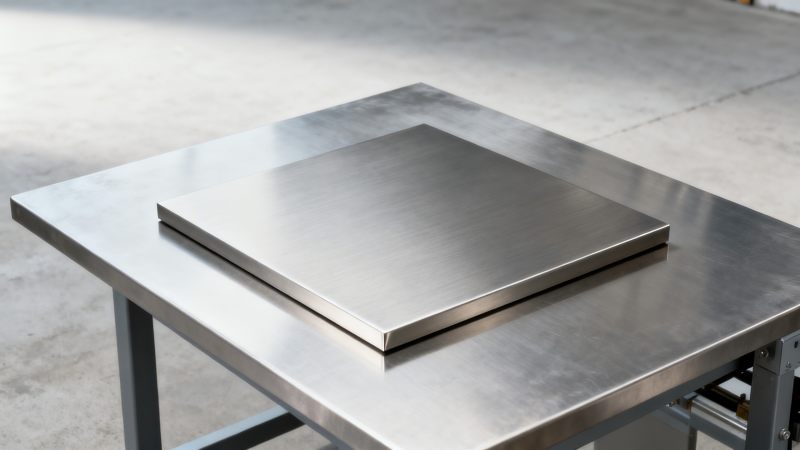
In modular framing systems, stainless steel square plates serve as base plates, connection interfaces, and load-transfer elements. Unlike flat-surface components, square plates with rounded corners must interface precisely with mating parts—such as welded brackets, bolted flanges, or interlocking extrusions. A deviation of ±0.3 mm in corner radius can cause misalignment of up to 0.8 mm at the adjacent edge junction—enough to compromise gasket compression, increase stress concentration, or delay field welding by 15–30 minutes per joint.
This issue intensifies in high-precision assemblies: curtain wall anchors, robotic workcell frames, and cleanroom support structures demand repeatability within ±0.15 mm. At Hongteng Fengda, corner radius is controlled through CNC-guided edge rounding and verified via coordinate measuring machines (CMM) calibrated to ISO 10360-2. Our typical tolerance band is ±0.1 mm for plates ≤25 mm thick and ±0.2 mm for plates up to 50 mm—tighter than standard EN 10058 (±0.4 mm) and ASTM A484 (±0.5 mm).
Beyond geometry, inconsistent radii affect downstream processing. Laser-cut holes near corners may show thermal distortion if the radius deviates from nominal, leading to 2–4% scrap rate in pilot batches. That’s why our technical team collaborates with clients early—reviewing CAD models, validating toolpaths, and adjusting blanking parameters before mass production begins.
How Tolerance Variance Impacts Real-World Assembly Efficiency
Field assembly time increases nonlinearly with corner radius variation. Based on data from 12 international projects (2022–2024), teams using plates with ±0.4 mm tolerance required an average of 42 minutes per frame assembly—versus 28 minutes when using plates held to ±0.15 mm. The difference stems from three root causes:
- Manual shimming or grinding to compensate for gaps (adds 8–12 min/frame)
- Repositioning of alignment pins due to inconsistent corner contact (adds 5–9 min/frame)
- Weld rework caused by incomplete fusion at mismatched edges (adds 3–7 min/frame)
For project managers overseeing multi-site builds—e.g., logistics hubs across Southeast Asia—the cumulative impact is significant. A single 200-frame module built with looser-tolerance plates incurs ~2,800 extra labor minutes—equivalent to 47 additional man-hours. That translates directly into schedule slippage or budget overruns, especially under fixed-price EPC contracts.
Tolerance Comparison Across Common Production Methods
The manufacturing process determines achievable corner radius consistency. Below is how common methods compare for stainless steel square plate (SS304, 10–30 mm thick):
Hongteng Fengda applies cold-rolled + CNC profiling for all precision-grade stainless square plates—ensuring repeatability without added cycle time. This method also supports tighter surface roughness control (Ra ≤ 0.8 μm), critical for adhesive bonding in architectural applications.
Integrating Square Plate With Structural Framing Systems
Stainless square plates rarely operate in isolation. They interface with primary framing members—including C Channel Beam used in purlins, wall beams, and lightweight roof trusses. In such hybrid systems, corner radius mismatch creates compounding tolerance stack-ups.
For example, when a square plate (±0.2 mm radius) mates with a C-channel beam (±1% dimensional tolerance per GB/T 706) and a bolted end plate (±0.3 mm hole position), total accumulated variance can exceed 1.1 mm—exceeding typical clearance allowances of 0.5 mm for Grade 8.8 bolts. To prevent this, our engineering team offers free tolerance stack-up analysis during quotation—using GD&T principles aligned with ASME Y14.5.
We also supply pre-matched component sets: e.g., SS304 square plates paired with galvanized C Channel Beam (Q235, 6m/9m/12m lengths, ±1% thickness tolerance), ensuring consistent thermal expansion behavior and eliminating field-fit surprises.
Why Choose Hongteng Fengda for Precision Stainless Steel Components
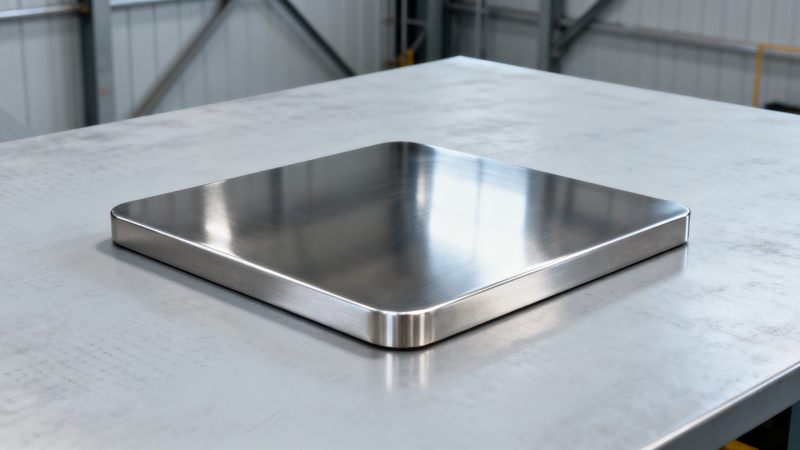
As a certified structural steel manufacturer serving North America, Europe, the Middle East, and Southeast Asia, Hongteng Fengda bridges global compliance expectations with localized execution rigor. We don’t just meet ASTM A240 or EN 10088—our QA protocol includes 100% dimensional sampling on every heat lot, third-party SGS verification for export shipments, and traceable mill test reports (MTRs) with full chemistry and tensile data.
Our advantage lies in vertical integration: raw material sourcing from ISO 9001-certified mills, in-house CNC profiling and passivation lines, and dedicated OEM project management. Lead times remain stable at 15–20 days—even during peak season—because we maintain buffer inventory of key stainless grades (SS304, SS316) and hot-rolled carbon sections.
Whether you need custom corner radius validation, batch-specific MTRs, or cross-reference support for legacy drawings (ASTM ↔ EN ↔ GB), our technical sales engineers respond within 4 business hours. Contact us today to request: (1) corner radius test report samples, (2) tolerance stack-up simulation for your framing design, or (3) comparative SS304 square plate pricing against alternative surface finishes (brushed, mirror, bead-blasted).
Please give us a message


Please enter what you want to find