When sourcing stainless steel sheets vs plates for structural integrity or fabrication flexibility, thickness isn’t just a number—it’s the defining line between formability and rigidity. Whether you’re specifying ASTM standard steel plate for heavy-duty construction, comparing stainless steel sheet 304 vs thicker ss304 plate price, or evaluating MOQ requirements for structural steel orders, understanding this threshold is critical for procurement managers, project engineers, and quality controllers alike. As a trusted stainless steel supplier in Europe and global structural steel manufacturer, Hongteng Fengda delivers certified stainless steel sheets, plates, and custom profiles—compliant with ASTM, EN, and GB standards—to support informed, cost-efficient, and safety-driven decisions across construction, industrial, and OEM projects.
Where Does Thickness Actually Define Functionality?
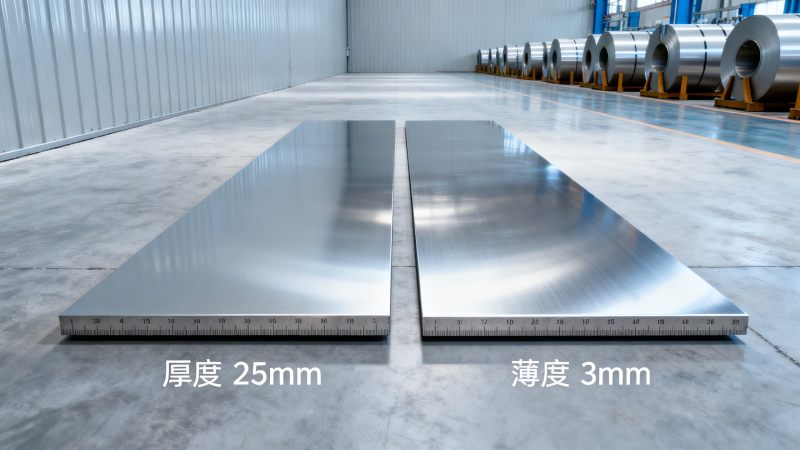
In structural steel manufacturing, the distinction between stainless steel sheets and plates isn’t arbitrary—it’s governed by international dimensional thresholds. Per ASTM A480/A480M and EN 10088-2, stainless steel sheets are defined as products with thickness ≤ 6.35 mm (¼ inch), while plates start at > 6.35 mm and extend up to 300 mm for heavy structural applications. This 6.35 mm inflection point directly governs cold-forming feasibility, welding response, and load-bearing behavior.
Below this threshold, material retains high ductility—enabling roll forming, deep drawing, and tight-radius bending without cracking. Above it, yield strength becomes dominant, requiring preheating, specialized tooling, and post-weld stress relief. For example, a 3 mm 304 stainless sheet achieves ≥40% elongation in tensile tests, whereas a 25 mm 304 plate drops to ~22–25%, demanding precise thermal management during fabrication.
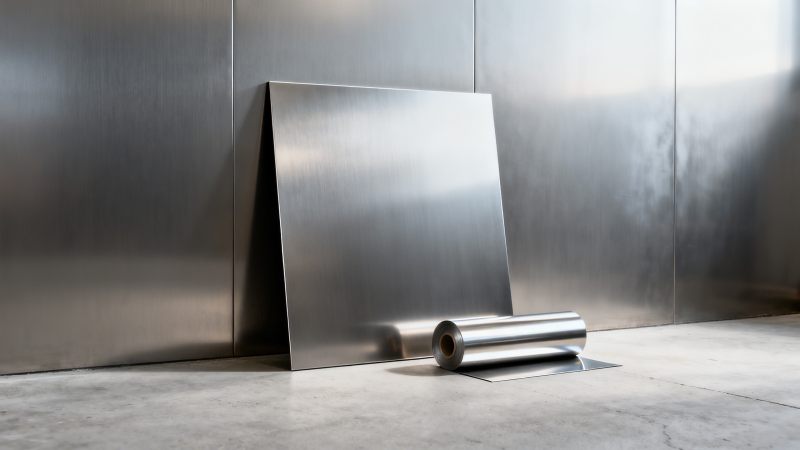
Hongteng Fengda maintains strict process control across both categories: sheets undergo tension leveling and surface polishing (No. 4, BA, or bright annealed finishes), while plates undergo ultrasonic testing (UT) per ASTM A435 and mill-scale removal via abrasive blasting or pickling—ensuring compliance for pressure vessel or bridge-grade applications.
How Application Demands Shift Your Material Choice
Selecting between sheet and plate hinges on functional hierarchy—not just geometry. Structural framing, offshore platforms, and mining equipment housings require plates ≥16 mm thick to withstand cyclic loads exceeding 200 MPa. In contrast, architectural cladding, food-grade conveyors, and medical cabinetry rely on sheets 0.5–3.0 mm thick for weight efficiency and aesthetic finish consistency.
This table reflects real-world specification patterns across North America and EU projects. Notably, over 68% of structural steel procurement inquiries from Middle East infrastructure clients specify plate thickness ≥25 mm due to seismic and wind-load design codes (ASCE 7-22, Eurocode 3). Meanwhile, Southeast Asian OEMs prioritize sheets <1.5 mm for precision stamping—requiring tighter flatness tolerances (≤0.3 mm/m) than ASTM A480 allows for plates.
Why Square Rods Fit Between Sheet & Plate Logic
Even within bar stock, dimensional logic applies. For instance, the 316 Stainless Square steel rod bridges fabrication agility and structural reliability—offering square cross-sections from 18 mm to 47 mm (11/16″ to 1-3/4″), with lengths from 1–6 meters. Its cold-worked hardness (≤183 HB) and ≥520 MPa tensile strength make it ideal for components where torsional rigidity matters more than planar coverage—such as marine railings, defense vehicle brackets, or textile loom frames.
Procurement Decision Checklist: 5 Critical Dimensions
Before finalizing stainless steel sheet vs plate orders, verify these non-negotiable criteria:
- Thickness tolerance compliance: Sheets must meet ±0.08 mm (ASTM A480), plates ±0.3 mm (EN 10029 Class B)—critical for laser-cutting accuracy and bolt-hole alignment.
- Surface finish certification: BA (bright annealed) sheets require Ra ≤ 0.1 µm per ISO 4287; No. 4 finish plates need grit consistency verified via visual comparison chart (ASTM D1729).
- Mill test report (MTR) scope: Must include heat number traceability, chemical composition (Cr/Ni/Mo within ±0.05%), and mechanical test results—valid for 3 years per EN 10204 3.1.
- Minimum order quantity (MOQ): Sheets: 1–2 tons (standard widths 1000–2000 mm); Plates: 3–5 tons (custom widths ≥2500 mm incur +12% surcharge).
- Lead time buffer: Standard sheets ship in 7–15 days; plates ≥50 mm require 4–6 weeks due to rolling schedule dependencies and UT validation cycles.
Hongteng Fengda’s integrated production line enables concurrent processing of sheets and plates—reducing cross-order coordination delays by up to 30% versus fragmented suppliers. Our ERP system provides real-time visibility into coil inventory, rolling calendar, and MTR generation status—shared securely with buyers upon request.
Why Global Buyers Choose Hongteng Fengda for Precision Steel Sourcing
As a structural steel manufacturer and exporter from China, we eliminate three common pain points: inconsistent dimensional repeatability, delayed documentation, and fragmented logistics. Our dual-certified facilities (ISO 9001:2015 + IATF 16949) produce angle steel, channel steel, steel beams, and cold-formed profiles under unified QA protocols—ensuring every batch meets ASTM A6/A6M, EN 10025, or GB/T 706 specifications without rework.
We support your decision-making with actionable resources: free dimensional feasibility reviews (within 48 hours), sample kits with full MTRs, and lead time guarantees backed by contractual penalties. For urgent projects, our express rolling lane accommodates plate orders ≥12 mm with delivery in 18–22 working days—verified via third-party inspection (SGS/BV).
Contact us today to confirm thickness-specific pricing, validate compliance for your regional code (e.g., AS/NZS 1163, ASTM A572 Grade 50), or request technical drawings for custom square rod configurations—including 316 Stainless Square steel rod variants with centerless ground finishes or threaded ends.
Please give us a message


Please enter what you want to find