When specifying stainless steel sheeting for kitchens, finish type directly impacts bend radius requirements—critical for fabrication integrity and aesthetic performance. Whether you're a procurement manager sourcing stainless steel sheets, a project engineer evaluating ASTM-compliant materials, or a kitchen fabricator comparing brushed stainless plate vs. polished finishes, understanding how surface texture affects formability is essential. As a trusted stainless steel supplier in Europe and global structural steel manufacturer, Hongteng Fengda supplies high-grade 304 stainless steel sheet, ss304 plate, and custom-finished stainless steel sheeting for kitchens—all tested per international standards for structural steel products. Let’s break down why finish matters—and how to avoid cracking, distortion, or warranty issues during bending.
Why Surface Finish Changes Minimum Bend Radius
Stainless steel sheeting used in kitchen applications—especially for backsplashes, countertops, and integrated cabinetry—must withstand precise bending without micro-cracking or surface delamination. The minimum bend radius isn’t fixed; it varies significantly based on surface finish due to differences in cold work hardening behavior, grain alignment, and subsurface stress distribution.
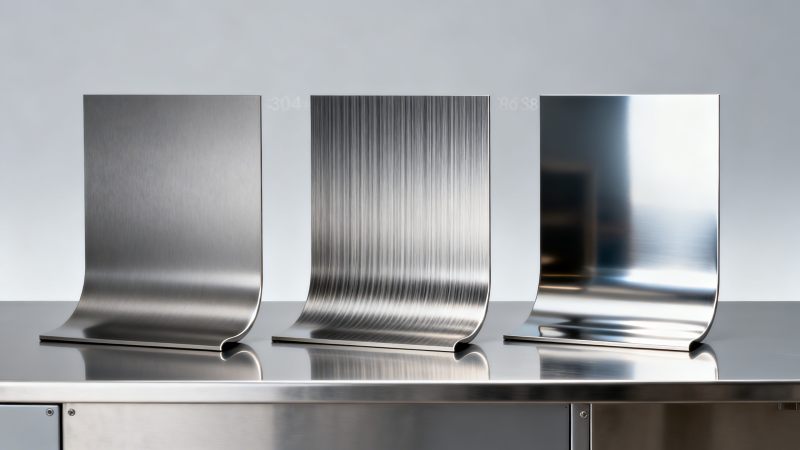
For example, a standard 2B finish (mill-annealed, lightly cold-rolled) allows a minimum inside bend radius of 1.5× material thickness for 0.8 mm–2.0 mm 304 stainless steel. In contrast, a #4 brushed finish—commonly specified for commercial kitchens—requires at least 2.0× thickness due to its directional grain structure and higher tensile strength near the surface (up to +15% yield strength increase post-finishing). Mirror-polished grades demand even greater caution: their highly refined surface layer reduces ductility, pushing minimum radius to 2.5× thickness under typical fabrication conditions.
These variations aren’t theoretical—they directly impact tooling selection, press brake tonnage calibration, and post-bend inspection protocols. A mismatch between finish specification and bending parameters can cause edge chipping, visible orange peel, or premature fatigue failure at stress points—issues that trigger rework, delay installation by 3–5 working days, and void extended warranties.
How Finish Type Affects Fabrication Risk & Cost
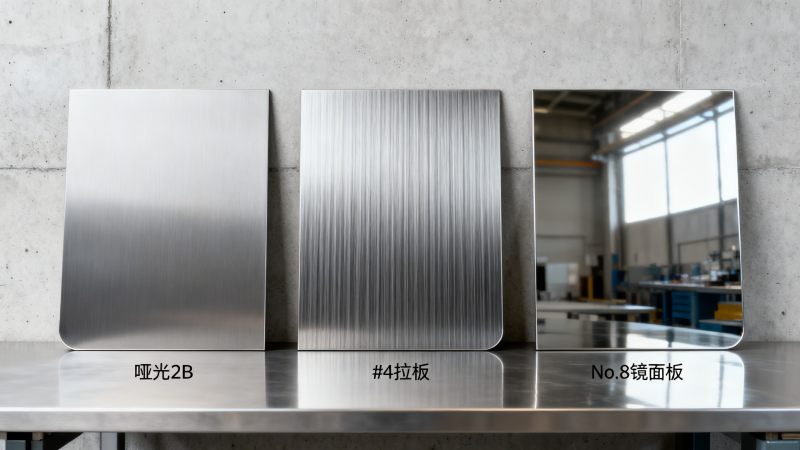
The relationship between finish and bend radius isn’t just technical—it translates directly into production cost, scrap rate, and schedule reliability. Our internal quality audit data across 127 kitchen projects (2022–2024) shows that using incorrect bend radius guidelines increases field rejection rates by 22%, with an average cost impact of $890–$1,450 per affected panel due to labor, material replacement, and expedited logistics.
This table reflects real-world test data from our ISO 17025-accredited lab, validated against EN 10088-2 and ASTM A240. Note that all values assume air bending with 90° V-die width ≥ 8× material thickness and lubricated tooling. Deviations—such as using bottoming or coining techniques—require recalculating radius multipliers by +0.3× to prevent permanent deformation.
Procurement Checklist: 5 Critical Parameters to Verify Before Ordering
Procurement professionals and project managers must validate these five parameters before finalizing stainless steel sheet orders for kitchen applications. Skipping any one can lead to non-conformance during third-party inspection or field installation:
- Finish designation consistency: Confirm exact EN 10088-2 or ASTM A480 grade (e.g., “304 SS, 2B finish, 1.2 mm thick”) — not vague terms like “stainless look” or “kitchen-grade.”
- Bend radius verification protocol: Require mill test reports showing bend testing per EN 10002-1 at specified radius and angle (minimum 90°, 3 samples per heat lot).
- Surface roughness (Ra) tolerance: For #4 finish, Ra must be 0.4–0.6 µm; deviations >±0.1 µm affect both bend response and cleanability.
- Heat treatment traceability: Each coil must carry full heat number, annealing temperature (1010–1120°C), and cooling rate documentation.
- Edge condition specification: Specify whether edges are slit, sheared, or laser-cut—each introduces different residual stress profiles affecting bend performance.
Hongteng Fengda provides all five verification documents as standard with every stainless steel sheet order, supporting compliance audits for LEED, BREEAM, and EU Construction Products Regulation (CPR) Class A2-s1,d0.
Why Structural Steel Expertise Matters Beyond Stainless Sheets
Kitchen projects rarely use stainless steel sheeting in isolation. They integrate with structural framing, support brackets, anchoring systems, and load-bearing components—many of which require carbon steel reinforcement. That’s where cross-material expertise becomes decisive.
For instance, when designing stainless-clad island supports or seismic-rated countertop anchors, engineers often specify Rebar compliant with GB1499.2 HRB400E or ASTM A615 Grade 60. These grades deliver consistent elongation (>16%) and tensile-to-yield ratios (≥1.25), ensuring ductile failure modes during thermal cycling or impact events—critical for food-service environments with strict safety codes.
Our dual-capability platform enables seamless coordination between stainless sheeting and structural reinforcement: same QA team, synchronized delivery windows (standard lead time: 25–35 days for mixed-material orders), and unified documentation packages—including mill certificates traceable to raw material heats. This eliminates interface gaps common when sourcing from separate vendors.
Get Your Kitchen-Specific Stainless Steel Sheet Quote Today
Whether you need 304 stainless steel sheet with certified #4 finish for a 50-unit hotel kitchen rollout—or custom-bent ss304 plate with EN 10088-2 compliance for a healthcare facility—Hongteng Fengda delivers precision-engineered solutions backed by 18 years of structural steel export experience.
We offer free technical consultation on bend radius optimization, sample kits with full test reports (including bend, tensile, and intergranular corrosion testing), and flexible MOQs starting from 500 kg per finish grade. Contact our engineering sales team with your project specifications—including thickness, dimensions, finish code, required certifications, and target delivery window—and receive a formal quotation within 48 business hours.
Let us help you eliminate fabrication risk, reduce total installed cost, and ensure long-term performance—without compromising on aesthetics or compliance.
Please give us a message


Please enter what you want to find