Choosing the right stainless steel sheet for kitchen environments is not only about appearance—it directly affects scratch resistance, denting, corrosion, and long-term maintenance. For after-sales maintenance teams, understanding how thickness relates to daily wear helps identify common performance issues faster, recommend practical replacements, and support end users with more reliable, cost-effective solutions.
Why does thickness matter so much for stainless steel sheet for kitchen applications?
Thickness is one of the first variables maintenance personnel should check because it directly changes how a panel behaves under impact, abrasion, vibration, and repeated cleaning. In kitchen settings, stainless surfaces are exposed every day to cookware contact, edge knocks, moisture, detergent residue, and temperature changes. A sheet that looks acceptable at installation may begin to show oil-canning, edge deformation, or surface waviness within 6 to 24 months if the thickness is too light for the duty level.
For a stainless steel sheet for kitchen use, thickness also affects how the sheet supports fasteners, bends around corners, and resists local denting on counters, wall cladding, cabinet skins, splashbacks, and equipment covers. In after-sales work, many complaints described as “poor material quality” are actually a mismatch between sheet gauge and operating conditions. A thin decorative panel in a high-contact preparation zone will wear differently from the same finish installed on a low-touch wall area.
As a practical reference, light decorative kitchen panels may fall around 0.4 mm to 0.6 mm, while more durable working surfaces or protective skins often move into the 0.7 mm to 1.2 mm range or higher depending on support structure. Thickness alone does not guarantee service life, but it strongly influences the rate at which visible wear becomes a maintenance issue.
What types of daily wear are most affected by sheet thickness?
The most common wear categories are scratching, denting, flexing, edge distortion, and surface fatigue around fixing points. Scratching is often more associated with finish and cleaning method, but visible scratch depth becomes more problematic when the panel flexes under pressure. Denting is more directly linked to thickness because thin sheets absorb local impact with less resistance, especially near unsupported spans.
Repeated door contact, trolley impact, utensil drops, and equipment vibration also create cumulative stress. In commercial kitchens, even 20 to 50 small contacts per shift can gradually distort a thin stainless face sheet if backing support is weak. This is why maintenance teams should not judge by alloy grade alone. Installation method, reinforcement, and contact frequency matter just as much.
Another overlooked factor is cleaning pressure. Aggressive pad cleaning on thin and highly polished surfaces can accelerate finish loss in visible zones. Over a 12-month cycle, this creates customer dissatisfaction even when corrosion is not present. For service teams, linking wear pattern to thickness helps separate cosmetic maintenance from replacement needs.
Quick wear checklist for service visits
- Check whether dents are isolated impact marks or signs of broad panel flexing.
- Inspect edge areas, cut-outs, and fastening points where thin sheets usually fail first.
- Review whether the affected area is decorative, semi-contact, or heavy-contact use.
- Compare the visible surface condition with the panel support spacing behind it.
- Ask how often abrasive cleaning tools are used per day or per week.
How can after-sales teams judge the right thickness for different kitchen zones?
The correct answer depends on use intensity, support structure, appearance expectations, and maintenance budget. Not every kitchen area needs heavy gauge material. In fact, overspecifying thickness in low-contact areas can raise replacement cost without creating clear service value. The more useful approach is zoning: divide the kitchen into decorative areas, splash zones, preparation zones, equipment enclosures, and impact-prone circulation zones.
For example, wall cladding behind sinks may need stronger corrosion resistance and easy cleaning, but not necessarily the same dent resistance required for trolley-side panels or worktable skins. In the field, a stainless steel sheet for kitchen maintenance decision is usually strongest when the team documents three things: approximate thickness, backing condition, and contact frequency. These three checkpoints often explain 70% or more of recurring wear complaints.
The table below gives a practical comparison that service teams can use during inspection or replacement planning. Values are general working ranges, not fixed design rules, and should always be checked against actual panel structure and end-user requirements.
This comparison shows why there is no universal gauge for every stainless steel sheet for kitchen task. A 0.5 mm panel may perform well for a protected wall area yet fail early on a service corridor corner. Maintenance teams that classify by zone can make more defensible replacement recommendations and reduce repeated service calls.
Which field questions should be asked before recommending replacement?
Good after-sales diagnosis starts with a few direct questions rather than immediate material substitution. Ask how long the current panel has been in service, whether damage appeared within the first 3 months or after 1 to 2 years, and whether the issue is isolated to one position or repeated across similar zones. Early failure often suggests thickness mismatch, insufficient support, or installation stress rather than normal wear.
You should also confirm whether the kitchen is domestic, semi-commercial, or full commercial. A household island panel and a school canteen service line may use similar-looking stainless finishes but operate under very different contact loads. When the use pattern changes, the same thickness can produce a very different maintenance cycle.
Finally, record whether the customer values appearance, impact resistance, or low replacement cost most. These priorities influence whether to recommend a thicker stainless sheet, a different finish, additional backing, or a change in cleaning practice.
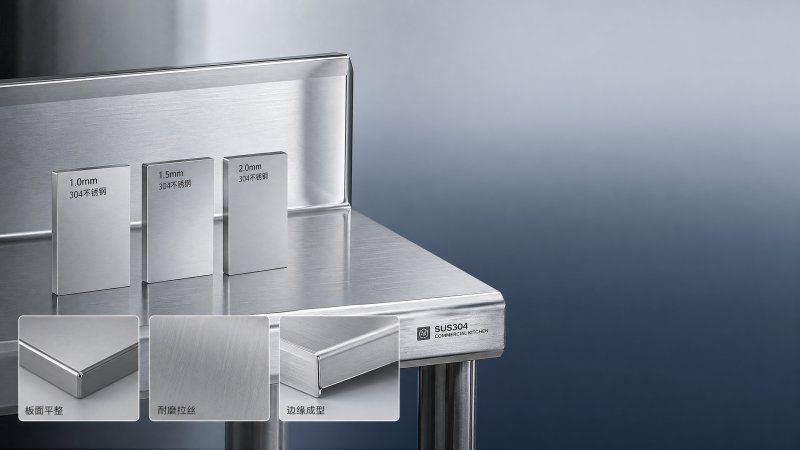
What are the most common mistakes when evaluating daily wear on kitchen stainless sheet?
One major mistake is assuming that every scratch indicates poor material quality. Many visible marks come from cleaning pads, dragged cookware, or directional brushing that was not maintained during repair. If the stainless steel sheet for kitchen surface has a fine brushed finish, inconsistent cleaning direction can make minor marks appear worse under overhead lighting, especially within 1 to 2 meters of eye level.
A second mistake is confusing corrosion with contamination. Brown staining near edges may result from trapped iron particles, failed sealants, or adjacent carbon steel contact during fabrication or installation. Maintenance teams should inspect the source of contamination before specifying a thicker replacement. More thickness will not solve a contamination pathway.
A third mistake is overlooking substrate and support. Thin sheet bonded to a flat, stable backing can outperform a thicker sheet installed over uneven framing. If the support spacing is wide or the adhesive bond has failed, movement causes noise, visible waviness, and local stress concentration. In service terms, this can shorten the acceptable appearance life by several months even where the stainless itself remains intact.
How can common misjudgments be corrected quickly?
The fastest correction method is to inspect wear by category instead of by complaint wording. “It looks old” should be broken down into scratch density, dent depth, corrosion spot count, edge lifting, and finish consistency. Once the defect type is identified, the maintenance response becomes more accurate and more economical.
The table below summarizes frequent service misunderstandings and the more reliable interpretation path. This is especially useful for teams handling multiple sites where response speed matters.
By moving from vague complaint language to root-cause analysis, service teams can reduce unnecessary replacement and improve customer confidence. This is often more valuable than simply moving to the next thicker sheet without understanding why the original surface failed.
Practical warning signs that need faster action
- Repeated dents in the same impact path within 30 to 90 days.
- Joint-edge staining that returns soon after cleaning.
- Fastener loosening caused by panel movement or vibration.
- Visible distortion around cut-outs for sinks, switches, or equipment handles.
Can support materials and related steel products improve kitchen panel performance?
Yes. A stainless face sheet does not work alone. In many projects, long-term service results depend on the combination of face material, substructure, reinforcement, and fabrication consistency. For example, when a kitchen installation includes equipment casing, protective covers, or wall systems tied to broader steel framing, the backing or carrier material strongly affects flatness and durability.
This is where broader steel supply capability matters. Structural steel manufacturers that understand forming, tolerances, and export standards can support not only main construction members but also compatible support materials used in fabricated assemblies. In some industrial or semi-enclosed applications, carbon steel coil products are processed into backing components, shells, or formed supports where direct food-contact stainless is not required on the exposed side.
For buyers handling integrated maintenance or replacement planning, products such as Hot Rolled Coil Hrc may be relevant in non-decorative support applications. Typical supply details can include wall thickness from 0.17 mm to 3.5 mm, width from 600 mm to 1250 mm, and common standards such as ASTM, JIS, EN, ISO, and CE-related export requirements. These products are generally valued for workability, formability, and cost control in fabricated steel parts.
When should maintenance teams think beyond the stainless face sheet?
You should broaden the review when the same visual damage keeps returning after sheet replacement. If a panel is replaced twice in 12 months but dents or waviness reappear, the issue may lie in frame geometry, support thickness, or vibration from adjacent equipment. Simply upgrading the visible sheet can increase cost without solving the service problem.
This is also relevant for larger refurbishment jobs where kitchen stainless surfaces are connected to utility housings, ventilation structures, water machine covers, or steel support skins. In those cases, using a supplier experienced in both structural steel and fabricated steel components can simplify procurement, especially when standard and customized parts must match delivery windows.
Hongteng Fengda, as a structural steel manufacturer and exporter from China, supports global construction, industrial, and manufacturing projects with angle steel, channel steel, steel beams, cold formed steel profiles, and customized structural steel components. For maintenance contractors and sourcing teams, that kind of supply range helps when a repair task expands from a single stainless panel into a broader steel assembly review.
How should after-sales teams balance thickness, cost, and service life?
The best balance comes from life-cycle thinking rather than unit price alone. A thinner stainless steel sheet for kitchen use may lower first cost, but if it triggers repeated call-backs, premature appearance complaints, or customer downtime, the total service cost rises quickly. On the other hand, specifying a heavy sheet for every location can overinvest in areas with minimal contact risk.
A useful method is to compare three numbers: expected replacement interval, maintenance frequency, and consequence of failure. For example, a low-touch decorative sheet that lasts 5 to 8 years with minor cleaning care may not justify a thicker option. But a high-contact service panel that suffers visible dents every 6 to 12 months may justify an upgrade in thickness, reinforcement, or protective design.
Cost discussions should also include fabrication and installation effects. Thicker sheets may require different forming force, edge treatment, or support planning. If the maintenance team knows the project lead time is tight, confirming available stock sizes, tolerance expectations, and replacement quantities early can avoid delays later.
What is a practical decision path for replacement planning?
- Identify whether the failure is cosmetic, structural, or corrosion-related.
- Measure or verify the current gauge and inspect backing support.
- Estimate contact frequency per day and cleaning intensity per week.
- Check whether the affected area is decorative, splash, work, or impact zone.
- Compare the cost of same-gauge replacement versus gauge upgrade plus support improvement.
- Confirm lead time, standards, and dimensional tolerance before final recommendation.
This process helps maintenance teams explain why a recommendation is technically reasonable and budget-aware. It also creates better documentation for repeat sites, where future decisions can be made faster and with fewer disputes.
FAQ summary table for quick field reference
The following table condenses the most common service questions around stainless steel sheet for kitchen installations into a simple action guide.
For many after-sales teams, this kind of structured review is more useful than relying on visual judgment alone. It improves replacement accuracy, helps communicate with end users, and supports more stable long-term maintenance planning.
What should you confirm before ordering or advising on a replacement?
Before placing an order or giving a final recommendation, confirm six essentials: thickness range, surface finish, dimensions, support condition, application zone, and delivery expectation. Even a well-selected stainless steel sheet for kitchen use can underperform if dimensional tolerance, edge processing, or installation details are ignored. Service teams should also verify whether the project requires compliance with ASTM, EN, JIS, or GB-related material expectations, especially in export-oriented or multinational facility environments.
For larger maintenance programs, it is helpful to work with suppliers that can support both standardized products and customized steel components. Hongteng Fengda serves buyers across North America, Europe, the Middle East, and Southeast Asia with structural steel products, OEM-oriented solutions, stable production capacity, and dependable lead times. That matters when a kitchen maintenance issue is connected to wider steel replacement needs across industrial or manufacturing facilities.
If you need to compare gauges, assess wear-related failure, review support materials, or discuss a broader steel sourcing plan, clear technical communication at the start will save time later. You can contact us to confirm parameters, product selection, delivery cycles, customized solutions, applicable standards, sample support, and quotation details based on your actual maintenance or procurement scenario.
Why choose us for steel-related maintenance and sourcing support?
We understand that after-sales maintenance teams do not only need material descriptions—they need practical answers that reduce repeat failures. Our experience in structural steel manufacturing and export helps us support buyers with realistic advice on specifications, fabrication compatibility, standards alignment, and supply continuity.
Whether your project involves stainless-facing assemblies, structural supports, cold formed profiles, or coordinated sourcing for replacement components, we can help you sort out the key variables before purchase. That includes parameter confirmation, thickness selection logic, tolerance discussion, lead time planning, and whether standard or custom processing is the better route.
Contact us if you want to discuss a current kitchen wear issue, compare material options, evaluate support steel requirements, or request a quotation for related steel products. A focused review of your drawings, dimensions, application environment, and service expectations is usually the fastest way to move from repeated maintenance problems to a more durable solution.
Please give us a message


Please enter what you want to find