Performance Comparison Between Stainless Steel Embossed Plate and Mirror Stainless Sheet
Choosing between a stainless steel embossed plate and a mirror stainless sheet can significantly influence project costs, durability, and aesthetics. As a trusted structural steel manufacturer from China, Hongteng Fengda helps builders and engineers assess ROI by comparing performance, finish, and ss sheets price across different specifications—whether stainless steel corrugated sheet, flat plate stainless steel, or stainless flat sheet—so you can identify the ideal option for both visual impact and long-term structural value. For construction professionals, the decision goes beyond appearance; it affects corrosion resistance, maintenance cycles, and even light reflection in architectural applications. While stainless steel embossed plates are typically preferred for non-slip, durable, and industrial surfaces, mirror stainless sheets are often chosen for premium facades and decorative interiors where gloss and reflection matter. Both options share the inherent advantages of stainless alloy—high tensile strength, resistance to oxidation, and adaptability to extreme weather—but their surface treatments create very different cost-to-performance ratios.
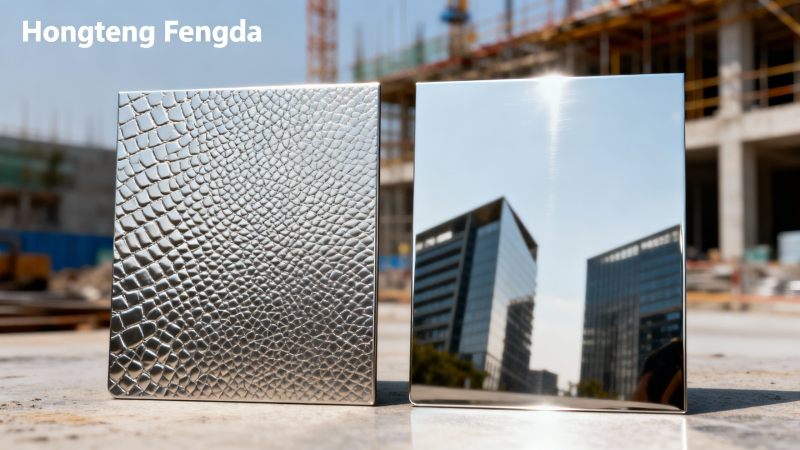
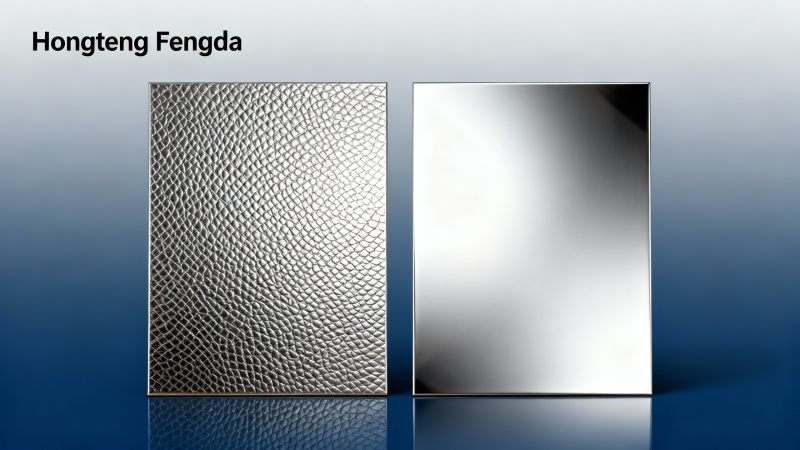
The embossed plate’s textured design not only enhances mechanical grip but also hides fingerprints and minor damages, which reduces long-term cleaning expenses. Mirror stainless sheets, on the other hand, require more frequent cleaning yet elevate aesthetic value, crucial for high-end commercial or residential projects. When evaluating ROI, engineers typically weigh these lifecycle considerations along with ss sheet 304 composition, thickness tolerance, and fabrication ease. In many infrastructure and load-bearing environments, the embossed plate provides a stronger short-term payback due to reduced maintenance. Understanding these dynamics allows procurement teams to align material specifications with functional expectations, optimizing both aesthetics and budget control.
Material Composition and Manufacturing Process Insights
The structure and alloy formulation behind stainless steel corrugated sheet and stainless flat plate decide their final performance in construction. The embossed plate typically uses a base of ss sheet 304 or 316 grade steel, rolled and pressed through precision molds that create patterns such as leather grain, diamond, or linen texture. This treatment increases rigidity and impact resistance while keeping overall thickness lightweight. Mirror stainless sheet production involves multiple cycles of cold rolling and polishing using a combination of mechanical abrasives and chemical passivation, achieving a reflection level nearly identical to glass. Both require strict adherence to standards such as ASTM A240, EN 10088, and JIS G4304 to guarantee structural integrity and surface uniformity. Manufacturers like Hongteng Fengda implement automated inspection systems and ISO9001-2008 quality controls, ensuring each batch meets expected grain direction, gloss uniformity, and corrosion testing performance.
In heavy construction projects, the combination of stainless round bars, steel round plate, and stainless flat sheet often complements structural designs to achieve balanced strength distribution. For reinforcement, many contractors pair stainless sheets with carbon steel frameworks and load-bearing reinforcements such as HPB300 Rebar. This integration enhances seismic stability while allowing flexible welding and cutting on-site. The pretreated steel grades—whether Q235 or ASTM A53 GrB—ensure reliable bonding with concrete and non-deformation under temperature variations. Selecting the correct finish—matte, embossed, or mirror—is therefore not a purely visual choice but a decision influencing mechanical behavior, assembly precision, and coating adhesion.
Cost, Lifespan, and ROI Evaluation
The ss sheets price can fluctuate based on grade, surface treatment, and sheet size, yet evaluating return on investment (ROI) should include the total lifecycle cost rather than mere purchase expense. An embossed stainless steel flat plate, resistant to wear in industrial corridors or stair treads, typically lasts over 25 years with minimal surface degradation. Mirror stainless sheet applications may face micro-scratches from cleaning operations, yet its reflective property can significantly enhance architectural brightness and energy efficiency through light diffusion. In regions with high humidity or coastal climate, selecting stainless flat plate with high Cr-Ni content mitigates pitting corrosion, ensuring the finish remains intact for longer. These material qualities drive long-term ROI by reducing repainting, polishing, and component replacement across project phases.
Project managers must balance visual return with mechanical performance. The aesthetic appeal of mirror stainless sheet often justifies its higher initial ss sheets price in premium projects such as airports, hotels, and showrooms. By contrast, embossed plates suit production plants, public walkways, and storage facilities. From a procurement standpoint, the final ROI hinges on usage frequency, environmental exposure, and required compliance standards. Hongteng Fengda’s experience exporting flat plate stainless steel components across North America, Europe, and the Middle East demonstrates the growing global preference for blends—mirror panels for facade appeal combined with embossed steel for functional durability. This hybrid approach maximizes project ROI while keeping long-term maintenance predictable and budget-aligned.
Application Scenarios and Structural Compatibility
In modern construction, stainless steel materials are no longer confined to decorative purposes; they serve core structural roles when integrated with reinforcing technologies. The stainless flat sheet and stainless flat plate function as architectural skin systems, while embossed surfaces increase traction in wet or heavy-use zones like subway stations or parking areas. Combining them with rebars such as HPB300 Rebar allows engineers to optimize load paths within concrete frameworks, improving bonding interfaces and minimizing cracking risks. With a yield strength of not less than 300 MPa, these rebars meet international standards like API and SGS certification, making them an ideal pairing with stainless components for hybrid steel–concrete composites. Their moderate cost allows flexibility in specifying both functional and visual steel grades within a cohesive structure.
Structural designers increasingly favor the use of stainless steel embossed plate in transport terminals and pedestrian zones because of its high resistance to deformation under localized pressure. Mirror stainless sheet finds extensive use in canopies, elevators, claddings, and showroom walls where reflectivity reduces artificial lighting demands. For coastal projects where atmospheric chloride levels are high, ss sheet 304 with embossed finish performs better in preventing corrosion stains. Hongteng Fengda’s technical team provides OEM solutions for tailored dimensions, ensuring components like stainless round plates and channel steels integrate smoothly into prefabrication workflows. Such flexibility directly contributes to shortened production time, minimized wastage, and improved ROI at scale.
Market Trends and Future Outlook for Stainless Construction Materials
Market intelligence indicates a consistent upward trajectory for stainless steel usage across construction and manufacturing sectors. As green building policies encourage recyclable materials and longer service life, stainless steel corrugated sheet and mirror stainless sheet demand is projected to rise by over 8% annually in key markets by 2030. Energy efficiency regulations are also accelerating substitution of painted carbon steel panels with reflective stainless materials, improving building energy management by reducing indoor heat absorption. In addition, the adoption of cold formed stainless profiles supports lightweight design principles, which translate into reduced foundation loads, faster assembly, and lower transport emissions. This trend strengthens ROI metrics, especially when combined with sustainable certifications required by modern building codes.
Product innovation is moving toward advanced surface treatments such as nano-coatings and anti-fingerprint layers, enabling mirror and flat plate stainless steel to retain gloss even in high-traffic areas. The integration of digital cutting and automated welding technologies ensures that structural elements—angle steels, stainless flat sheets, and steel round plates—maintain dimensional accuracy across multiple production cycles. As a professional manufacturer and exporter, Hongteng Fengda leverages robust supply capacity and international logistics channels to deliver stable pricing and timely delivery. Contractors and distributors benefit from fewer sourcing uncertainties, ensuring predictable cost planning and continuous project progress, a critical factor when evaluating long-term investment returns on stainless materials.
Conclusion and Call to Action
Stainless steel embossed plate and mirror stainless sheet each deliver distinct performance and visual strengths. The embossed variant maximizes durability, anti-slip performance, and maintenance simplicity, while the mirror finish elevates design value and architectural prestige. Selecting between the two depends on project objectives—industrial functionality or visual branding. To achieve the best ROI, professionals should consider lifecycle costs, environmental exposure, and compatibility with reinforcing materials such as stainless round and structural profiles. Hongteng Fengda, as a leading structural steel supplier from China, supports global builders with certified stainless and carbon solutions aligned with ASTM, EN, JIS, and GB standards. Whether your goal is to enhance facade aesthetics or strengthen structural frameworks, our engineering team ensures quality consistency and cost optimization from raw processing to final delivery.
Contact Hongteng Fengda today to discover how our stainless steel corrugated sheet, flat plate stainless steel, and customized structural components can transform your project’s performance. Request technical consultation or quotation to explore comprehensive steel packages designed to increase reliability, efficiency, and return on investment for every build.
Please give us a message


Please enter what you want to find