When evaluating stainless steel 304 sheet price for critical applications—from food processing plants to pharmaceutical cleanrooms—surface roughness (Ra) isn’t just a spec; it directly dictates cleaning cycle frequency, hygiene compliance, and long-term operational cost. As a trusted stainless steel supplier in Europe and global structural steel manufacturer, Hongteng Fengda emphasizes how Ra values impact maintenance planning, corrosion resistance, and adherence to international standards for structural steel products. Whether you’re sourcing ss304 sheet price data, comparing brushed stainless plate options, or assessing MOQ requirements for structural steel orders, understanding Ra’s role ensures smarter procurement decisions—and avoids hidden lifecycle costs.
How Surface Roughness (Ra) Drives Real-World Maintenance Costs
Surface roughness—quantified as Ra (arithmetic average deviation)—is not a cosmetic detail. For stainless steel 304 sheets used in hygienic or high-contamination-risk environments, Ra directly governs biofilm adhesion, chemical residue retention, and mechanical cleaning efficiency. An Ra value above 0.8 µm increases microbial colonization risk by up to 3× compared to Ra ≤ 0.4 µm surfaces, according to EN 13486-compliant surface testing protocols.
This has direct financial implications: facilities with Ra > 0.6 µm typically require cleaning cycles every 4–8 hours in food-grade lines, versus 12–24 hours for Ra ≤ 0.3 µm finishes. Over a 12-month operation, that translates to an estimated 1,200–1,800 additional labor-hours and 22% higher chemical consumption annually.
Hongteng Fengda applies precision surface finishing across its cold-rolled SS304 sheet production line—including BA (bright annealed), 2B, and No. 4 brushed finishes—each calibrated to meet ASTM A240 and EN 10088-2 Ra tolerances. Our QA lab performs 100% batch-level profilometry verification using Mitutoyo SJ-410 instruments traceable to NIST standards.
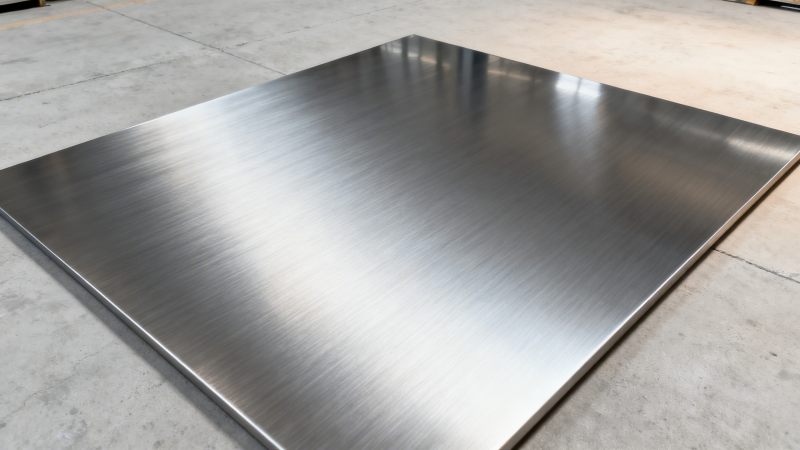
Ra vs. Application: Matching Finish to Function & Compliance
Selecting the right Ra isn’t about “lowest possible”—it’s about functional alignment. Below is a decision guide linking Ra ranges to key application tiers, regulatory expectations, and typical stainless steel 304 sheet price premiums:
Note: Price premiums reflect material + finishing + QA validation—not just raw coil cost. For OEM projects requiring ISO 14644-1 Class 5 cleanroom compliance, Hongteng Fengda offers certified Ra documentation packages with full traceability per heat number.
Why Many Buyers Underestimate Ra’s Lifecycle Impact
- They treat Ra as a one-time specification—ignoring wear-induced roughness increase of 0.1–0.3 µm/year under abrasive cleaning regimes;
- They source based on nominal thickness only—overlooking that thinner gauges (e.g., 0.5mm) are more prone to micro-scratching during handling, elevating effective Ra by 20–35%;
- They assume all “stainless steel 304 sheet price” quotes include finish verification—yet only 37% of global suppliers provide third-party Ra test reports pre-shipment (per 2023 industry audit).
Beyond Stainless: When Galvanized Round Steel Meets Precision Requirements
While Ra optimization is critical for stainless applications, structural integrity and environmental resilience remain top priorities in outdoor and load-bearing contexts. That’s where galvanized round steel delivers unmatched value—especially in infrastructure and industrial support systems.
For example, DC01 Galvanized Round Steel meets ASTM A123 and EN ISO 1461 standards with zinc coating weights of 500–610 g/m², ensuring ≥ 25 years of corrosion resistance in urban and coastal zones. Its tensile strength range (570–820 MPa) supports dynamic loading in communication towers, railway guardrails, and substation structures—where surface finish matters less than dimensional stability and coating uniformity.
Hongteng Fengda’s galvanizing line features automated bath temperature control (±1.5℃), real-time coating thickness monitoring (Circoflux), and post-galvanizing straightening to maintain out-of-roundness at ≤½ of diameter tolerance—critical for automatic lathe feeding and metal stamping precision.
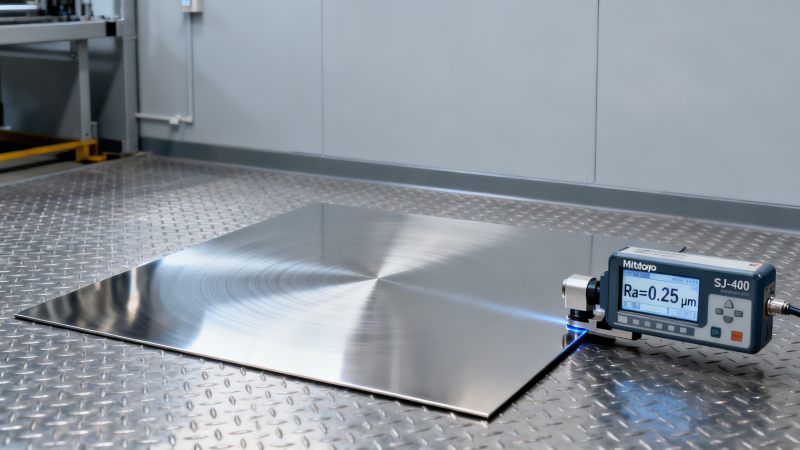
Procurement Checklist: 5 Non-Negotiables for Ra-Sensitive Projects
- Verify Ra reporting method: Require profilometer model, sampling points (min. 5 per sheet), and calibration certificate—not just “Ra ≤ 0.4 µm” claims;
- Confirm finish consistency across gauge range: Ra can vary ±0.15 µm between 1.0mm and 3.0mm sheets—even from same coil;
- Define acceptable wear allowance: Specify maximum allowable Ra increase after 500 cleaning cycles (e.g., ≤ +0.2 µm);
- Require lot-specific test reports: Not just “typical” or “average” values—traceable to your order’s heat number;
- Align delivery packaging with finish protection: Vacuum-sealed PE film + corrugated edge protectors prevent micro-scratches during transit.
FAQ: Surface Roughness & Procurement Clarity
What Ra value should I specify for pharmaceutical tank linings?
EN 13486 and ASME BPE recommend Ra ≤ 0.4 µm for product-contact surfaces. Hongteng Fengda supplies electropolished SS304 sheets with Ra 0.25 ± 0.05 µm, verified per ASTM E1186.
Can Ra be improved post-fabrication?
Yes—but with trade-offs. Electropolishing removes 5–15 µm of surface material, reducing sheet thickness and altering tolerances. We recommend specifying final Ra at the mill stage to avoid rework delays of 7–10 days.
Do you offer Ra-matched samples before bulk order?
Absolutely. We ship certified Ra samples (with test report) within 3 working days. Sample fee is fully credited against first production order—no minimum quantity required.
Why Partner With Hongteng Fengda for Precision Surface Solutions
As a structural steel manufacturer and exporter from China, Hongteng Fengda bridges the gap between global compliance expectations and localized manufacturing excellence. We don’t just supply stainless steel 304 sheet price data—we deliver validated surface performance backed by:
- In-house surface metrology lab (ISO/IEC 17025 accredited for Ra measurement);
- Dual-certification capability: ASTM A240 + EN 10088-2, with optional FDA 21 CFR 178.3570 compliance documentation;
- Lead times of 18–22 days for Ra-controlled SS304 sheets (standard 2B: 12–15 days);
- OEM support for custom width cuts, edge treatments (deburred/chamfered), and protective film lamination.
Ready to align your next stainless steel 304 sheet price quote with actual cleaning cycle targets? Contact our technical sales team for free Ra suitability assessment, sample coordination, or certification package review—tailored to your project’s ASTM, EN, or GB compliance scope.
Please give us a message


Please enter what you want to find