When sourcing stainless plate sheet for critical construction or industrial applications—whether you’re a procurement manager evaluating ASTM standard steel plate, a project engineer assessing residual stress risks post-cutting, or a buyer comparing ss304 plate price and stainless steel plate suppliers—you need more than just a mill certificate. That document confirms original material compliance (e.g., ASTM A36, EN 10025), not how fabrication affects structural integrity. At Hongteng Fengda, a trusted stainless steel supplier in Europe and global structural steel manufacturer from China, we help technical and commercial stakeholders understand why post-processing verification—especially for stainless steel sheets, angle stainless steel Europe, and galvanised steel sheet Middle East projects—is essential for safety, lifespan, and code compliance.
Why Mill Certificates Alone Can’t Guarantee Post-Cutting Performance
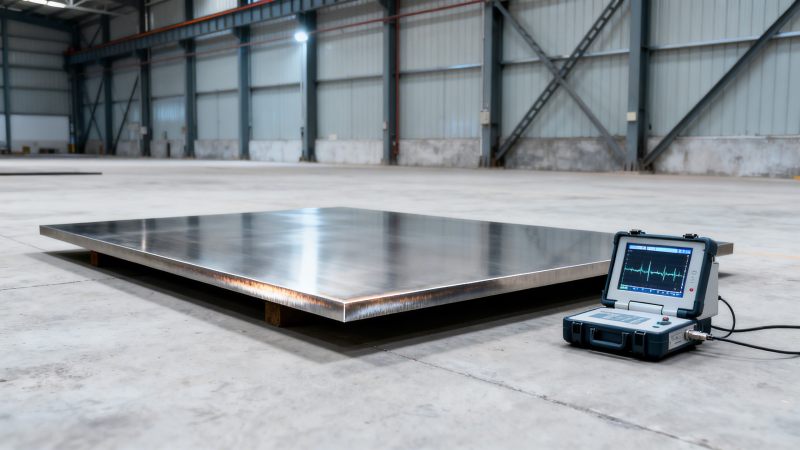
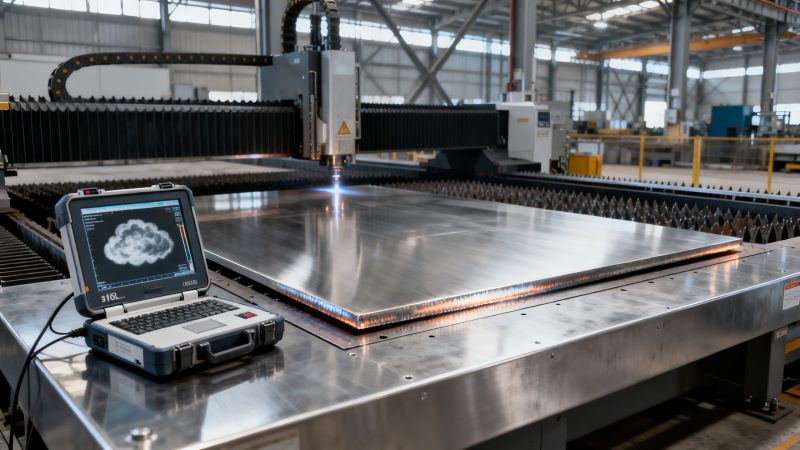
A mill certificate validates chemical composition, tensile strength, yield point, and dimensional tolerances—as tested on the raw coil or slab before cutting, bending, or welding. It does not reflect internal stress redistribution caused by thermal cutting (plasma, laser), mechanical shearing, or cold forming. Residual stress levels in stainless plate sheet can reach 30–60% of yield strength after high-precision CNC plasma cutting—enough to trigger distortion during machining, premature fatigue cracking in cyclic loading environments, or out-of-tolerance warping in precision assemblies.
This gap is especially critical in load-bearing applications such as offshore platforms, pharmaceutical cleanroom cladding, or nuclear-grade containment vessels—where even localized stress concentrations compromise long-term corrosion resistance and structural predictability. For instance, residual stress > 200 MPa in 316L stainless steel sheet increases susceptibility to chloride-induced stress corrosion cracking (SCC) by up to 4× under humid saline exposure.
Hongteng Fengda addresses this through certified post-fabrication stress relief protocols—including controlled furnace annealing (1050–1100°C, hold time ≥ 15 min) and vibratory stress relief (VSR) for large-format plates—verified via X-ray diffraction (XRD) or hole-drilling strain gauge analysis per ASTM E837.
How Residual Stress Impacts Real-World Applications
Residual stress doesn’t appear on inspection reports—but it manifests visibly and functionally across key use cases. In architectural façade systems, unrelieved stress causes bowing or camber in stainless steel sheets after installation, leading to sealant failure and water ingress within 12–18 months. In food processing equipment, residual stress near weld zones accelerates pitting in acidic cleaning cycles—reducing service life from expected 25+ years to under 8 years in some EU dairy plants.
For structural reinforcement, stress distribution directly affects load transfer efficiency. When stainless plate sheet is used as shear connectors or stiffeners in composite beams, non-uniform stress fields reduce effective moment capacity by 7–12%, per EN 1993-1-8 Annex D test data. This impacts both design safety margins and lifecycle cost calculations—particularly relevant when evaluating HRB500 Rebar integration in hybrid steel-concrete systems.
The risk compounds with thickness: plates ≥12 mm show 2.3× higher residual stress retention post-cutting versus ≤6 mm sheets. That’s why our European clients specify mandatory stress mapping for all stainless plate sheet orders above 10 mm thickness—verified before shipment, not upon receipt.
Critical Application Thresholds
These thresholds are not arbitrary—they align with EN 10025-2 Annex A, ASTM A240 Table 2 stress-corrosion limits, and ISO 15630-1 rebar anchorage performance benchmarks. Our quality control team cross-references every plate batch against these criteria before release.
Procurement Checklist: What to Demand Beyond the Mill Certificate
Smart procurement starts with precise specification—not passive acceptance of documentation. Here’s what top-tier buyers verify before approving stainless plate sheet orders:
- Explicit inclusion of residual stress limits in purchase order (PO) terms—not just “as per mill cert”
- Third-party verification report (e.g., TÜV SÜD or SGS) confirming post-cutting stress levels, dated ≤ 7 days prior to shipment
- Traceability to heat number and cutting lot—not just coil ID—to isolate stress anomalies
- Minimum 3-point stress measurement per 2 m² area, with full dataset provided digitally (CSV/Excel)
At Hongteng Fengda, every stainless plate sheet order includes a digital Stress Compliance Dossier (SCD)—containing XRD scans, thermal history logs, and dimensional stability charts—delivered 48 hours pre-shipment. This eliminates field rework delays averaging 11–14 days for European contractors managing tight milestone windows.
Why Partner with Hongteng Fengda for Verified Stainless Plate Sheet
We bridge the gap between mill compliance and real-world performance—not by adding layers of paperwork, but by embedding stress-aware manufacturing into our core process. Our ISO 9001-certified production line integrates inline thermal imaging during cooling, automated CNC cutting with adaptive feed-rate algorithms, and post-process annealing chambers calibrated to ±2°C across 12 m³ volume.
Unlike general-purpose mills, we specialize in structural-grade stainless solutions for demanding geographies: angle stainless steel Europe shipments include EN 10088-2-compliant stress relief certification; galvanised steel sheet Middle East orders feature enhanced zinc-alloy coating adhesion testing post-stress relief. With production capacity of 280,000 MT/year and lead times stabilized at 21–28 days for FOB Shanghai, we support consistent supply without compromising verification rigor.
Ready to validate residual stress performance for your next stainless plate sheet order? Contact our technical sales team for: (1) free stress simulation based on your cutting layout and thickness profile, (2) sample stress mapping report from recent EN 1.4404 batch, or (3) customized PO clause drafting aligned with your project’s ASME Section VIII or EN 15085-2 requirements.
Please give us a message


Please enter what you want to find