Choosing the right stainless pipe sizes means checking more than outside diameter and wall thickness. In real projects, the correct selection depends on pressure, corrosion exposure, installation method, standard compliance, weight, weldability, and total lifecycle cost. For engineers, buyers, project managers, and quality teams, the fastest way to reduce sourcing risk is to match pipe size with service conditions first, then confirm dimensions, tolerance, material grade, and documentation before purchase.
What should you check first when comparing stainless pipe sizes?
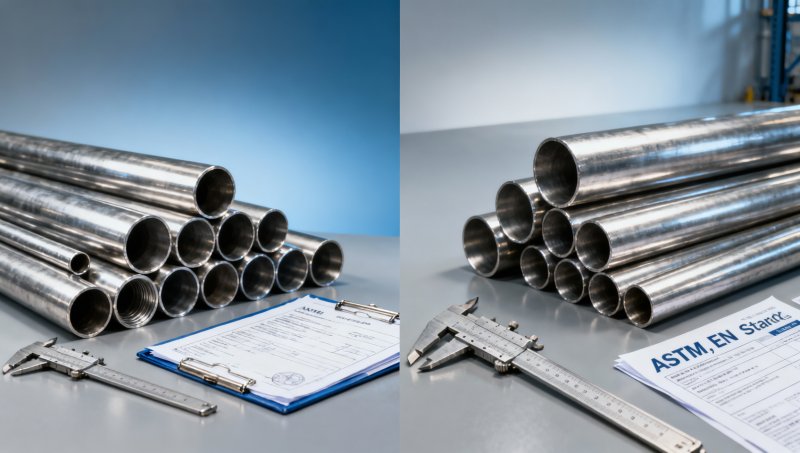
The first thing to understand is that a “pipe size” is never just a diameter number. In practice, buyers should verify five points together:
- Outside diameter (OD): Determines fit with supports, clamps, valves, and connecting parts.
- Wall thickness or schedule: Affects pressure capacity, durability, and weight.
- Material grade: Common stainless grades such as 304, 304L, 316, and 316L perform differently in corrosive environments.
- Applicable standard: ASTM, EN, JIS, or GB standards may define dimensional tolerance, testing, and mechanical requirements differently.
- Actual service condition: Temperature, fluid type, outdoor exposure, chloride content, and welding requirements all matter.
If a pipe looks right on paper but does not match the operating environment or the project standard, it can still become a costly mistake. That is why technical review should come before price comparison.
How do diameter and wall thickness affect real project performance?
For most users, diameter and wall thickness are the starting point because they influence flow, strength, installation space, and cost.
Larger diameter usually increases flow capacity and reduces velocity loss, but it also raises material cost, transport cost, support load, and installation complexity.
Greater wall thickness improves pressure resistance and mechanical strength, but it also increases weight and may reduce the internal flow area. In some systems, a thicker wall is necessary for safety. In others, it may be over-specification that adds cost without real benefit.
When reviewing stainless pipe sizes, ask these practical questions:
- What is the design pressure and operating pressure?
- Will the pipe face vibration, impact, or heavy support spans?
- Is the system for fluid transport, structure, fabrication, or decoration?
- Does the installation require bending, welding, threading, or polishing?
- Are there weight limits for transport, lifting, or elevated structures?
For procurement teams, this is where many avoidable issues begin. A lower-priced pipe may become expensive if the wall tolerance is inconsistent, the weight is higher than expected, or the actual dimensions cause rework on site.
Which standards and tolerances matter before sourcing?
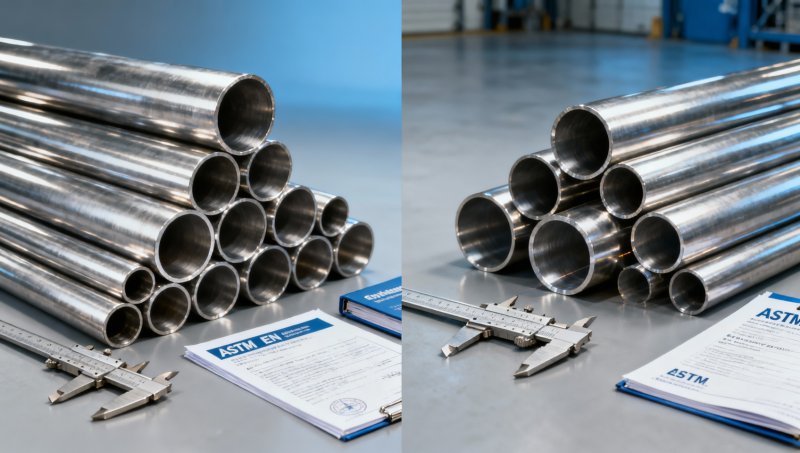
Standards are critical because they affect interchangeability, compliance, and inspection acceptance. Two pipes with similar nominal size may still differ in tolerance, chemistry, test requirements, and marking rules.
Before placing an order, confirm:
- Dimensional standard: OD, thickness, length, straightness, and tolerance range
- Material standard: Chemical composition and mechanical properties
- Testing requirements: Hydrostatic test, PMI, flattening test, eddy current, or third-party inspection if needed
- Surface condition: Pickled, polished, annealed, or industrial finish depending on use
- Mill documentation: MTC/EN 10204 certificates, heat number traceability, and packing list accuracy
This is especially important for export projects, industrial facilities, and public infrastructure where acceptance depends on documentation as much as physical quality. For buyers sourcing from overseas suppliers, stable quality control and clear standard alignment help reduce the risk of shipment delays, claim disputes, and replacement costs.
In some mixed-material projects, teams may compare stainless pipes with other steel products used in adjacent structural or fabrication applications. For example, for supports, frames, or general construction components, a product such as Q235 Carbon Steel Round Bar may be considered where corrosion exposure, strength needs, and budget differ from the piping system itself. This kind of side-by-side material review helps procurement and engineering teams choose the right product for each function instead of overusing one material everywhere.
How do corrosion resistance and environment influence size selection?
Many buyers focus on dimensions first, but corrosion environment can change what size is actually suitable. If the material grade is not appropriate, simply increasing wall thickness may not solve the problem for long-term service.
For example:
- Indoor dry environments: Standard stainless grades are often sufficient.
- Marine or chloride-rich areas: Grade selection becomes more important, especially for pitting resistance.
- Chemical processing: The medium and temperature must be reviewed carefully.
- Outdoor architectural use: Surface finish, drainage design, and maintenance affect appearance and durability.
In corrosive service, pipe size decisions should also consider:
- Potential corrosion allowance
- Cleaning and maintenance access
- Weld zone performance
- Expected service life
- Replacement cost versus initial cost
This is why technical evaluators and decision-makers often look beyond unit price. A pipe that lasts longer with fewer failures can offer better total project value even if the purchase cost is higher.
What should buyers, QC teams, and project managers verify before ordering?
To avoid mismatch between specification and delivered goods, use a simple pre-order checklist:
- Confirm the exact pipe size format — nominal size, OD, wall thickness, schedule, and length.
- Confirm stainless grade — especially if corrosion resistance or welding performance is critical.
- Match the standard to the project requirement — ASTM, EN, JIS, or GB.
- Check tolerance and weight — important for installation fit and freight calculation.
- Request test certificates — especially for regulated or export projects.
- Review end finish and surface treatment — plain end, beveled, polished, or other required condition.
- Verify packaging and shipment method — to prevent damage, rust contamination, or identification loss.
- Clarify lead time and batch consistency — essential for phased construction schedules.
For distributors and project buyers, consistency often matters as much as the first sample. A reliable manufacturer with stable production capacity, international standard compliance, and dependable delivery can reduce operational risk across multiple orders.
How can you balance technical suitability and cost?
The best purchase is not always the cheapest stainless pipe size, and it is not always the heaviest or most premium option. The right balance comes from matching the product to the actual application.
Here is a practical approach:
- Use technical requirements as the baseline, not price alone.
- Avoid over-specifying if the environment is mild and the load is limited.
- Avoid under-specifying where pressure, corrosion, or compliance risk is high.
- Consider fabrication efficiency such as welding, cutting, and installation labor.
- Compare total cost including freight, wastage, maintenance, replacement, and delay risk.
For global sourcing, experienced steel suppliers can support this process by helping buyers compare standards, dimensions, and feasible material options for different project sections. This is especially useful for construction, industrial manufacturing, and export procurement where multiple steel products may be sourced together.
Conclusion: the right stainless pipe size is the one that fits the service, not just the drawing
When evaluating stainless pipe sizes, the smartest approach is to start with operating conditions and project standards, then confirm diameter, wall thickness, grade, tolerance, and inspection documents. That process helps engineers select safely, helps procurement control cost, and helps project teams avoid delays and quality disputes.
In short, check more than size labels. Review pressure, corrosion, compliance, weight, fabrication needs, and supplier consistency before sourcing. When those factors are aligned, the selected pipe is far more likely to deliver the performance, reliability, and value your project actually needs.
Please give us a message


Please enter what you want to find