When working with stainless 304 sheet in structural applications—such as steel channel for construction projects or ASTM A36 angle steel—repeated heat-affected zone (HAZ) overlap during welding significantly increases weld decay risk. This metallurgical vulnerability compromises corrosion resistance and long-term structural integrity, especially critical for buyers sourcing stainless steel sheet 304 from China or evaluating ss304 plate price versus performance. For procurement managers, project engineers, and quality control teams, understanding this phenomenon is essential when selecting materials compliant with international standards for structural steel products—and before finalizing MOQ requirements for structural steel orders.
Why Repeated HAZ Overlap Triggers Sensitization in 304 Stainless Steel
Stainless 304 sheet contains 18–20% chromium and 8–10.5% nickel, delivering excellent corrosion resistance in ambient conditions. However, its carbon content (up to 0.08 wt%) becomes a liability during multi-pass welding. When the same region undergoes repeated thermal cycles—especially between 425°C and 850°C—the chromium carbides (Cr23C6) precipitate preferentially at grain boundaries. This depletes adjacent zones of chromium below the 12% threshold required for passive film formation.
The result is intergranular corrosion susceptibility—commonly called “weld decay.” Unlike uniform surface rust, this degradation occurs invisibly along grain boundaries, drastically reducing load-bearing capacity without obvious visual cues. In structural steel applications like cold formed steel profiles or custom steel beams, such hidden weakness can accelerate fatigue failure under cyclic loading or environmental exposure.
Hongteng Fengda mitigates this risk through controlled heat input protocols, post-weld solution annealing (1010–1120°C + rapid quenching), and optional low-carbon 304L variants (C ≤ 0.03%). Our manufacturing facilities in China apply real-time thermal monitoring across all weld passes—ensuring HAZ overlap remains within safe thresholds of ≤2 cycles per location for critical structural joints.
How Weld Decay Impacts Structural Steel Procurement Decisions
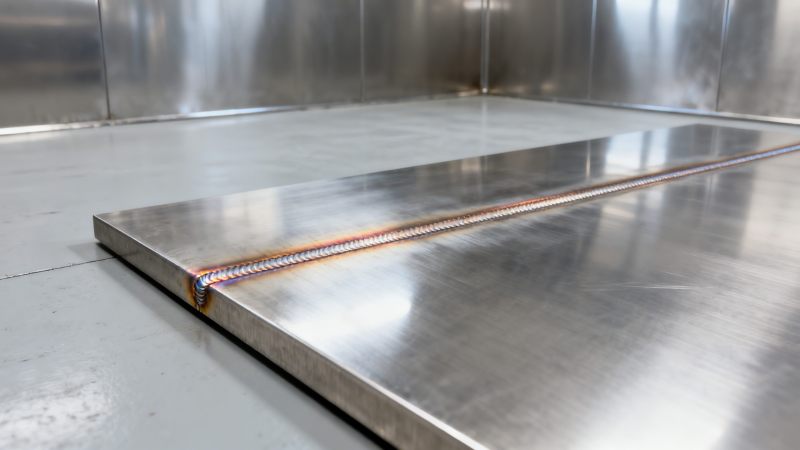
Procurement professionals evaluating stainless steel sheet 304 must weigh not just material cost, but lifecycle risk. A seemingly competitive ss304 plate price may mask higher inspection, rework, or premature replacement costs—particularly where welds are inaccessible for NDT (e.g., embedded connections in steel beams or angle steel assemblies). Financial approval teams should factor in total cost of ownership: every 1% increase in HAZ overlap beyond 2 cycles raises non-destructive testing frequency by 30–40%, extending QA timelines by 5–7 business days per batch.
For project managers overseeing construction timelines, delayed weld qualification due to sensitization failures can push commissioning dates by 2–4 weeks. Meanwhile, safety officers and quality auditors require documented thermal cycle logs—something many Chinese suppliers do not routinely provide unless explicitly specified in purchase orders. Hongteng Fengda embeds weld parameter traceability into every structural steel order, including arc voltage, travel speed, interpass temperature, and cumulative HAZ exposure maps.
This transparency supports compliance with ASTM A959 (standard specification for stainless steel forgings), EN 10088-2 (technical delivery conditions), and GB/T 4237 (Chinese stainless steel sheet standard). It also enables seamless integration with third-party certification bodies across North America, Europe, and the Middle East.
Key Procurement Evaluation Criteria for 304 Stainless Sheet
- Maximum allowable HAZ overlap count per joint (target: ≤2)
- Availability of mill test reports with carbon content and intergranular corrosion test results (ASTM A262 Practice E)
- Weld procedure specification (WPS) validation against EN ISO 15614-1 or AWS D1.6
- Traceability documentation covering thermal history per weld pass
Comparing Material Options for High-Integrity Structural Applications
While 304 stainless offers balanced strength and formability, alternatives exist for high-heat-cycle scenarios. The table below compares key options relevant to structural steel fabrication—including carbon steel solutions that avoid sensitization entirely while meeting mechanical and durability requirements.
As shown, Q195 Carbon Steel Round Bar provides a cost-effective, thermally robust alternative for applications where corrosion resistance is secondary to mechanical reliability and weld repeatability. Its excellent strength and wear resistance make it ideal for high-frequency fabrication processes—especially where multiple tack welds or rework cycles are anticipated.
Why Global Buyers Choose Hongteng Fengda for Structural Steel Solutions
Hongteng Fengda combines deep metallurgical expertise with scalable production infrastructure—enabling precise control over thermal parameters across all stainless and carbon steel product lines. We serve over 32 countries with consistent lead times: standard structural steel orders ship within 15–25 days; customized steel beams or cold formed profiles require 30–45 days—with no premium for mixed-material batches (e.g., SS304 sheet + Q195 round bar).
Our quality assurance system includes three-tiered inspection: raw material verification (spectrometric analysis), in-process thermal mapping, and final dimensional/corrosion testing. Every shipment includes full compliance documentation aligned with your regional requirements—whether ASTM A36 angle steel for U.S. contractors, EN 10025 S355JR channel steel for EU infrastructure projects, or GB/T 702 Q195 round bars for Southeast Asian architectural fabricators.
We invite procurement managers, technical evaluators, and project decision-makers to request: (1) a weld thermal cycle simulation report for your specific joint geometry, (2) sample material test data matching your intended application, or (3) an OEM packaging and labeling proposal aligned with your brand guidelines. Contact us today to align material selection with structural integrity, compliance, and long-term value—not just initial ss304 plate price.
Please give us a message


Please enter what you want to find