Choosing the right small metal angle usually comes down to one question: can it support the frame without adding unnecessary cost or weight? For light framing, the answer is often yes—if you match the angle size to the span, load, fixing method, and exposure conditions. This guide explains the sizes operators and project teams commonly use, how to judge suitability, and what to check before sourcing material.
What “small metal angle” usually means in light framing
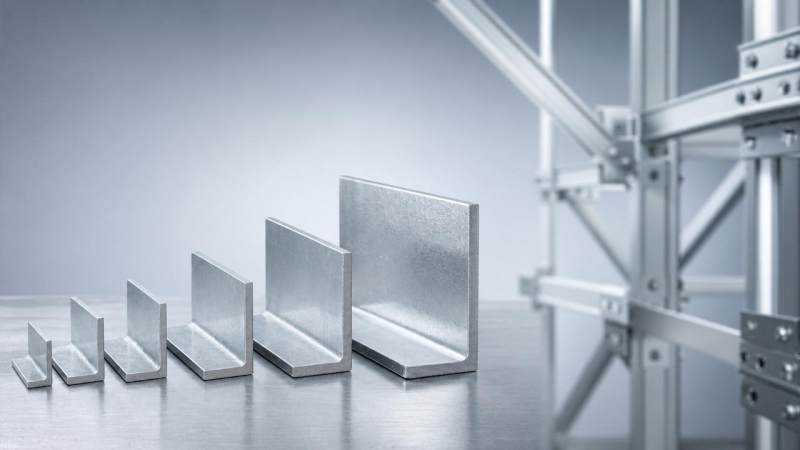
In practical use, small metal angle refers to L-shaped steel sections used for supports, bracing, edging, and simple frame connections. For light framing, buyers usually look at compact leg sizes, manageable thickness, and easy fabrication rather than heavy load-bearing capacity.
Common choices include equal angles such as 20×20 mm, 25×25 mm, 30×30 mm, 40×40 mm, and 50×50 mm. Thickness often ranges from 2 mm to 5 mm, depending on whether the part is decorative, supportive, or part of a more demanding assembly.
The “best” size is not the largest one. It is the size that gives enough stiffness, fits available space, and can still be cut, drilled, welded, or bolted efficiently on site.
Sizes that work well for operators on light-duty jobs
For light framing, 20×20×2 mm and 25×25×2 mm are often used for small brackets, cabinet supports, trims, and low-stress assembly points. These sizes are easy to handle and reduce unnecessary material use.
When the frame needs more rigidity, 30×30×3 mm or 40×40×3 mm becomes more practical. These sizes are widely used for shelving frames, simple equipment guards, support rails, and small steel subframes.
For stronger support while still staying in the “small angle” range, 40×40×4 mm and 50×50×5 mm are common. They offer better resistance to bending and impact, especially when the part will be fixed with bolts or welded into a light structural frame.
The right selection depends on whether the angle is carrying its own weight only, holding panel loads, or helping stabilize a larger assembly. Operators should always check the span and fastening points before choosing a section size.
How to choose the right size without overbuying
Start with the actual function of the frame. If the angle is only for alignment or edge support, a smaller section usually works. If it helps transfer load, brace a corner, or resist vibration, choose a thicker and slightly larger leg size.
Next, review the environment. Indoor dry applications can often use standard steel, while outdoor or humid locations need better corrosion protection. Many buyers also compare coating performance when deciding whether to use coated steel products or uncoated structural parts.
For projects that need more durable coated feedstock, some teams also evaluate options like AZ50 Galvalume Steel Coil because its corrosion resistance and stable forming performance can support downstream fabrication in exterior, structural, and industrial applications.
Finally, match the size to fabrication method. If the team will drill and bolt the angle, keep enough thickness for fastener strength. If welding is involved, confirm weldability and ensure the section is not so thin that it distorts during processing.
What operators should check before installation
Measure the cut length accurately and confirm that both legs are aligned before fixing. Even a small angle can create problems if the holes are off-center or the frame is out of square.
Check surface quality, straightness, and thickness consistency before fabrication. These small inspections reduce rework, especially when multiple pieces must fit together in a repeated assembly process.
If the angle will be exposed to weather, condensation, or chemical fumes, corrosion resistance should be part of the selection logic, not an afterthought. A slightly better protected material can lower maintenance and replacement costs later.
For buyers sourcing internationally, it also helps to confirm standards, size tolerances, and delivery stability early. Consistent supply matters as much as the nominal size, because project delays often come from mismatched batches or weak quality control.
Practical buying guidance for light framing projects
If you need a simple rule, use smaller sizes for positioning and light support, medium small sizes for everyday framing, and thicker small angles when the assembly sees vibration, outdoor exposure, or repeated handling.
For most light framing work, 25×25×2 mm, 30×30×3 mm, and 40×40×3 mm cover a wide range of tasks. If you are unsure, compare the part’s span, fastening points, and service environment instead of relying only on a catalog size.
Working with a steel supplier that understands export requirements, custom cutting, and stable production can reduce sourcing risk. That matters when your team needs repeatable sizes, predictable lead times, and dependable material performance across batches.
Conclusion
The best small metal angle for light framing is the one that balances fit, strength, and ease of installation. In many cases, compact equal angles in the 20×20 mm to 50×50 mm range are enough, provided thickness and protection match the job.
For operators, the key is to judge the real load, the environment, and the fixing method before choosing a size. That approach helps avoid overspending, reduces installation problems, and improves long-term reliability.
Please give us a message


Please enter what you want to find