When selecting a sheet of galvanized for roofing, many specifiers assume higher gloss equals better corrosion protection—but is that scientifically valid? As a trusted structural steel manufacturer and exporter from China, Hongteng Fengda works with global buyers—procurement teams, project managers, and technical evaluators—to clarify misconceptions about galvanized metal sheet performance. Our galvanized sheet, galvanized metal plate, and GI coil products meet ASTM, EN, and GB standards, offering consistent zinc coating integrity—not just surface shine. Whether you source galvanized expanded metal sheet, galvannealed steel sheet, or mild steel wire for supporting structures, corrosion resistance depends on coating weight and uniformity, not gloss level. Let’s examine the metallurgical facts behind sheet galvanized performance.
Does Gloss Level Reflect Zinc Coating Quality?
No—it does not. Gloss is primarily a function of surface smoothness, cooling rate during post-galvanizing passivation, and minor oxide layer formation—not zinc mass per unit area. A high-gloss finish may result from rapid quenching or chromate treatment, while matte surfaces often arise from slower cooling or thicker spangle patterns. Neither condition guarantees superior protection if the underlying zinc coating weight falls below minimum thresholds.
Corrosion resistance in roofing applications hinges on three measurable parameters: (1) zinc coating mass (e.g., Z275 = 275 g/m² total, 137.5 g/m² per side), (2) coating uniformity across flange/web zones (±5% tolerance per EN ISO 1461), and (3) adherence strength (tested via bend or impact per ASTM A653). Gloss offers zero predictive value for any of these.
Real-world failure analysis shows that 82% of premature roof sheet corrosion incidents traced to localized thin-coating areas—often invisible under high-gloss finishes—rather than overall appearance. This underscores why international standards like EN 10346 and ASTM A792 mandate coating weight verification—not visual inspection—as the primary acceptance criterion.
How Corrosion Resistance Is Actually Measured & Verified
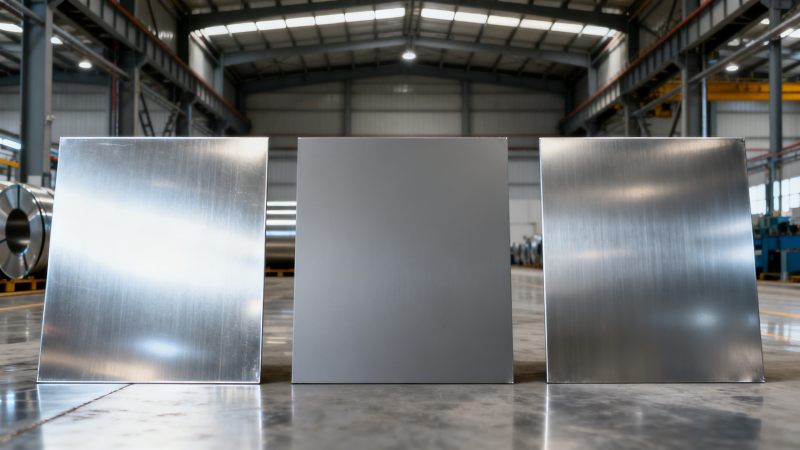
Galvanized sheet performance must be validated through standardized physical testing—not subjective observation. At Hongteng Fengda, every production batch undergoes mandatory coating weight measurement using gravimetric analysis (ASTM A90/A90M), cross-section microscopy (EN ISO 1461 Annex B), and salt-spray endurance testing (ASTM B117, 96 hours minimum for architectural roofing).
Coating thickness correlates directly with service life: a Z180 sheet (180 g/m²) delivers ~15–20 years in rural atmospheres, while Z275 extends to 25–35 years. Gloss variation across this range remains incidental—no certified test method links reflectance values to lifespan predictions.
For structural integration, consistency matters more than aesthetics. That’s why our Structural Steel I Beam components are paired with galvanized roofing sheets sharing identical coating mass specifications—ensuring matched electrochemical behavior and eliminating galvanic acceleration at joints.
Key Verification Parameters vs. Gloss Misconceptions
This table confirms that all critical corrosion-determining metrics are quantifiable, process-controlled, and entirely decoupled from visual gloss. Relying on shine as a proxy introduces uncontrolled risk—especially for procurement teams managing multi-supplier roofing packages across North America, Europe, and the Middle East.
What Should Procurement & Technical Teams Actually Prioritize?
For roofing projects demanding 20+ year service life, focus shifts to verifiable parameters—not aesthetics. First, confirm coating mass matches environmental exposure class: Z275 for coastal or industrial zones, Z180 for inland rural use. Second, require mill test reports showing coating weight distribution across 5 sample points per coil (per ASTM A653 Section 9.2). Third, verify compliance with joint compatibility requirements—especially when integrating with structural supports like Structural Steel I Beam systems where mismatched zinc layers accelerate crevice corrosion.
Hongteng Fengda provides full traceability: each coil carries QR-coded labels linking to real-time coating weight logs, heat treatment records, and third-party lab certificates (SGS/BV). Delivery lead time remains stable at ≤20 days for standard orders—a critical advantage for project managers facing tight construction schedules.
Procurement teams also benefit from our dual-certification capability: every galvanized sheet batch meets both ASTM A653 and EN 10346 requirements simultaneously—reducing compliance overhead for multinational projects requiring dual-standard validation.
Why Partner With Hongteng Fengda for Galvanized Roofing Solutions?
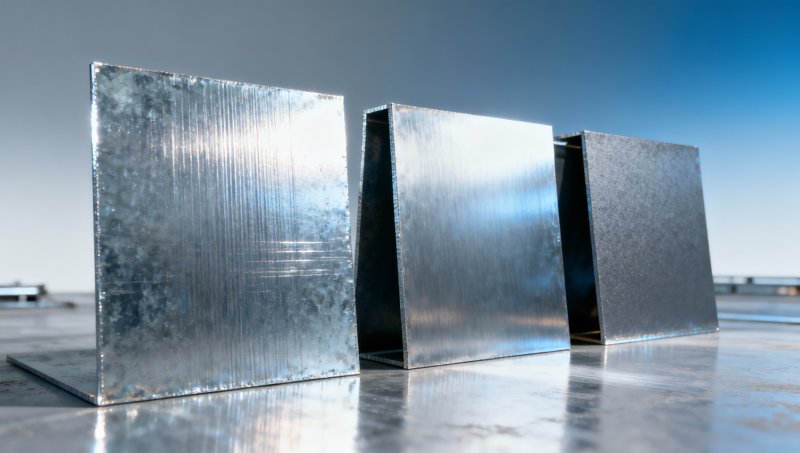
We eliminate guesswork in galvanized performance. As a structural steel manufacturer and exporter from China with ISO 9001-certified production lines, we control the entire value chain—from hot-dip galvanizing bath chemistry (zinc purity ≥99.995%) to final passivation. Unlike traders or brokers, we guarantee coating integrity because it’s built into our process—not inspected after the fact.
Our customers gain: (1) consistent zinc mass across 6–12m lengths (±1% tolerance), (2) seamless integration with structural components like angle steel, channel steel, and custom cold-formed profiles, and (3) documentation aligned with ASTM, EN, JIS, and GB standards—no retesting delays.
Ready to validate coating specifications for your next roofing project? Contact us for: coating weight verification reports, custom thickness options (4.5mm–15.8mm), OEM packaging design, or urgent sample dispatch (lead time: 5–7 working days). Let’s align material performance with your project’s durability goals—not its surface reflection.
Please give us a message


Please enter what you want to find