For operators and fabrication teams, sheet steel angle offers a practical balance of strength, formability, and cost efficiency in light structural work.
Whether used for brackets, frames, edge protection, or custom assemblies, it supports flexible processing with reliable mechanical performance.
In steel sourcing, product consistency matters as much as section size. Stable quality, standard compliance, and dependable delivery directly affect fabrication efficiency and installation accuracy.
Understanding Sheet Steel Angle in Light Fabrication
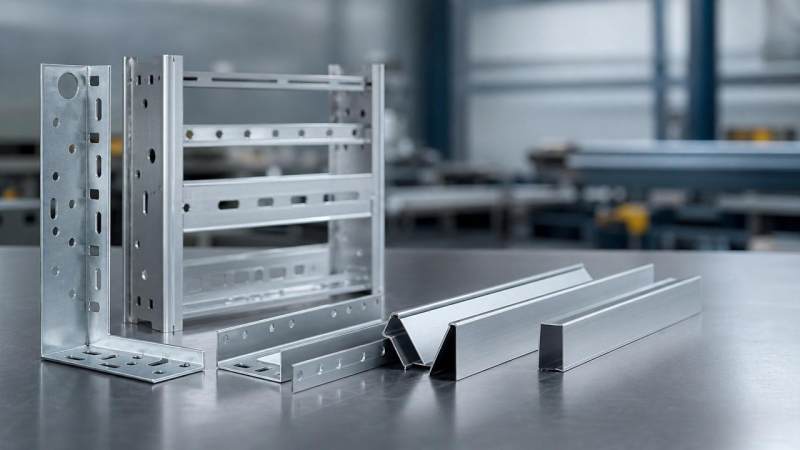
Sheet steel angle usually refers to angle sections formed from sheet or strip steel for lighter structural and support applications.
Compared with heavy hot rolled angles, sheet steel angle is often easier to cut, punch, bend, and integrate into compact assemblies.
It is widely selected where moderate load capacity is needed without the weight or cost of larger structural sections.
Common base materials include carbon steel, galvanized steel, and stainless grades, depending on corrosion exposure and forming requirements.
The appeal of sheet steel angle comes from its simple geometry. The L-shape improves stiffness while remaining easy to nest, stack, transport, and assemble.
Basic characteristics
- Lightweight support for frames, trims, guards, and brackets
- Good compatibility with welding, bolting, and riveting
- Efficient material usage for short-run or custom fabrication
- Available in different leg sizes, thicknesses, and finishes
Current Industry Priorities Around Sheet Steel Angle
In today’s steel market, sheet steel angle is valued not only for price, but also for processing predictability and supply reliability.
Projects increasingly require tighter tolerances, faster production cycles, and better corrosion performance in mixed indoor and outdoor environments.
As a result, buyers often review more than basic dimensions before confirming a supplier or section type.
These priorities explain why sheet steel angle remains relevant across construction support work, equipment enclosures, storage systems, and general industrial fabrication.
Why Sheet Steel Angle Is a Practical Material Choice
The value of sheet steel angle starts with efficiency. It provides useful stiffness at a relatively low weight, helping reduce handling effort and material waste.
For many secondary structures, thicker or heavier sections would add cost without improving real project performance.
Another advantage is processing flexibility. Sheet steel angle can fit manual fabrication, CNC cutting, punching lines, and welded sub-assemblies with minimal complexity.
This makes it suitable for prototype work, repeat production, and mixed-specification orders where speed and adaptability matter.
Key business benefits
- Lower section weight can reduce transport and handling costs
- Simple profiles shorten fabrication preparation time
- Flexible finishing options support indoor and outdoor use
- Custom lengths help improve material yield and installation efficiency
Where corrosion or chemical exposure is part of the design environment, complementary stainless components are often used in the same project.
For example, filters, architectural infill, or process-area screens may incorporate 316 Stainless Steel Welded Mesh beside support angles.
That mesh is available in grades including SS 201, 304, 304L, 316, 316L, and 430, with strong resistance to rust, corrosion, acid, alkali, heat, and chemicals.
Its diameter range of 0.0008″-0.12″ and mesh range of 2-635 mesh support filters, sieves, chemical facilities, mining, residences, and architectural uses.
Typical Applications of Sheet Steel Angle
Sheet steel angle is common in projects where support, edge reinforcement, or connection framing is needed without heavy structural loading.
Its versatility allows use in both visible and hidden parts of fabricated systems.
Because sheet steel angle is easy to integrate, it often appears in hybrid systems together with channels, beams, formed profiles, and sheet assemblies.
This compatibility is especially useful in custom OEM steel fabrication, where different section types must work together without slowing production.
Material Selection and Specification Considerations
Choosing sheet steel angle should begin with the service environment, load condition, fabrication method, and finish requirement.
A low-cost section may not be the most practical option if it complicates welding, coating, or long-term maintenance.
Points to review before ordering
- Steel grade and relevant standards such as ASTM, EN, JIS, or GB
- Leg size, thickness, and straightness tolerance
- Surface condition for painting, galvanizing, or direct exposure
- Required processing, including holes, slots, bevels, or cut lengths
- Packaging and shipment protection for export delivery
If the project includes harsh environments, stainless or coated components may be specified only in critical zones, while carbon steel angle handles general support tasks.
This mixed-material approach can balance lifecycle performance and overall project cost.
Supply Reliability and Fabrication Support
A suitable steel product still depends on supplier capability. Consistent sheet steel angle output requires controlled production, inspection, and export coordination.
Hongteng Fengda is a structural steel manufacturer and exporter from China, serving construction, industrial, and manufacturing projects worldwide.
The company specializes in angle steel, channel steel, steel beams, cold formed steel profiles, and customized structural steel components.
With modern production facilities and strict quality control, products comply with major international standards, including ASTM, EN, JIS, and GB.
Stable production capacity and dependable lead times support buyers across North America, Europe, the Middle East, and Southeast Asia.
For sheet steel angle projects, that means better coordination between specification, manufacturing, documentation, and shipment planning.
Practical Guidance for Better Results
To get better value from sheet steel angle, it helps to define the fabrication path before finalizing material details.
This reduces avoidable changes later in cutting, welding, coating, and field installation.
- Match section thickness to real loading, not only safety margin assumptions.
- Confirm whether punched or drilled holes affect strength or fit-up.
- Select finish type according to humidity, chemicals, and expected maintenance intervals.
- Request dimensional and material documentation for repeat or export projects.
- Coordinate custom fabrication details early to shorten production lead time.
When these steps are addressed early, sheet steel angle becomes a reliable and cost-efficient element in light structural fabrication.
It supports clean design execution, efficient workshop processing, and better control over project schedules.
Next Steps for Project Evaluation
Sheet steel angle remains a practical choice because it combines structural usefulness, flexible fabrication, and manageable cost in one simple profile.
For projects requiring standard sections or OEM steel solutions, clear specifications and dependable supply support better long-term results.
Review section size, steel grade, finish, processing needs, and delivery expectations before placing an order for sheet steel angle.
With the right technical review and supplier support, sheet steel angle can improve fabrication efficiency while maintaining reliable project performance.
Please give us a message


Please enter what you want to find