Choosing the right sheet metal angle is essential for building durable enclosures, protective guards, and clean trim work. For operators and fabricators, the right profile improves structural strength, simplifies installation, and supports a safer, more professional finish. As a structural steel manufacturer and exporter from China, Hongteng Fengda supplies reliable steel angle solutions for industrial and manufacturing applications worldwide.
What users really need from a sheet metal angle
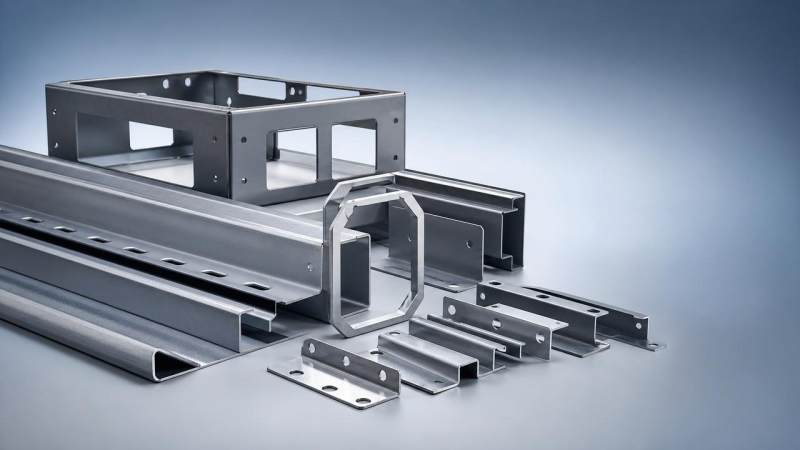
When people search for sheet metal angle, they usually want a practical answer: which angle works best, how strong it is, and whether it will fit the job.
For enclosures, guards, and trim work, the best choice is not simply the thickest or cheapest profile. It must match the load, environment, finish quality, and installation method.
Operators and shop-floor users often care less about theory and more about daily performance. They need angle sections that are easy to cut, drill, weld, align, and install consistently.
If the wrong section is selected, problems appear quickly. Panels may flex, guards may vibrate, corners may look uneven, and rework can increase material waste and labor time.
That is why the right sheet metal angle should be judged by function first. Strength, corrosion resistance, dimensional accuracy, and fabrication convenience matter more than appearance alone.
Where sheet metal angle is used in enclosures, guards, and trim
In industrial enclosures, sheet metal angle is commonly used as an internal support frame. It stiffens wall panels, strengthens corners, and helps doors or covers keep their shape.
In machine guards, angle sections support protective barriers around moving parts. A stable frame improves safety because panels stay fixed and resist impact, vibration, and repeated opening.
For trim work, the angle serves a different purpose. It creates neat edges, protects exposed corners, and improves the finished look of cabinets, housings, and equipment casings.
Some users also combine angle sections with channels, especially when a project needs stronger framing. In support structures, items like Channel In Steel can be paired with angles for extra rigidity.
The application decides the profile requirements. A light trim edge may need clean bending and smooth surface quality, while a guard frame may need higher thickness and better weldability.
How to choose the right thickness and size
Thickness is one of the first decisions. For light trim and finishing details, thinner material may be enough, but for guards and structural support, a thicker angle is usually safer.
If the angle is too thin, it may deform during handling or fastening. If it is too thick, it may raise cost, add unnecessary weight, and slow down cutting or forming.
Users should check the span length, panel weight, mounting points, and expected impact. A short support member may work well with a lighter gauge than a long unsupported section.
Hole patterns and fastening methods also matter. If bolts or screws are used near edges, the angle must have enough material to avoid tearing, distortion, or weak connection points.
Dimensional consistency is equally important. A profile with stable tolerances helps operators maintain alignment and reduce fitting adjustments during production and assembly.
Material options and what they mean in real work
The material grade affects durability, fabrication behavior, and corrosion performance. Carbon steel is often chosen for general industrial use because it offers strength, weldability, and good value.
Galvanized steel angle is a better option when moisture, outdoor exposure, or washdown conditions are expected. The zinc coating helps reduce rust and extends service life.
Stainless steel angle is often selected for cleaner environments or where corrosion resistance is critical. It is common in food equipment, chemical areas, marine settings, and decorative trim.
For many operators, the real question is simple: will the material hold up in the workplace? The answer depends on contact with water, chemicals, abrasion, and maintenance frequency.
A reliable supplier should offer multiple grades and standards, such as ASTM, EN, JIS, or GB, so buyers can match the material to project specifications and local compliance needs.
Why edge quality and straightness matter more than many users expect
In trim work, poor edge quality is immediately visible. Burrs, waviness, or inconsistent angles can damage appearance and make installation slower because extra finishing work is required.
In guards and enclosures, straightness affects more than looks. If the angle is twisted or uneven, panel gaps become inconsistent and doors may not close smoothly.
Good edge condition also improves safety. Operators handling cut parts face less risk of injury when corners are cleaner and surfaces require less corrective grinding or filing.
Accurate angle geometry helps maintain repeatability in production. When each piece is uniform, assembly becomes faster and quality control becomes easier across larger batches.
This is especially useful in export and OEM projects, where multiple units must match the same drawings, mounting locations, and surface finish expectations.
Installation and fabrication tips for operators
Before installation, confirm the part drawing, hole layout, and corner orientation. A simple marking error can cause mismatched parts, wasted labor, and avoidable delays on the shop floor.
Use cutting methods that suit the material and finish requirement. Saw cutting is common for clean ends, while plasma or laser cutting may be faster for higher-volume fabrication.
After cutting, remove burrs and check the angle for distortion. Even a small twist can affect how panels sit, especially in enclosure corners or visible trim lines.
When welding, control heat input to reduce warping. Tack first, verify alignment, and complete welds gradually. This is particularly important for thin sections used in guards and panel frames.
If fastening mechanically, choose the correct hole size and spacing. Over-tightening can deform thinner profiles, while poor spacing can reduce the load capacity of the connection.
Common mistakes that lead to weak frames or poor finish
One common mistake is selecting a profile based only on price. Lower-cost material may create bigger costs later through distortion, poor fit, corrosion, or repeated maintenance.
Another issue is ignoring the service environment. Indoor dry use and outdoor humid use are very different, and the same sheet metal angle may not perform equally well in both.
Some users also underestimate vibration and repeated impact. In machine guards, a profile that looks strong enough may still loosen or fatigue if dynamic loads are not considered.
Surface finish requirements are also often overlooked. For visible trim, scratches, scale, or inconsistent coating can affect customer perception, even if the part is mechanically acceptable.
Finally, buying without confirming tolerances can create assembly trouble. Small size deviations become large problems when many pieces must align across an enclosure or protective frame.
How to judge supplier reliability before ordering
For buyers and operators, material quality is only part of the decision. Stable production, traceable grades, and dependable delivery are just as important for avoiding downtime.
A capable supplier should provide clear technical data, including thickness range, tolerance, available grades, and applicable standards. This helps users compare products on facts, not assumptions.
Ask whether the supplier supports custom fabrication, special lengths, or OEM requirements. This can reduce secondary processing and improve installation efficiency at the destination site.
It is also helpful to review coating options, certification support, and export experience. These factors often determine whether materials arrive ready for use or create delays at inspection.
For projects that combine support profiles, manufacturers offering both angle products and structural sections such as Channel In Steel can simplify sourcing and quality coordination.
What Hongteng Fengda can support for industrial steel needs
Hongteng Fengda is a structural steel manufacturer and exporter from China serving global construction, industrial, and manufacturing projects with stable supply and customized solutions.
The company supplies angle steel, channel steel, steel beams, cold formed steel profiles, and custom structural components for customers across North America, Europe, the Middle East, and Southeast Asia.
With modern production facilities and strict quality control, products are manufactured to major international standards including ASTM, EN, JIS, and GB for broad project compatibility.
For users who need consistent quality, dependable lead times, and reduced sourcing risk, this kind of manufacturing support helps keep fabrication and installation work on schedule.
In practical terms, that means better control over dimensions, material consistency, corrosion options, and project communication from inquiry through export delivery.
Final thoughts on selecting a sheet metal angle
The right sheet metal angle improves more than structure. It affects safety, assembly speed, finish quality, maintenance needs, and the overall reliability of enclosures, guards, and trim work.
For operators, the best choice is usually the profile that fits the real working condition, not the one with the lowest unit price or the most general specification.
Focus on thickness, material grade, corrosion resistance, straightness, tolerance, and fabrication method. These factors have the biggest influence on performance and installation success.
If you evaluate those points carefully, you can avoid common failures and achieve a stronger, cleaner, and more efficient result in daily industrial applications.
When reliable supply and custom steel support are important, working with an experienced structural steel manufacturer can make the selection process more practical and more secure.
Please give us a message


Please enter what you want to find