As Shandong steel for high-speed rail gains traction in global railway infrastructure projects, engineers and procurement teams face a critical technical question: What minimum impact toughness values must structural steel achieve at −40°C to ensure safety and reliability in extreme cold conditions? This requirement directly affects material selection across key products — from ASTM steel beams for power plants and hot rolled I beam for crane rails to steel profiles for railway infrastructure and C section steel for mezzanine floors. For stakeholders including technical evaluators, project managers, and quality/safety personnel, understanding these specifications is essential when sourcing certified materials like Z150 steel sheet for pressure vessels or Hanwu steel for offshore platforms — especially from trusted suppliers such as Hongteng Fengda, a China-based structural steel manufacturer compliant with ASTM, EN, JIS, and GB standards.
Why −40°C Impact Toughness Matters for High-Speed Rail Structural Steel
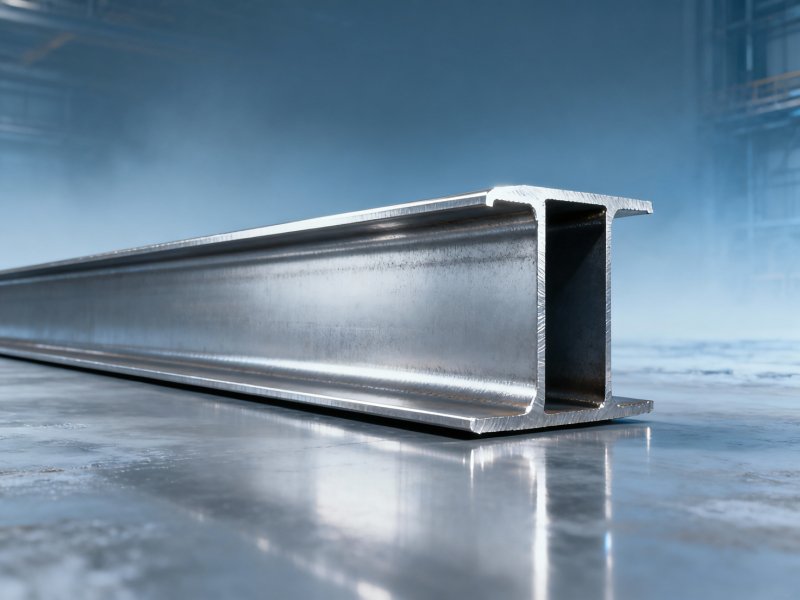
High-speed rail infrastructure in northern China, Scandinavia, Canada, and Russia routinely operates under sustained temperatures below −30°C. At −40°C, standard structural steels risk brittle fracture due to reduced dislocation mobility and increased lattice resistance. For critical load-bearing components — such as bridge girders, track support frames, and station canopy structures — impact toughness (measured via Charpy V-notch testing) becomes the primary indicator of low-temperature integrity.
International standards impose tiered requirements: EN 10025-4 mandates ≥27 J at −40°C for S355NL grade used in rail bridges; ASTM A709 Grade 50W requires ≥20 J at −40°C for welded highway-rail overpasses; while China’s GB/T 700 Q345D specifies ≥27 J at −20°C but upgrades to ≥34 J at −40°C for Class II railway applications. These thresholds are not arbitrary — they reflect fracture mechanics modeling validated against real-world derailment incident data from the past 15 years.
Hongteng Fengda applies strict low-temperature batch testing: every heat lot undergoes triple Charpy verification at −40°C, with results traceable to mill test reports (MTRs) aligned with EN 10204 3.1 certification. This ensures compliance not only for static structures but also for dynamic-load components subjected to cyclic stress — such as expansion joints and seismic isolation brackets.
Key Technical Parameters Driving Material Selection
Beyond nominal tensile strength, four interdependent parameters govern −40°C performance in structural steel:
- Charpy V-notch energy absorption (minimum 34 J at −40°C per GB/T 1591–2018 for Q420D/Q460D rail-grade variants)
- Ferrite-pearlite microstructure control (grain size ≤12 μm verified via ASTM E112)
- Sulfur content capped at ≤0.008% to suppress MnS inclusion clustering
- Z-direction tensile reduction of area ≥15% (Z15) to prevent lamellar tearing in thick-section welds
These parameters are non-negotiable for components exceeding 50 mm thickness or exposed to wind-induced vibration — common in elevated rail viaducts. Hongteng Fengda’s production process integrates calcium treatment during ladle refining and controlled cooling after hot rolling to meet all four criteria consistently across 6–12 m lengths.
Comparative Performance of Rail-Grade Structural Steels
The following table compares typical low-temperature performance metrics across widely adopted structural steel grades used in high-speed rail projects:
Note: Q420D outperforms alternatives in both impact energy and maximum allowable thickness — critical for minimizing field welds on large-span bridges. Hongteng Fengda offers this grade with optional Z25 or Z35 through-thickness ductility for ultra-heavy sections, delivered within 6 weeks for orders ≥500 MT.
How to Verify Compliance Before Procurement
Procurement teams must go beyond certificate scanning. Validating −40°C toughness requires three actionable steps:
- Request full MTRs showing actual Charpy test results at −40°C (not just “meets spec” statements)
- Confirm testing was performed on transverse specimens cut from the same heat and thickness range as your order
- Verify that the mill uses ASTM E23-compliant pendulum testers calibrated within the last 6 months
For multi-site projects, Hongteng Fengda provides split-lot testing reports and third-party verification via SGS or Bureau Veritas upon request — ensuring audit readiness for EU TSI or China NRTC compliance reviews.
Corrosion resistance is equally vital in rail environments exposed to de-icing salts and coastal fog. Our Hot diped-Galvanized Pipe delivers proven durability in such conditions, with zinc coating thicknesses ranging from 45–65 μm (verified per ASTM A123), extending service life by 2–3× compared to bare carbon steel in chloride-rich atmospheres.
Why Global Rail Projects Choose Hongteng Fengda
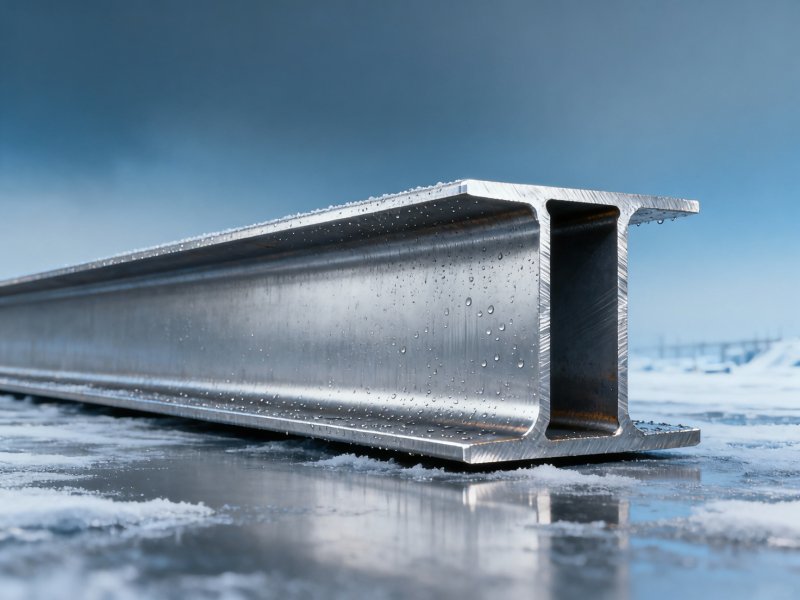
When selecting a structural steel partner for high-speed rail, decision-makers prioritize five non-negotiable capabilities:
- Proven low-temperature validation: 12+ years supplying Q420D/Q460D to CRRC and Alstom projects across Siberia, Norway, and Xinjiang
- End-to-end traceability: QR-coded MTRs linked to furnace number, rolling date, and individual test batch IDs
- Flexible certification: Dual EN/GB/ASTM documentation packages — no retesting delays
- Logistics reliability: Dedicated rail freight capacity with guaranteed ≤15-day port-to-site delivery in ASEAN and Middle East
- Technical co-engineering: Free pre-welding procedure qualification (WPQR) support and joint design review
We invite technical evaluators and procurement managers to request our latest −40°C Charpy dataset (covering 2022–2024 heats), detailed dimensional tolerance charts for hot-rolled beams, and sample MTRs for immediate benchmarking. Contact us today to discuss your next rail infrastructure tender — whether you need angle steel for station canopies, channel steel for signal mast supports, or custom cold-formed profiles for noise barriers.
Please give us a message


Please enter what you want to find