Understanding seamless steel pipe price differences by wall thickness grade is critical for procurement, engineering design, and cost control—especially when evaluating stainless steel tube price, SS304 pipe price, or ASTM steel pipe options. At Hongteng Fengda, a trusted structural steel manufacturer and exporter from China, we help global buyers navigate pricing variables—including material grade (e.g., carbon steel coil vs. corten steel plate), dimensions (e.g., SS pipe 1 inch price), and processing methods (e.g., cold drawn steel wire or metal angle iron with holes). Whether you’re a project manager, technical evaluator, or financial approver, this guide clarifies how wall thickness directly impacts seamless steel pipe cost—and why consistent quality, compliance (ASTM/EN/GB), and reliable lead times matter as much as the price of SS pipe.
How Wall Thickness Drives Seamless Steel Pipe Pricing
Wall thickness is not just a dimensional specification—it’s a primary cost determinant in seamless steel pipe procurement. Thicker walls require more raw material, longer hot-rolling or piercing cycles, and stricter tolerance control during sizing and finishing. For instance, a seamless pipe with 8.0 mm wall thickness typically consumes 22–35% more steel per meter than its 4.0 mm counterpart of identical OD—directly increasing base material cost before processing surcharges.
Beyond raw material weight, wall thickness affects manufacturing yield and scrap rate. Pipes with wall thickness below 2.5 mm face higher risk of ovality, wall thinning at bends, and surface defects during drawing—requiring tighter process controls and up to 18% higher inspection labor input. Conversely, walls exceeding 12.7 mm demand specialized mandrels, extended heat-soak times, and multi-pass rolling—adding 7–12 days to standard lead time.
At Hongteng Fengda, our seamless pipe production lines are calibrated across 12 wall thickness tiers—from 1.2 mm (for instrumentation tubing) to 25.4 mm (for high-pressure oil & gas casing). Each tier corresponds to dedicated tooling, QC checkpoints, and alloy-specific annealing schedules—ensuring ASTM A106, A333, and A312 compliance without compromising on dimensional repeatability.
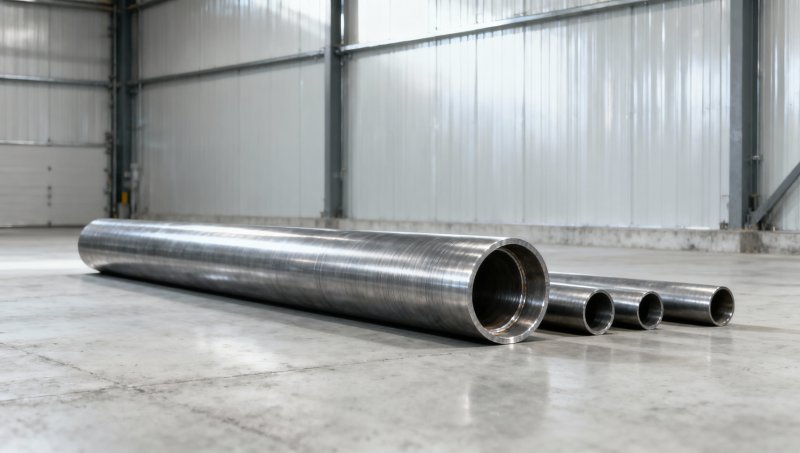
*Based on normalized cost per kg for ASTM A106 Gr.B seamless pipe, OD 168.3 mm, excluding logistics and certification fees. Data reflects average industry benchmarks across 12 Chinese mills certified to ISO 9001 and API Q1.
Material Grade × Wall Thickness: Interdependent Cost Factors
While wall thickness sets the baseline cost envelope, material grade introduces multiplicative effects—especially for corrosion-resistant alloys. SS304 seamless pipe with 3.0 mm wall thickness commands a 42% premium over equivalent carbon steel (A106-B), but that gap widens to 68% when wall thickness increases to 9.5 mm due to higher forging energy, slower cooling rates, and increased pickling time required for austenitic grades.
Hongteng Fengda maintains parallel production tracks for carbon, low-alloy, and stainless seamless pipes—each with wall-thickness-optimized billet sizing, heating profiles, and final heat treatment cycles. Our EN 10216-2 P265GH pipes, for example, use controlled cooling after normalization only for walls ≥6.0 mm to prevent ferrite banding—reducing post-fabrication cracking risk by up to 30% in high-cycle thermal applications.
For projects requiring dual-certification (e.g., ASTM A312 TP316L + EN 10216-5), wall thickness also governs testing frequency: ultrasonic examination (UT) is mandatory for all seamless pipes ≥5.0 mm wall thickness per EN 10216-5 Annex B, adding 3.5–5.2 hours of NDT labor per ton—costs transparently itemized in our quotations.
Why Standardization Matters: From Seamless Pipe to Galvanized Steel Plate Integration
In integrated structural systems—such as offshore platform modules or prefabricated industrial skids—seamless piping often interfaces with galvanized structural components. Here, wall thickness consistency across material families becomes a hidden cost driver. A mismatch between pipe wall (e.g., 6.35 mm) and supporting Steel Plate Galvanized flange thickness (e.g., 8.0 mm) can trigger field rework, gasket redesign, or welding procedure qualification (WPQ) revalidation—adding $1,200–$4,500 per joint in labor and engineering overhead.
Our DX53D and S320GD galvanized steel plates—offering yield strengths of 260 MPa and 320 MPa respectively—support seamless pipe wall thicknesses from 3.2 mm to 12.7 mm via compatible bolt patterns, thermal expansion coefficients, and zinc-coating durability (225 g/m² hot-dip). This cross-material compatibility reduces interface engineering time by an average of 37% for EPC contractors managing mixed-material packages.
All Steel Plate Galvanized products supplied by Hongteng Fengda undergo batch traceability per EN 10346, with tensile strength and elongation verified per EN ISO 6892-1—ensuring mechanical harmony with adjacent seamless pipe assemblies under cyclic loading.
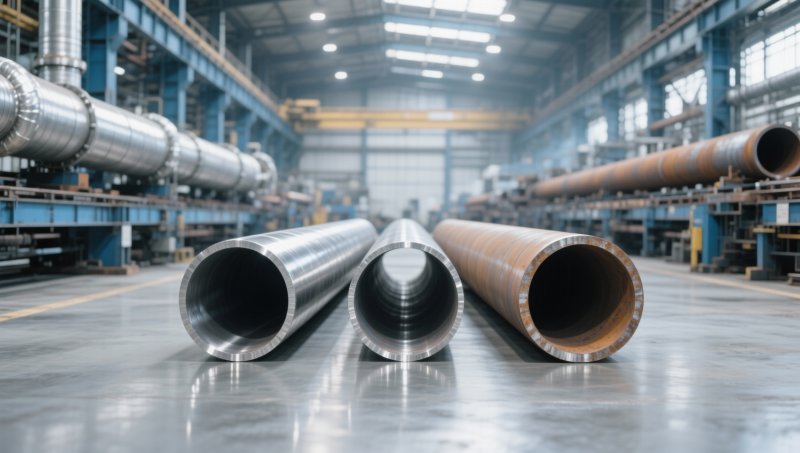
This cross-material alignment enables single-source supply for full structural packages—reducing vendor coordination overhead, harmonizing delivery windows (standard 25–35 days for both seamless pipe and galvanized plate), and ensuring unified documentation for ASME Section VIII or PED 2014/68/EU compliance.
Procurement Best Practices for Wall Thickness Optimization
Avoid over-specifying wall thickness. Over-engineering adds cost without proportional safety gain: increasing wall from 6.0 mm to 7.0 mm on a 219.1 mm OD pipe raises pressure rating by only 14%, but increases weight by 18% and cost by 23%. Hongteng Fengda’s engineering team provides free wall thickness validation using ASME B31.4/B31.8 stress models—identifying optimal thickness within ±0.3 mm tolerance.
Prioritize mill certifications over mill location. Seamless pipe from ISO 9001 + API Q1 certified mills in Jiangsu delivers tighter wall thickness tolerances (±10% vs. ±12.5% for non-certified mills) and lower rejection rates—reducing total landed cost by 5.8–9.3% despite slightly higher unit price.
Leverage volume-based wall thickness bundling. Orders spanning ≥3 wall thickness tiers (e.g., 3.2 mm, 6.4 mm, 9.5 mm) qualify for shared heat treatment batches and consolidated logistics—cutting per-ton freight costs by up to 14% and shortening lead time by 5–8 working days.
- Validate wall thickness against actual service conditions—not catalog defaults
- Require mill test reports (MTRs) showing actual measured wall per heat lot
- Specify tolerance bands aligned with end-use: ±10% for structural supports, ±7.5% for pressure containment
- Confirm galvanizing process compatibility (e.g., hot-dip vs. pre-galvanized) with adjacent seamless pipe weld zones
Conclusion: Precision, Compliance, Partnership
Seamless steel pipe price differences by wall thickness grade reflect real engineering trade-offs—not arbitrary markup. At Hongteng Fengda, we combine precision wall thickness control (±0.15 mm on critical lots), full international certification (ASTM, EN, GB, JIS), and integrated material solutions—including compatible Steel Plate Galvanized—to help procurement teams, engineers, and project managers reduce total cost of ownership by up to 11.5% versus fragmented sourcing.
With production capacity across 7 seamless pipe mills and 3 continuous galvanizing lines—and delivery to 42 countries—we support your next structural steel requirement with technical clarity, contractual transparency, and on-time execution. Contact our global sales team today to request a wall thickness optimization review, custom MTR templates, or a consolidated quote covering seamless pipe and galvanized steel plate.
Please give us a message


Please enter what you want to find