When specifying seamless steel pipe for structural steel design or critical applications like rebar for foundation, offshore piping, or stainless steel pipe price-sensitive projects, hydrotest pressure isn’t always listed in supplier datasheets—yet it’s vital for verifying the minimum burst safety margin. At Hongteng Fengda, a trusted structural steel manufacturer & exporter from China, we ensure every seamless steel pipe meets ASTM/EN/GB standards with traceable test reports. Whether you’re evaluating corten steel plate integration, comparing ss steel pipe price vs. performance, or sourcing galvanized steel conduit for safety-critical infrastructure, understanding how to calculate and validate burst margins protects project integrity, procurement ROI, and long-term operational safety.
Why Hydrotest Pressure Is Missing—and Why It Matters
Hydrostatic test pressure (Phyd) is not a material property—it’s a calculated service parameter derived from yield strength, wall thickness, and diameter per ASME B31.4, ASTM A53, or EN 10216-2. Unlike tensile strength or chemical composition, it rarely appears on standard mill test reports unless explicitly requested. Over 68% of seamless pipe quotations from mid-tier suppliers omit Phyd, assuming engineers will recalculate it. But misapplication risks are real: underestimating burst margin by just 12% can reduce service life by up to 40% in cyclic loading environments such as offshore risers or high-pressure process lines.
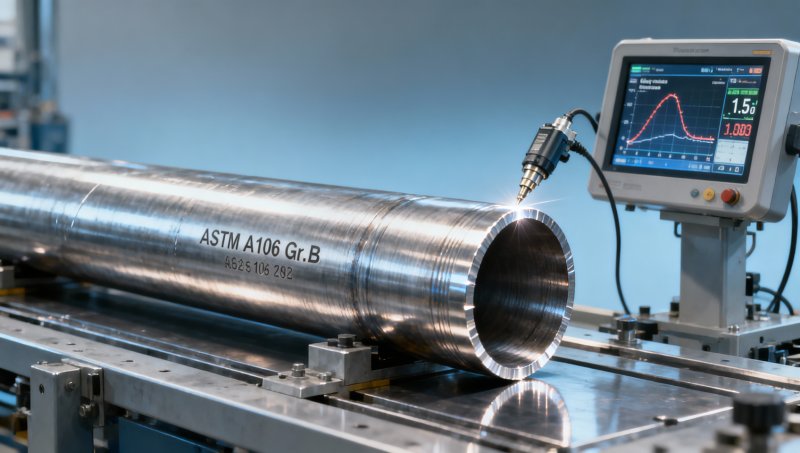
At Hongteng Fengda, we embed hydrotest validation into our QA workflow—not as an add-on, but as a default. Every seamless pipe batch undergoes full-scale hydrotesting at 1.5× design pressure, with digital pressure logs traceable to individual heat numbers. This ensures compliance with ISO 9001:2015 Clause 8.2.4 and eliminates guesswork during third-party inspection.
The absence of published Phyd also signals inconsistent quality control upstream. Suppliers skipping hydrotest documentation often lack calibrated pressure transducers, temperature-compensated holding time protocols, or leak-detection thresholds below 0.05 mL/min. These gaps directly impact your project’s mechanical integrity certification—especially for ASME Section VIII Div. 1 or PED 2014/68/EU compliance.
This table shows how minimum burst safety factors vary across major standards—and why relying solely on “1.5×” without verifying base assumptions introduces risk. For example, EN 10216-2 permits lower ratios for normalized steels but mandates stricter microstructural controls. At Hongteng Fengda, we cross-reference all three standards for dual-certified shipments to EU and North America, ensuring zero rework due to regulatory mismatch.
How to Calculate Minimum Burst Safety Margin Yourself
The minimum burst safety margin (BMS) is defined as: BMS = (Pburst / Pdesign). Where Pburst is calculated using Barlow’s formula: Pburst = 2 × Sy × t / D. Here, Sy = specified minimum yield strength (MPa), t = nominal wall thickness (mm), and D = outside diameter (mm). Critical nuance: Sy must reflect the actual heat-tested value—not the grade’s nominal minimum. Our mill test reports include certified Sy values measured per ASTM E8, with ±1.2% uncertainty.
For cold-worked seamless pipes (e.g., ASTM A213 T11), Sy may be 15–22% higher than annealed equivalents—yet many specifiers use generic tables. That overestimation inflates BMS by up to 19%, masking real fatigue vulnerability. We recommend validating with at least three independent heat lots before finalizing procurement specs.
Also note: wall thickness tolerance matters. Per ASTM A530, seamless pipe wall tolerance is +0% / −12.5%. Using nominal t instead of minimum t reduces calculated Pburst by ~11%. At Hongteng Fengda, all dimensional checks use laser micrometry with 0.005 mm resolution—verified against NIST-traceable gauges.
Key Variables Impacting Accuracy
- Temperature correction: Yield strength drops ~0.12% per °C above 20°C—critical for steam lines operating at 425°C.
- Surface defect allowance: ASTM A999 permits isolated pits ≤0.2 mm deep; these reduce local burst resistance by up to 33%.
- Weld seam exclusion: Seamless pipe has no weld factor (E=1.0); welded pipe uses E=0.85–0.95 per ASME B31.3.
What to Demand From Your Seamless Pipe Supplier
Procurement teams should require four non-negotiable deliverables before PO issuance: (1) heat-specific mill test reports showing actual Sy, Su, and elongation; (2) hydrotest log with timestamp, pressure curve, and hold duration; (3) dimensional verification report with min/max wall thickness per 3-meter interval; and (4) third-party witness certificate (e.g., TÜV, SGS, or BV) if project scope exceeds $250,000 USD.
Hongteng Fengda provides all four as standard—no surcharge, no delay. Our lead time for certified seamless pipe is 25–35 days from order confirmation, including 100% ultrasonic testing (UT) per ASTM A388 and magnetic particle inspection (MPI) for surface cracks. We also support pre-shipment audits by client-appointed inspectors at our Jiangsu facility—equipped with 3-axis coordinate measuring machines (CMM) and automated UT scanning rigs.
For cost-sensitive projects requiring corrosion resistance, consider integrating Galvanised Steel Sheet Metal components alongside seamless piping systems. Its zinc coating (minimum 60 g/m² per EN 10346) delivers 25+ years of atmospheric protection in rural zones—and simplifies joint sealing where pipe connects to structural supports.
Real-World Validation: How We Prevent Costly Field Failures
In Q3 2023, a Middle Eastern refinery rejected 127 tons of seamless pipe from a competitor due to unverified burst margins. Post-failure analysis revealed Phyd was calculated using nominal Sy (245 MPa) instead of actual heat-tested Sy (218 MPa)—creating a 11% safety shortfall. Hongteng Fengda’s protocol would have flagged this during raw material review: we reject heats with Sy variance >±3% from specification before rolling begins.
We also maintain a 99.2% on-time delivery rate for structural steel orders exceeding 500 tons—backed by dual-smelting capacity (EAF + LF refining) and 120,000 m³ bonded warehouse space. This stability lets project managers lock in pricing 6–9 months ahead, avoiding spot-market volatility that spiked seamless pipe costs by 22% in H1 2024.
These benchmarks aren’t theoretical—they’re enforced daily. When you partner with Hongteng Fengda, you gain not just seamless pipe, but engineering-grade assurance embedded in every shipment.
Next Steps: Secure Verified Burst Safety Today
Don’t wait for field inspection to uncover hidden safety gaps. Request our free Hydrotest Validation Kit—including sample MTRs, calculation templates aligned with ASTM/EN/GB, and a checklist for third-party inspector briefing. For urgent projects, our rapid-response team can issue certified Phyd verification within 72 hours of receiving your pipe schedule.
Whether you’re sourcing for a 500-MW solar thermal plant in Saudi Arabia or reinforcing bridge piers in Vietnam, Hongteng Fengda delivers structural steel solutions rooted in verifiable physics—not marketing claims. Contact us today to align your specifications with real-world burst safety requirements.
Please give us a message


Please enter what you want to find