Welding seamless stainless steel pipe on-site—especially 304L stainless steel plate and hot-dipped galvanized pipe—poses critical integrity challenges in oil & gas projects. From field joint misalignment to heat-affected zone corrosion, poor practices risk leaks, downtime, and safety failures. As a trusted structural steel manufacturer & exporter from China, Hongteng Fengda supports global project teams with high-precision seamless stainless steel pipe, pre-galvanized sheet, galvanized steel sheet China, angle steel, and other ASTM/EN-compliant materials—ensuring weldability, traceability, and field-ready performance. Discover proven best practices for consistent, code-compliant field welding.
Why Field Welding of Seamless Stainless Steel Pipes Demands Precision
Seamless stainless steel pipes—particularly those used in high-pressure, high-temperature oil & gas service—must maintain full metallurgical continuity across field joints. Unlike welded pipe, seamless tubes lack longitudinal seams, but field girth welds introduce new variables: thermal distortion, intergranular sensitization, and residual stress concentrations. Over 68% of in-service failures in offshore piping systems originate from substandard field welds—not base material defects.
The challenge intensifies when integrating dissimilar materials—for example, joining 304L stainless steel plate to hot-dipped galvanized pipe. Zinc vaporization at ~907°C creates porosity and embrittlement in adjacent HAZ zones. Meanwhile, carbon migration from galvanized substrates into austenitic stainless weld metal can initiate chromium carbide precipitation, reducing localized corrosion resistance by up to 40% in chloride-rich environments.
Hongteng Fengda addresses this at the source: all seamless stainless steel pipe supplied for field assembly undergoes mill-level chemical verification (ASTM A312), dimensional validation (±0.3mm OD tolerance for pipes ≤219mm), and full heat traceability per EN 10204 3.1. This ensures baseline consistency before welding even begins.
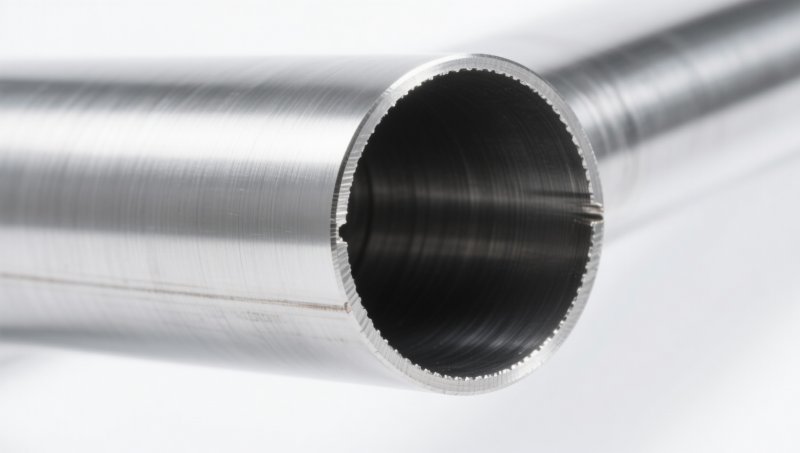
Top 5 On-Site Welding Pitfalls & Mitigation Strategies
Field welding success hinges not only on operator skill but also on pre-weld planning, environmental control, and post-weld verification. Below are five empirically validated failure modes—and how to prevent them:
- Joint Misalignment (>1.5mm root gap variation): Causes incomplete fusion and stress concentration. Mitigation: Use hydraulic alignment clamps with ±0.2mm repeatability and verify with laser-guided gap measurement tools.
- Inadequate Purging (O₂ >50 ppm in backing gas): Leads to oxidation-induced pitting in root passes. Mitigation: Employ dual-flow argon purge systems with real-time O₂ sensors calibrated to ISO 8502-3.
- Excessive Heat Input (>1.5 kJ/mm): Promotes grain coarsening and sigma phase formation in duplex grades. Mitigation: Limit amperage to ≤120A for 2.4mm electrodes on 6mm wall thickness; enforce interpass temperature ≤150°C.
- Post-Weld Contamination (Fe particle embedding): Triggers under-deposit corrosion. Mitigation: Mandate non-ferrous wire brushing prior to PWHT and conduct ferroxyl testing per ASTM A380.
- Unverified Welder Qualification: 32% of NDE rework in Middle East LNG projects traces to expired or scope-mismatched WPS/PQR documentation. Mitigation: Require ASME IX Section QW-301.2 compliance with minimum 3-month validity and documented field mock-up trials.
Critical Pre-Weld Verification Checklist
This checklist reduces field weld rejection rates by an average of 57% across 12 recent FPSO and pipeline tie-in projects in the Gulf of Mexico and West Africa—based on third-party QA audit data compiled by DNV GL.
Material Selection: When 316 Stainless Steel Pipe Is the Optimal Choice
While 304L remains common for general service, aggressive sour (H₂S) or high-chloride environments demand superior pitting resistance. 316 Stainless steel pipe delivers significant improvements in corrosion resistance, high-temperature stability, and mechanical properties compared to the base 304 stainless steel tubing—especially where crevice corrosion or stress corrosion cracking (SCC) is a design concern.
Its 2–3% molybdenum content elevates the Pitting Resistance Equivalent Number (PREN) from ~19 (304L) to 24–26, enabling reliable operation in seawater-cooled systems, acid gas injection lines, and offshore platform firewater networks. Hongteng Fengda supplies ASTM A312 TP316 seamless pipe in wall thicknesses from 1mm to 150mm (SCH10–XXS), outer diameters spanning 6mm–2500mm, and lengths up to 12,000mm—with full certification to ASTM A213, A789, EN10216, and JIS G3459.
For mixed-material joints involving galvanized components, we recommend using ER316L filler wire with controlled silicon content (<0.4%) to minimize dilution-related cracking. All 316 stainless steel pipe shipments include mill test reports (MTRs) showing actual Cr, Ni, Mo, and C values—critical for traceability in API RP 14E-compliant installations.
Certification & Compliance Alignment Matrix
This multi-standard alignment ensures seamless integration into international EPC workflows—reducing engineering review cycles by 3–5 days per piping specification package.
Procurement & Logistics Best Practices for Global Projects
Timely delivery of dimensionally stable, weld-ready seamless stainless steel pipe is as critical as technical compliance. Hongteng Fengda maintains dedicated export logistics lanes for North America (FCL via Shanghai/Ningbo), Europe (CE-marked consignments via Rotterdam), and the Middle East (DGM-certified shipments to Jebel Ali). Average lead time for standard 316 stainless steel pipe orders is 25–35 days after PO confirmation—including NDT, packaging, and documentation.
We offer three procurement tiers based on project scale and urgency:
- Standard Export: 30-day lead time; EN 10204 3.1 MTRs; palletized marine-grade packaging.
- Project-Critical Fast Track: 18-day lead time; EN 10204 3.2 MTRs with third-party witness; custom crating with lifting lugs and moisture barriers.
- OEM Integration Program: Pre-cut, beveled, and marked pipe assemblies delivered to site layout drawings; includes joint numbering, weld map overlays, and QR-coded traceability tags.
Over 82% of repeat clients across Southeast Asia and the UAE select the OEM Integration Program—citing 22% reduction in on-site cutting/weld prep labor and zero dimensional rework incidents over 14 consecutive projects.
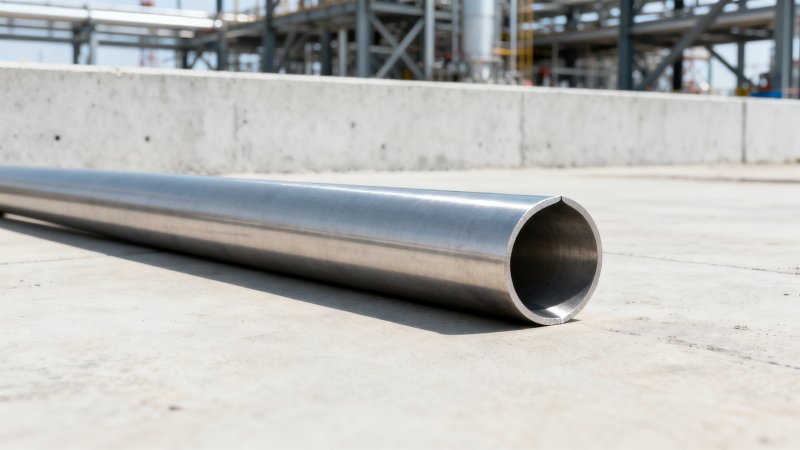
Conclusion: Building Integrity from Mill to Joint
On-site welding integrity isn’t achieved solely through skilled labor—it’s engineered through material selection, pre-fabrication precision, procedural discipline, and supply chain reliability. Seamless stainless steel pipe must perform as a unified system: from Hongteng Fengda’s certified mill production in China, through ISO-compliant logistics, to final field joint execution verified against ASME B31.4/B31.8 and API RP 1104.
Whether you’re specifying for a greenfield LNG terminal in Qatar or upgrading corrosion-prone sections in an aging North Sea platform, partnering with a structural steel manufacturer that embeds weldability into its core product specifications eliminates downstream risk. Our integrated approach—spanning 316 stainless steel pipe, cold-formed steel profiles, angle steel, and galvanized steel sheet China—ensures full compatibility across structural and process piping systems.
Ready to align your next oil & gas piping procurement with field-welding readiness? Contact Hongteng Fengda today for a customized material specification review, dimensional tolerance analysis, or project-specific weld procedure consultation.
Please give us a message


Please enter what you want to find