Think seamless pipe is always the strongest choice? Think again. In structural steel fabrication, welded pipe often outperforms seamless—especially for large-diameter, cost-sensitive, or ASTM-compliant applications like steel beams, galvanized steel pipe, and stainless steel tubing. As a trusted stainless steel supplier and structural steel manufacturer from China, Hongteng Fengda delivers high-strength welded solutions meeting EN, ASTM, and GB standards—ideal for construction, industrial projects, and steel roofing systems. Whether you're evaluating carbon steel pipe vs. seamless, optimizing steel roofing cost, or sourcing hot dip galvanized steel, understanding this distinction helps procurement teams, engineers, and project managers make smarter, safer, and more economical decisions.
When Does Welded Pipe Outperform Seamless in Structural Applications?
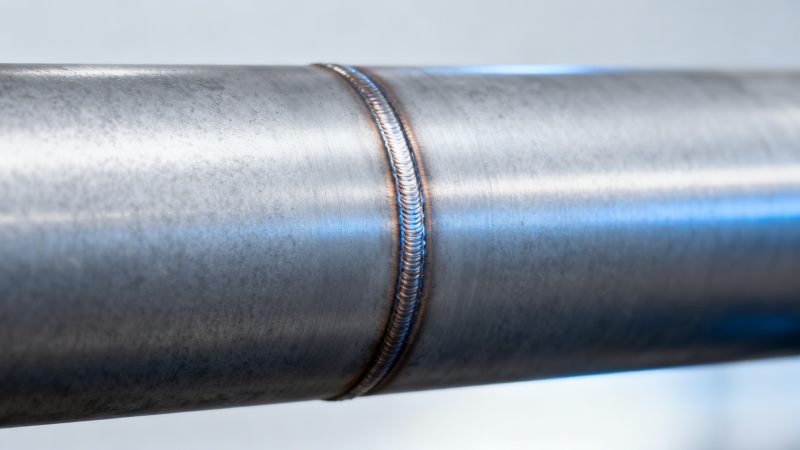
The assumption that seamless pipe is inherently superior stems from its manufacturing process—extruded from solid billets without weld seams—making it ideal for high-pressure, high-temperature, or critical fluid conveyance. But in structural steel contexts—such as load-bearing frames, purlins, wall beams, and light manufacturing supports—welded pipe offers distinct advantages rooted in dimensional control, material efficiency, and application-specific performance.
For diameters above 168 mm (6.6 inches), seamless pipe becomes exponentially more expensive and harder to source consistently. Welded pipe, by contrast, maintains tight tolerances (±0.02 mm on thickness, ±2 mm on height) across lengths of 6–12 m, enabling precise fit-up in prefabricated steel structures. This precision reduces field adjustments, cuts installation time by up to 30%, and improves structural integrity under cyclic loading—key for seismic zones and industrial facilities.
Moreover, modern high-frequency induction (HFI) and submerged arc welding (SAW) processes produce welds with tensile strength matching or exceeding base metal—particularly when using Q345B, Duplex, or 316-grade materials. Independent third-party testing (SGS, BV, CE) confirms weld-zone hardness remains within 95–105% of parent material, eliminating weak-link concerns common in older ERW methods.
Key Performance Drivers for Structural Use
- Consistent wall thickness control across 1.5–25 mm range—critical for uniform load distribution in Channel In Steel and beam assemblies
- Optimized metallurgical grain structure post-weld heat treatment (PWHT), enhancing fatigue resistance in dynamic-load environments
- Full compatibility with hot-dip galvanizing (HDG)—achieving coating thicknesses of 70–120 µm per ISO 1461, versus inconsistent coverage on seamless due to internal surface oxidation
- Scalable production capacity: 2–4 weeks lead time for standard orders, versus 8–12 weeks for custom seamless extrusions
How Material Grade & Surface Treatment Impact Real-World Durability
Material selection isn’t just about yield strength—it’s about corrosion resilience, weldability, and lifecycle cost. For example, Q235B carbon structural steel provides 235 MPa minimum yield strength at competitive pricing, while Q345B delivers 345 MPa with improved low-temperature toughness (down to –40°C). In aggressive coastal or chemical-exposure environments, duplex stainless steels (e.g., UNS S32205) combine 450–550 MPa tensile strength with chloride stress-corrosion resistance far exceeding 304 or 316 grades.
Surface treatment directly affects service life. Hot-dip galvanized channel steel achieves minimum 610 g/m² zinc coating weight (ASTM A123), offering 25+ years of maintenance-free protection in urban atmospheres—and over 15 years in marine settings. Hot-blown galvanized variants provide enhanced adhesion for subsequent powder coating, crucial for architectural façades and steel roofing systems requiring color consistency and UV stability.
This data-driven approach ensures durability aligns with budget and environment—not assumptions. For instance, specifying HDG Channel In Steel instead of bare carbon steel reduces lifetime maintenance costs by 60–75% in infrastructure projects across Southeast Asia and the Middle East.
Procurement Checklist: 5 Critical Factors Beyond “Seamless vs. Welded”
Decision-makers must move beyond binary comparisons. Here’s what actually matters during technical evaluation and vendor selection:
- Dimensional repeatability: Verify tolerance compliance (e.g., ±0.02 mm thickness) via mill test reports—not just nominal specs
- Weld zone verification: Require Charpy V-notch impact test results at –20°C for all welded structural sections
- Zinc coating uniformity: Confirm HDG adherence to ASTM A123 Section 7.2—minimum 610 g/m² average, no spot below 490 g/m²
- Traceability & certification: UL, CE, ISO 9001, and SGS-certified documentation must accompany every shipment
- Logistics readiness: Assess stock availability for standard sizes (e.g., 100×50×5 mm U-channel steel) and confirmed 7–15 day dispatch windows
Why Global Project Teams Choose Hongteng Fengda for Structural Steel Solutions
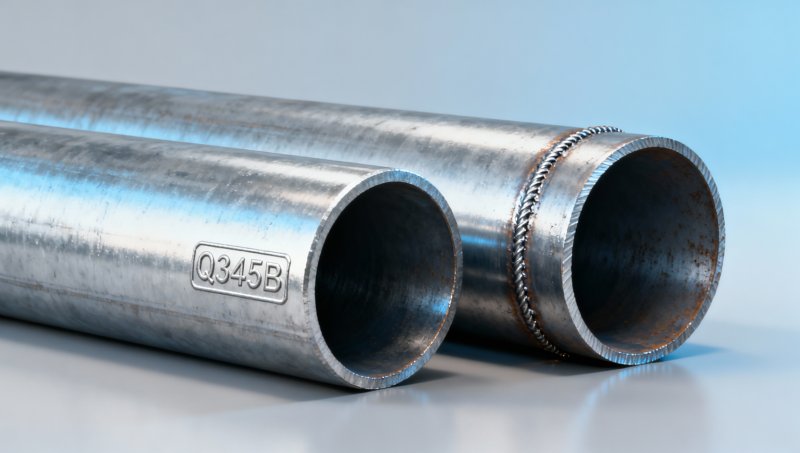
Hongteng Fengda bridges the gap between global compliance requirements and on-the-ground execution realities. As a structural steel manufacturer and exporter from China, we don’t just supply products—we co-engineer outcomes. Our integrated capabilities include:
- End-to-end traceability from raw material (GB/T 700, ASTM A36, EN 10025) through cold-forming, welding, galvanizing, and final inspection
- Multi-standard compliance: All Channel In Steel meets AISI, ASTM, DIN, JIS, BS, and GB/T specifications—with dual-certification options (e.g., ASTM A500 + EN 10219) available
- Export-ready logistics: 30+ container loads/month capacity, pre-shipment inspections (BV/SGS), and FTA documentation support for North America, EU, and GCC markets
- Customization agility: From OEM-branded packaging to laser-cutting, punching, and bending services—all executed within 10–14 working days
We help procurement teams reduce sourcing risk—not just cost. With stable production capacity, consistent quality across 12,000+ tons/year output, and dependable lead times (standard items shipped within 7–15 days), we enable predictable project scheduling and inventory optimization. Contact us today to discuss your next structural steel requirement—including grade selection, galvanizing specifications, dimensional validation, or full OEM support.
Please give us a message


Please enter what you want to find