While diameter is often the go-to metric for pipe selection, seamless pipe internal roughness critically governs flow efficiency—impacting pressure drop, energy consumption, and system longevity. For steel suppliers and project stakeholders—from technical evaluators to procurement teams and structural steel fabrication managers—understanding this nuance ensures optimal material choice. Whether specifying stainless steel pipe, carbon steel pipe, or hot dip galvanized steel for fluid conveyance, surface finish directly affects compliance with ASTM standards and operational performance. As a trusted stainless steel supplier and structural steel manufacturer, Hongteng Fengda delivers precision-engineered seamless pipe and structural steel beams that balance dimensional accuracy, surface quality, and international certification—supporting smarter, safer, and more cost-effective infrastructure decisions.
Why Internal Roughness Matters More Than Diameter Alone
Diameter determines nominal capacity—but internal surface roughness dictates real-world hydraulic resistance. In seamless carbon steel pipes used for high-pressure fluid transport, even minor deviations in Ra (arithmetic average roughness) from 0.8 μm to 3.2 μm can increase friction factor by up to 40%, raising pumping energy costs by 12–18% over a 10-year service life.
This effect intensifies in turbulent flow regimes common in industrial piping systems (Re > 4,000), where wall shear stress becomes exponentially sensitive to micro-irregularities. A pipe with identical outer diameter and wall thickness—but Ra = 2.5 μm vs. Ra = 0.9 μm—can exhibit 22% higher ΔP across 100 m of straight run at 3 m/s flow velocity.
For structural steel fabricators integrating piping into load-bearing frameworks—or OEMs embedding conduits within prefabricated modules—roughness-driven pressure loss translates directly into oversized pump specifications, increased motor sizing, and higher lifecycle CAPEX. That’s why ASTM A53, EN 10216-2, and GB/T 8163 all specify maximum allowable inner surface roughness alongside dimensional tolerances.
How Manufacturing Process Shapes Surface Quality
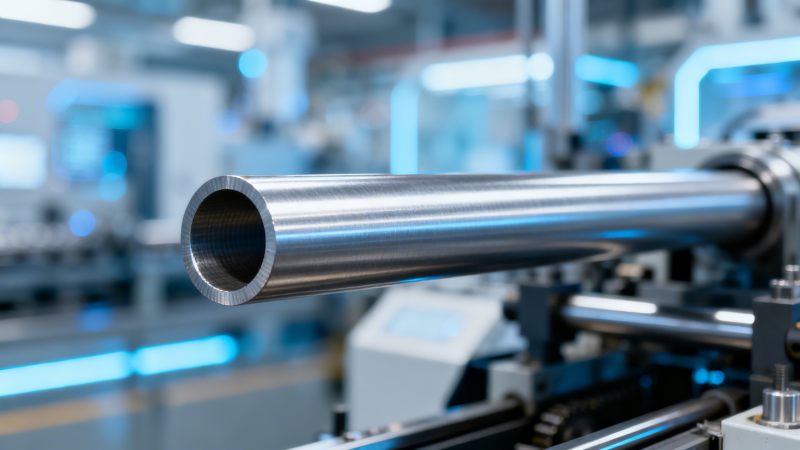
Cold drawing produces smoother internal surfaces than hot finishing—typically achieving Ra ≤ 1.6 μm versus Ra ≥ 3.2 μm for hot-finished seamless pipes. At Hongteng Fengda, our cold-drawn seamless pipe production line employs multi-stage polishing mandrels and inline surface metrology, ensuring consistent Ra values between 0.8–1.2 μm across diameters from 21.3 mm to 219.1 mm.
Galvanizing adds another layer of complexity: zinc spatter, dross adhesion, or uneven coating thickness can elevate effective roughness by 0.3–0.7 μm—even on otherwise smooth substrates. Our hot-dip galvanizing line uses high-pressure air wiping and controlled withdrawal speed (≤ 1.2 m/min), maintaining zinc layer uniformity within ±5 g/m² across the full 60–275 g/m² range.
For applications requiring ultra-low turbulence—such as pharmaceutical clean utilities or semiconductor process gas lines—we offer electropolished seamless stainless steel (ASTM A269/A270) with Ra ≤ 0.4 μm, verified via profilometer traceability per ISO 4287.
Comparing Flow Efficiency Across Common Structural Steel Pipe Types
The table below compares pressure loss per 100 meters for 100 mm NB seamless pipes under laminar and turbulent flow conditions, using Darcy–Weisbach calculations with actual measured roughness values from certified production batches:
Note: All values assume 100 mm nominal bore, 4.5 mm wall thickness, and water at 20°C. Differences widen significantly with viscosity changes—e.g., crude oil (100 cSt) shows 31% greater ΔP delta between cold-drawn and hot-finished variants at 2.5 m/s.
Procurement Checklist: What to Verify Before Finalizing Seamless Pipe Orders
Technical evaluators and procurement teams must validate these five parameters—not just diameter and schedule—to avoid field-level flow inefficiencies:
- Surface roughness certificate (Ra value, measurement method per ISO 4287 or ASTM E1092)
- Verification report showing max-min deviation across 3 axial positions per pipe length
- Zinc coating weight distribution test (for galvanized grades)—minimum 80 g/m² at any point
- Hydrostatic test pressure documentation (1.5× design pressure, held ≥ 5 sec per ASTM A53)
- Traceable heat number linking mechanical properties (Yield Strength ≥240 MPa, Tensile Strength ≥270 MPa) to surface finish data
Hongteng Fengda provides full mill test reports (MTRs) with every shipment—including digital copies signed via PKI encryption—and supports third-party inspection (SGS, BV, TÜV) at no extra cost for orders exceeding 20 tons.
Why Choose Hongteng Fengda for Precision Seamless Pipe & Structural Steel Solutions
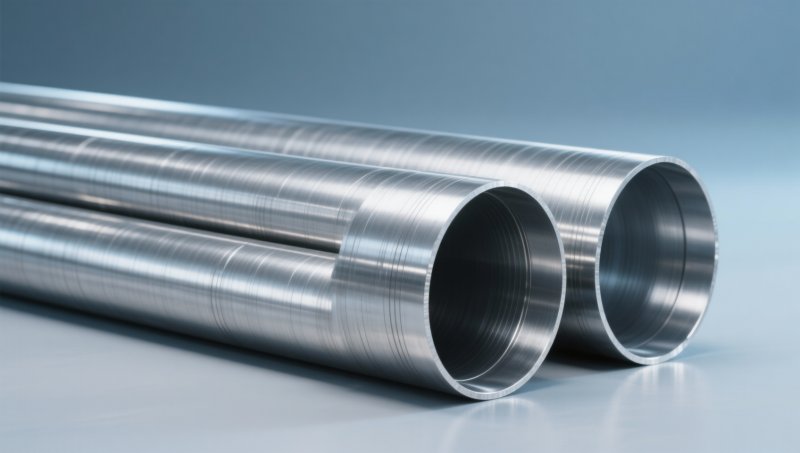
As a vertically integrated structural steel manufacturer, we control the full chain—from billet casting through cold drawing, galvanizing, and final inspection. This enables guaranteed Ra consistency (±0.15 μm tolerance band), repeatable zinc layer control (60–275 g/m²), and compliance with ASTM, EN, JIS, and GB standards—all verified in our ISO/IEC 17025-accredited lab.
For projects demanding both structural integrity and hydraulic efficiency—like offshore platform risers, LNG transfer manifolds, or modular hospital utility cores—we also supply Galvanized Expanded Metal Sheet (G60, DX51D+Z, S320GD+Z) with 0.12–6.00 mm thickness and custom perforation patterns for protective cladding, ventilation grilles, and acoustic damping layers—delivered with matching zinc coating specs and EN 10142 certification.
Contact us today for: (1) Ra-targeted seamless pipe sample batches with full surface metrology reports, (2) Custom galvanizing process validation for your specific fluid media, (3) OEM engineering support for hybrid structural-piping assemblies, or (4) Lead time confirmation for urgent deliveries—standard lead: 25–35 days FOB Qingdao, with expedited options down to 14 days.
Please give us a message


Please enter what you want to find