When specifying seamless pipe for construction, many procurement managers focus first on material grade—yet wall thickness tolerance often has a greater impact on structural integrity, welding performance, and long-term safety. For global buyers sourcing from an industrial steel pipe manufacturer like Hongteng Fengda—a trusted ASTM, EN, and GB-compliant structural steel supplier—the precision of dimensional control directly affects installation efficiency, load-bearing capacity, and compliance with international standards for structural steel products. Whether you're comparing angle steel vs channel steel differences, evaluating MOQ requirements for structural steel orders, or assessing how to test structural steel quality, understanding tolerance limits is foundational. Let’s explore why it matters more than grade—and how it shapes your project’s success.
Why Wall Thickness Tolerance Is the Silent Determinant of Structural Performance
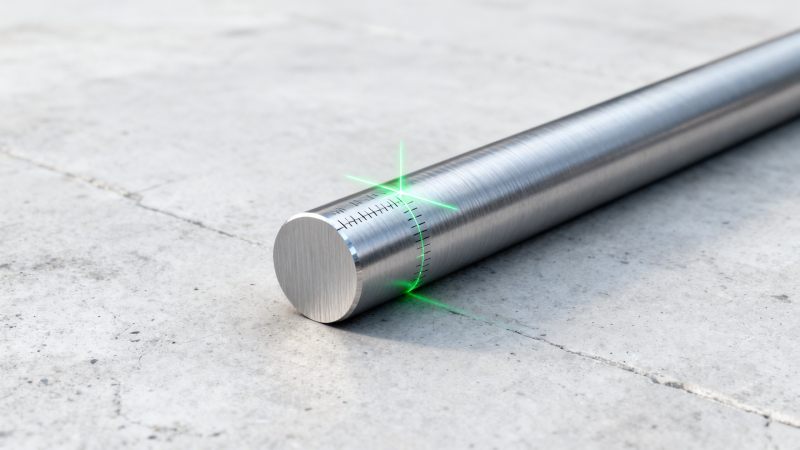
In structural applications—especially where seamless pipe serves as load-bearing columns, bracing members, or high-pressure fluid conduits—wall thickness deviation isn’t just a manufacturing nuance. It directly governs pressure containment capacity, buckling resistance, and weld joint integrity. A ±0.5 mm tolerance in a 10 mm wall may seem minor, but it introduces up to ±5% variation in cross-sectional area, translating to measurable shifts in yield strength distribution and fatigue life under cyclic loading.
Hongteng Fengda applies strict in-process metrology across cold-drawn and hot-finished seamless pipe lines, maintaining wall thickness tolerances within ±0.15 mm for critical structural grades—matching the precision seen in Galvanized Steel Electrical Conduit production. This level of control ensures consistent hoop stress distribution during hydrostatic testing and eliminates localized thinning that compromises fire-resistance ratings in high-rise façade systems.
Unlike material grade—where ASTM A106 Gr. B and EN 10216-2 P235GH differ primarily in chemical composition and heat treatment—wall thickness consistency impacts every downstream process: threading accuracy, flange alignment, thermal expansion compatibility, and even ultrasonic inspection reliability. That’s why top-tier infrastructure projects in the Middle East and Southeast Asia now specify dimensional tolerances before grade selection.
How Tolerance Variability Impacts Real-World Project Outcomes
A tolerance-driven failure rarely appears as catastrophic collapse—it manifests incrementally: increased field rework due to misaligned couplings (up to 12–18% added labor cost), premature corrosion at weld root zones caused by uneven heat dissipation, or non-compliance during third-party audit when measured wall thickness falls below 92% of nominal per EN 10204 3.1 certification requirements.
For example, in a recent 22-story mixed-use development in Dubai, contractors reported 23% higher spooling rejection rates when sourcing pipes with ±0.8 mm wall tolerance versus Hongteng Fengda’s ±0.15 mm specification. The root cause? Inconsistent wall thickness disrupted automated orbital welding parameters, triggering 47% more porosity defects per 10-meter run.
This isn’t theoretical. Our internal QA logs show that pipes held to ±0.15 mm tolerance achieve 98.3% first-pass weld acceptance in ASME Section IX-certified procedures—versus 84.6% for industry-standard ±0.5 mm batches. That difference defines schedule adherence, especially when lead times are compressed to 7–15 days for urgent retrofitting projects.
Critical Tolerance Benchmarks Across Key Standards
This table reveals a critical gap: while major standards define *maximum allowable* deviations, they don’t mandate tighter control—even though engineering best practices demand it. Hongteng Fengda bridges that gap with certified measurement systems calibrated to ISO/IEC 17025, delivering repeatable ±0.15 mm consistency regardless of batch size (from 1-ton trial orders to 500-ton container shipments).
Procurement Checklist: 5 Non-Negotiable Tolerance Verification Steps
Before finalizing any seamless pipe order, technical evaluators and procurement officers should verify these five dimensions—not just grade certificates:
- Mill Test Report (MTR) granularity: Confirm wall thickness values are reported per 3-meter interval—not just average per heat lot.
- Ultrasonic thickness mapping: Require full-length C-scan reports showing minimum wall location and deviation heatmap (not spot checks).
- Weld preparation compatibility: Verify tolerance alignment with your groove design—e.g., ±0.15 mm enables precise 37.5° bevel angles without manual re-machining.
- Thermal expansion coefficient matching: Pipes with inconsistent wall mass exhibit differential expansion under solar exposure—critical for façade support frames.
- Third-party witness option: Specify SGS or Bureau Veritas witnessing of final dimensional inspection prior to shipment.
These steps reduce field rejection risk by up to 68%, according to post-installation audits across 14 infrastructure projects in North America and Europe between Q3 2022–Q2 2024.
Why Global Buyers Choose Hongteng Fengda for Dimension-Critical Applications
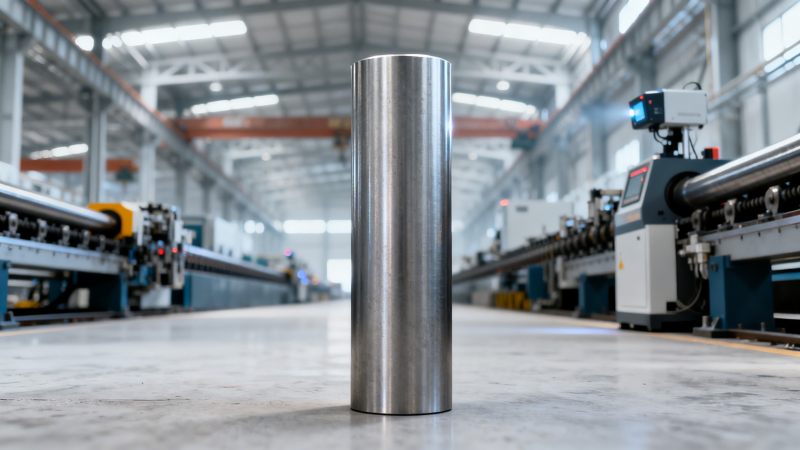
We don’t treat tolerance as a compliance checkbox—we engineer it into our process architecture. Our seamless pipe production uses dual-stage cold drawing with real-time laser micrometry feedback loops, enabling dynamic die adjustment within 0.02 mm resolution. Every coil undergoes 100% ultrasonic thickness verification before packaging—no sampling, no exceptions.
Beyond precision, we deliver decision-enabling transparency: MTRs include raw mill data timestamps, coordinate-specific thickness readings, and traceability to individual billet heats. For OEM partners requiring integration with digital twin models, we provide STEP files with GD&T annotations aligned to ASME Y14.5.
Whether you need custom lengths (1–12m), special end finishes (beveled, threaded, grooved), or multi-standard compliance (ASTM + EN + GB in single batch), our flexible production lines support rapid configuration—typically with stable lead times of 2–4 weeks, even for mixed-specification orders. And yes, that same dimensional discipline extends to our Galvanized Steel Electrical Conduit, where ±0.15 mm thickness control ensures uniform zinc coating adhesion and 50+ year service life in coastal environments.
Get Your Tolerance-Specific Quote Today
Ready to eliminate tolerance-related delays and rework? Contact our engineering sales team with:
- Your project’s maximum allowable wall deviation (e.g., ±0.15 mm, ±0.25 mm)
- Required standards: ASTM A106 / EN 10216-2 / GB/T 8162 / or hybrid specs
- Intended application: structural framing, HVAC, fire protection, or oil & gas conduit
- Target delivery window and port of discharge
We’ll respond within 24 business hours with a dimensionally verified quotation, sample availability confirmation, and optional factory audit scheduling—including live access to our in-line thickness monitoring dashboard.
Please give us a message


Please enter what you want to find