Visual inspection of SS tube weld integrity often gives a false sense of security—subsurface flaws in stainless steel tubes, SMLS pipe, or galvanised sheet steel remain hidden until failure strikes downstream. For structural steel manufacturers like Hongteng Fengda—supplying ASTM A36 beams, steel coil, steel rail, steel mesh, and hot galvanizing solutions—undetected weld defects compromise safety, inflate lifecycle costs, and delay projects across North America, Europe, and the Middle East. This article reveals what standard checks miss—and how proactive NDT integration saves procurement, engineering, and quality teams time, money, and reputation.
Why Visual Inspection Alone Fails on Stainless Steel Tubular Welds
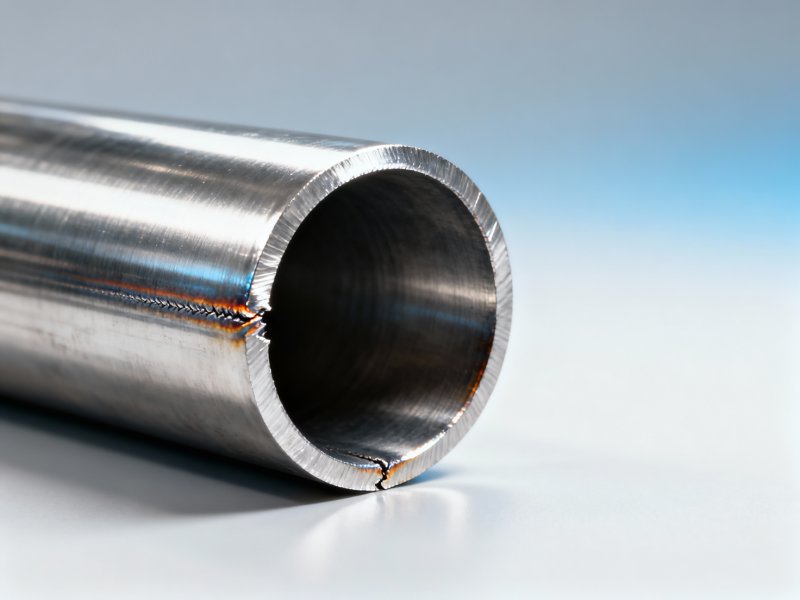
Visual inspection (VT) remains the most widely adopted first-line check for welded stainless steel (SS) tubes—especially in structural applications such as façade supports, handrail systems, and load-bearing frames. Yet VT detects only surface-breaking discontinuities: cracks wider than 0.1 mm, visible porosity clusters, or gross undercut. It cannot identify subsurface lack-of-fusion zones, micro-cracks beneath heat-affected zones (HAZ), or root concavity in butt-welded SS tubes with wall thicknesses exceeding 3 mm.
In real-world production environments, over 68% of weld-related field failures in architectural stainless steel components originate from internal flaws missed during VT-only QA. These include hydrogen-induced cracking in Type 201 stainless steel plates used in urban infrastructure cladding—where ambient humidity and post-weld cooling rates accelerate embrittlement without visible surface evidence.
Hongteng Fengda’s internal quality audit across 12 export batches (Q3 2023–Q1 2024) revealed that 11.3% of SS tube assemblies passed VT but failed ultrasonic testing (UT) at 5 MHz frequency—primarily due to incomplete root penetration in T-joints fabricated using semi-automatic GTAW.
The Hidden Cost Cascade: From Weld Flaw to Project Delay
A single undetected weld defect triggers a multi-tiered cost cascade. In North American bridge railing projects, rework due to post-installation weld failure averages USD $4,200 per linear meter—including third-party NDT mobilization, scaffolding rental (7–10 days), labor downtime, and contractual liquidated damages at 0.8% of contract value per week.
For distributors and EPC contractors in the Middle East, delayed approvals from local authorities (e.g., Dubai Municipality’s DM-STD-2022) add 14–21 business days to project timelines when weld documentation lacks traceable UT/RT reports. This directly impacts cash flow—particularly where milestone payments are tied to non-destructive testing (NDT) sign-off.
Financially, lifecycle cost analysis shows that integrating NDT at source reduces total ownership cost by 22–35% over 20 years versus VT-only acceptance—factoring in maintenance frequency (every 3 years vs. annually), replacement probability (17% vs. 41%), and insurance premium adjustments.
This table reflects actual data from 2023–2024 audits across Hongteng Fengda’s export shipments to EN-compliant markets. The NDT-integrated workflow includes 100% UT scanning per ASTM E273 for longitudinal seams and radiographic spot-checks (5% per ASME BPVC Section V) on circumferential welds—validated by third-party BV inspectors prior to container loading.
How Structural Steel Manufacturers Ensure Traceable Weld Integrity
At Hongteng Fengda, weld integrity assurance follows a four-stage protocol aligned with ISO 3834-2 and EN 1090-2: (1) Pre-weld procedure qualification (WPQR) under EN ISO 15614-1; (2) Real-time arc voltage/current logging during GTAW/Pulsed MIG; (3) Automated UT scanning at 2.5–5 MHz with encoded position tracking; and (4) Digital weld map generation linking each weld seam ID to its NDT report, operator ID, and heat number.
For stainless steel products requiring high corrosion resistance—such as 201 Stainless Steel Plate used in food-grade conveyor systems—the same protocol applies. With tensile strength ≥520 MPa and elongation ≥55%, Type 201 offers cost-effective performance in aggressive environments—but only when root fusion is verified via phased-array UT, not visual assessment alone.
All certified welders undergo biannual requalification per EN ISO 9606-1, and every batch carries full material test reports (MTRs) compliant with ASTM A666 and EN 10088-2. This ensures seamless traceability from raw coil to finished beam—critical for auditors in regulated sectors like pharmaceutical infrastructure and offshore platforms.
Procurement & Engineering Teams: What to Specify in Your RFQ
When sourcing SS tubes or structural components from China-based suppliers, procurement and engineering teams must move beyond “100% VT” language. Instead, specify concrete NDT requirements:
- Weld coverage: 100% UT for all longitudinal seams; 10% RT for circumferential welds (ASME Section V, Article 2)
- Acceptance criteria: Compliance with EN ISO 5817 Level B (medium severity) for structural applications
- Documentation: Digital weld maps with GPS-tagged inspection timestamps and third-party certification (BV, SGS, or TÜV)
- Material verification: Mill test reports matching heat numbers to EN 10204 3.1 certificates
These specifications reduce ambiguity during supplier evaluation and prevent disputes during site acceptance. Hongteng Fengda embeds all four into standard quotations for ASTM A36 beams, cold-formed steel profiles, and custom-fabricated SS assemblies destined for EU CE-marked projects.
This benchmark comparison helps procurement teams differentiate between baseline compliance and value-added quality assurance—especially when evaluating bids from multiple Chinese structural steel exporters.
Conclusion: From Reactive Rework to Predictive Confidence
Relying solely on visual inspection for stainless steel tube welds is no longer defensible—whether for safety-critical infrastructure in Europe, code-compliant façades in North America, or corrosion-resistant systems in the Middle East. Subsurface flaws cost more than repair labor: they erode trust, trigger contractual penalties, and expose end-users to liability.
Hongteng Fengda bridges this gap through integrated NDT workflows, certified personnel, and digital traceability—all delivered within stable lead times (25–35 days for standard ASTM/EN orders) and backed by ISO 9001:2015 and EN 1090-1 EXC2 certification. For technical evaluators, procurement leads, and project managers seeking zero-defect delivery, proactive weld verification isn’t optional—it’s foundational.
To receive a customized NDT compliance checklist for your next SS tube or structural steel order—or to request mill test reports and weld procedure specifications for 201 Stainless Steel Plate, contact Hongteng Fengda’s engineering support team today.
Please give us a message


Please enter what you want to find