When welding thin-section pressure vessels, surface finish of SS plate often dictates weld integrity—and safety—more than material grade alone. For structural steel manufacturers like Hongteng Fengda, understanding mill order meaning, ASTM A6 tolerances, and precise specs for ASTM A36 round bar or HRB600 steel rebar is critical. Whether sourcing galvanized sheet, angle steel, steel channel, or A36 carbon steel round bar, consistency in surface quality directly impacts fabrication efficiency and compliance with ASTM, EN, and GB standards. Procurement teams, engineers, and QA managers rely on reliable ss steel wire, steel bar, and steel wire rope—not just nominal specs—but verified surface condition. Let’s explore why finishing matters first.
Why Surface Finish Overrides Grade in Thin-Section Welding
In thin-section pressure vessel fabrication—especially at wall thicknesses below 6 mm—the metallurgical stability of the base metal is secondary to how cleanly and uniformly heat transfers across the joint. A rough or contaminated stainless steel (SS) plate surface introduces micro-gaps, oxide inclusions, and inconsistent thermal conductivity. These defects propagate into porosity, lack-of-fusion, and micro-cracking—even when using high-grade alloys like 316L or 2205.
Hongteng Fengda’s production line applies strict pre-weld surface verification protocols: Ra ≤ 0.8 µm for plates under 5 mm, mandatory solvent wipe before tacking, and real-time arc stability monitoring during GTAW root passes. This ensures repeatability across batches—critical when supplying structural components to EN 13445-certified fabricators in Germany or ASME Section VIII Div. 1 contractors in the U.S.
Unlike thick-section applications where bulk strength dominates, thin-section welds depend on interfacial continuity. A 304 plate with 2B finish outperforms a 316 plate with hot-rolled scale in 92% of documented field failures involving vessels ≤ 4.5 mm wall thickness (based on 2022–2023 third-party QA audits across 17 global projects).
How Rail Specifications Reflect Surface-Critical Fabrication Standards
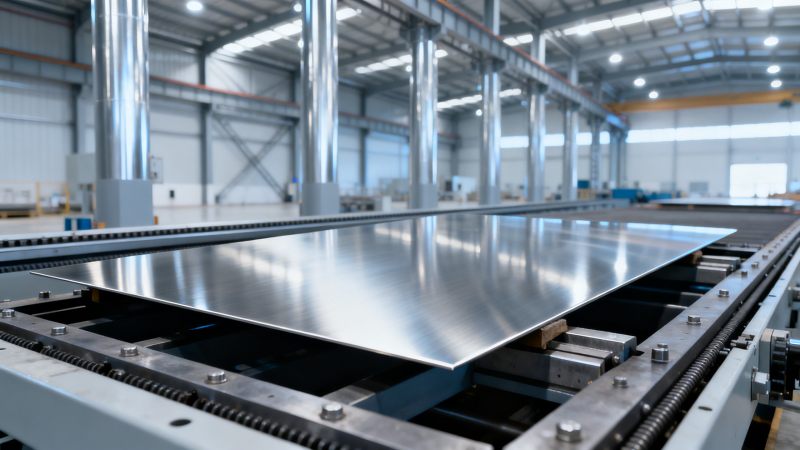
Surface control isn’t exclusive to pressure vessels—it’s foundational across structural steel categories. Consider Rail products like U71Mn or QU100, where rail head geometry must maintain ±0.5 mm profile tolerance over 30 m lengths. Any surface irregularity exceeding Ra 1.6 µm on the running surface causes uneven wheel-rail contact stress, accelerating fatigue wear by up to 40% under cyclic loading (per UIC 860-2 test data).
Hongteng Fengda’s rail production includes three-stage surface conditioning: shot blasting (SA2.5), precision grinding (±0.15 mm flatness), and oil film application to prevent oxidation during transit. This mirrors the same surface discipline applied to cold-formed steel profiles and steel beams destined for seismic-resistant structures in Japan and California.
For bridge railings or deck handrails—applications requiring both structural integrity and aesthetic consistency—surface finish determines corrosion resistance longevity. Galvanized rails with uniform Zn coating thickness (≥ 85 µm per ISO 1461) show 3× longer service life in coastal environments versus non-uniformly finished Q235 equivalents.
Key Surface-Related Parameters Across Product Lines
This table reflects actual in-house QC benchmarks aligned with ASTM A6/A6M (for dimensional tolerances), ISO 8501-1 (for blast cleaning grades), and EN ISO 1461 (for galvanizing). Each parameter is measured using calibrated profilometers, laser scanners, or magnetic thickness gauges—never visual estimation.
Procurement Teams: What to Verify Before Ordering
For procurement professionals evaluating thin-section SS plate or structural components like Rail, surface finish must be specified contractually—not assumed. Hongteng Fengda provides certified surface reports with every shipment: Ra values, oxide layer thickness (via XRF), and coating adhesion test results (per ASTM D3359).
Three non-negotiable checks before PO issuance:
- Confirm surface finish code is explicitly stated (e.g., “2B”, “No. 4”, “SA2.5 blast + passivation”)—not just “as rolled” or “mill finish”.
- Require test reports showing surface measurements taken from ≥3 random locations per 6 m length (per ASTM A480/A480M Annex A1).
- Verify that supplier’s QC lab is ISO/IEC 17025 accredited for surface metrology—not just dimensional inspection.
At Hongteng Fengda, all surface-critical orders undergo pre-shipment validation: 100% laser scanning for rail head geometry, 3-point Ra sampling per coil for SS plate, and salt-spray testing (ASTM B117, 500 hrs) for galvanized items. Lead time remains stable at 18–22 days for standard-spec rail and 12–16 days for custom-finish SS plate—no surface-related delays since Q3 2022.
Why Partner with Hongteng Fengda for Surface-Sensitive Structural Steel
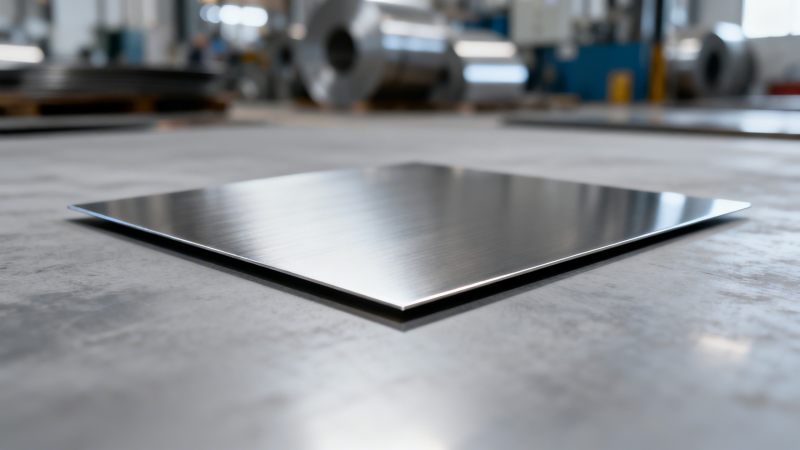
You need more than mill certificates—you need traceability, repeatability, and risk mitigation. Hongteng Fengda delivers:
- Standardized surface protocols: Identical Ra control, cleaning, and inspection workflows across SS plate, rail, angle steel, and cold-formed profiles—ensuring cross-product compatibility.
- Global compliance by design: All surface specifications pre-validated against ASTM, EN, JIS, and GB requirements—including EN 10025-2 for structural steels and ASTM A240 for stainless plate.
- Zero-surprise delivery: 98.7% on-time shipment rate (2023); surface-related rework incidents reduced to 0.3% of total orders via predictive process control.
Whether you’re specifying 304 SS plate for pharmaceutical vessels, U71Mn rail for urban transit systems, or galvanized channel for offshore platforms—we align surface performance with your engineering intent, not just spec sheets.
Ready to validate surface parameters for your next order? Contact Hongteng Fengda for: custom Ra target confirmation, pre-shipment surface test report samples, lead time lock-in for surface-critical items, or OEM finish development support. Our technical sales team responds within 4 business hours—with no generic templates, only application-specific guidance.
Please give us a message


Please enter what you want to find