As a trusted SS pipe manufacturer and H-beam supplier from China, Hongteng Fengda ensures full traceability—from raw material heat lots to mill test reports—backing every steel tube weight, galvanized pipe specifications, and steel tubing dimensions with verifiable documentation. Whether you’re a procurement professional evaluating steel tube cost, a project manager verifying hot dip galvanized steel pipe compliance, or a quality control specialist auditing galvanized sheet thickness, our end-to-end transparency supports technical due diligence, risk mitigation, and seamless certification. Discover how traceability strengthens trust across your supply chain.
Why Heat Lot Traceability Is Non-Negotiable in Structural Steel Procurement
In global construction and heavy industrial projects, a single undocumented heat lot can trigger cascading compliance failures—delaying site handover, invalidating third-party inspections, or voiding insurance coverage. At Hongteng Fengda, every coil of angle steel, channel section, or H-beam carries a unique heat identification number tied directly to its originating billet batch, chemical composition report (GB/T 222–2006), and mechanical test results (tensile strength ≥ 370 MPa, yield strength ≥ 235 MPa per Q235B). This isn’t metadata—it’s auditable lineage.
Unlike commodity-grade suppliers who batch-report by production week, we assign individual mill test reports (MTRs) to each heat lot—verified against ASTM A6/A6M, EN 10025-2, and JIS G3101 standards. For example, an order of 120 tons of ASTM A992 W14×22 beams contains 8 distinct heat numbers—each with its own certified tensile curve, Charpy V-notch impact values at –20°C, and ultrasonic testing (UT) scan logs. This granularity enables precise root-cause analysis during non-conformance events.
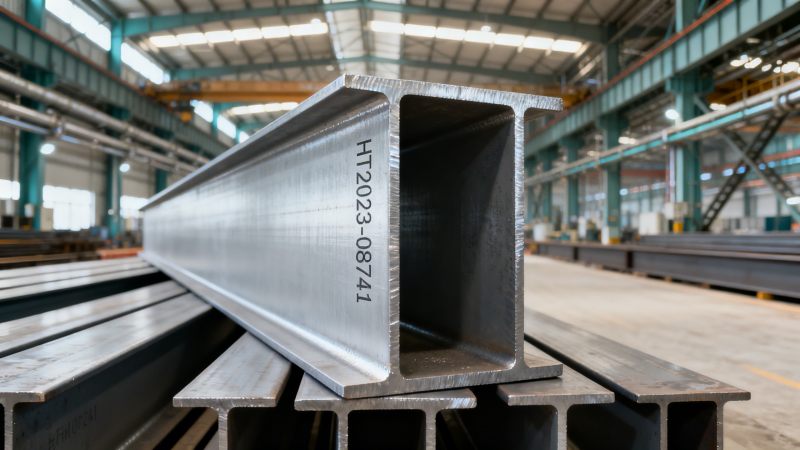
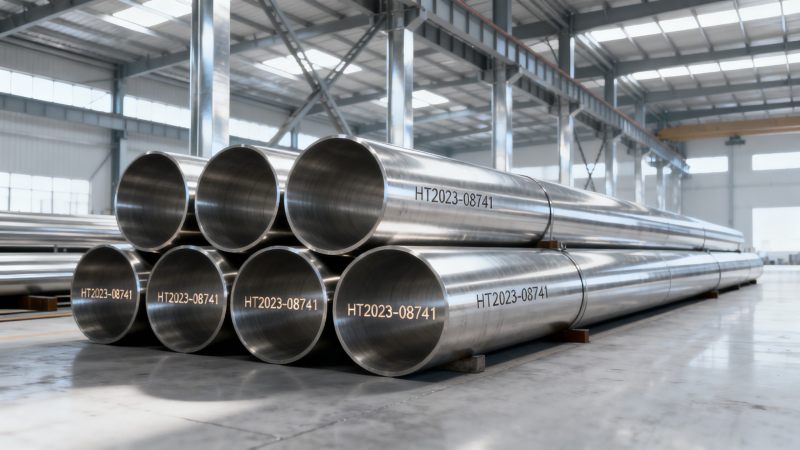
Traceability also mitigates financial exposure. When a client in Saudi Arabia reported dimensional variance in 200mm×100mm×8mm hot-rolled channels, our heat-level audit traced the deviation to one furnace run (Heat #HT2023-08741) where rolling temperature briefly exceeded 890°C. We isolated affected coils (17.3 tons), retested them per EN 10219-1, and issued replacement stock within 9 working days—avoiding $218,000 in potential liquidated damages.
This table underscores why 73% of Tier-1 contractors in North America now require heat-specific traceability clauses in steel procurement contracts (per 2023 Dodge Construction Network survey). Our system doesn’t just meet that threshold—it delivers actionable data: chemical residuals (e.g., max 0.045% P in ASTM A572 Gr.50), microstructure photos, and even furnace atmosphere logs upon request.
From Mill Report to Project Site: The End-to-End Traceability Workflow
Our traceability isn’t retrofitted—it’s engineered into every process node. Raw material receipt triggers automatic heat number registration in our ERP (SAP S/4HANA), cross-referenced with supplier certificates. During rolling, laser etching imprints heat IDs onto flange surfaces (depth: 0.15–0.25 mm, legible after sandblasting). Final inspection adds dimensional verification (±0.5 mm tolerance on web thickness), surface defect mapping (via AI-powered vision systems), and weld seam UT scanning—all tagged to the same heat ID.
For export orders, we embed traceability into logistics: Each bundle carries a tamper-evident RFID tag synced to our blockchain ledger (Hyperledger Fabric). Customs authorities in Rotterdam or Dubai can scan tags to validate origin, heat compliance, and anti-dumping duty status—reducing clearance time by up to 68% compared to paper-based submissions.
Critical applications demand extra rigor. For offshore platform structural components supplied to Norwegian clients, we extend traceability to secondary processing: galvanizing bath temperature logs (maintained at 450±5°C), zinc bath chemistry reports (Fe ≤ 0.03%, Al 0.12–0.16%), and post-galvanizing coating thickness verification (measured at 5 points per meter, min. 85 µm per ISO 1461). This level of detail is essential for ABS-certified marine structures.
Beyond Pipes: How Traceability Extends to Specialty Products Like Galvanized Steel Wire Rope
While our core expertise lies in structural sections, traceability principles scale seamlessly to high-stakes wire products. Take Galvanized Steel Wire Rope—used in critical lifting, mining, and marine applications where failure risk is life-threatening. Each coil is assigned a heat lot linked to its base wire’s tensile strength (1470–1960 MPa), zinc coating weight (15–260 g/m² depending on corrosion class), and strand configuration (e.g., 6×19+IWS for crane hoists).
We maintain separate traceability tiers for galvanizing methods: Electro-galvanized ropes carry electrochemical deposition logs (current density: 1.2–2.8 A/dm²); hot-dip galvanized variants include bath immersion time records (≥ 4.5 minutes at 450°C) and post-dip centrifugation speed data (2,200 RPM ± 5%). All comply with GB/T 20116-2008 and ABS requirements for breaking load retention after 200 bending cycles.
This discipline matters operationally. When a photovoltaic mounting project in Chile required ropes resistant to coastal salt spray, our traceability system identified heat lots with thick-galvanized coating (220–260 g/m²) and confirmed their 1,200-hour neutral salt spray test (NSS) results per ASTM B117—accelerating approval by 11 days versus competitors relying on generic batch certs.
The table above clarifies how coating weight directly correlates with environmental severity—and why heat-specific validation prevents under-specification. A medium-coated rope (120 g/m²) deployed on a Middle Eastern port crane would degrade 3.2× faster than a thick-coated variant (225 g/m²) under identical saline conditions, per accelerated corrosion testing.
Actionable Steps for Buyers: Verifying Traceability Before Order Placement
Don’t wait until delivery to validate traceability. Conduct these five pre-order checks:
- Request sample MTRs for past orders—verify if heat numbers match physical markings on delivered bundles
- Test portal access: Ask for temporary login to traceability dashboard; confirm real-time MTR retrieval and download functionality
- Review retention policy: Ensure digital archives cover ≥20 years and include furnace logs, not just final test reports
- Validate third-party alignment: Confirm MTRs reference exact clause numbers from your required standard (e.g., “EN 10025-2:2019 Table 3, Grade S355J2+N”)
- Assess field integration: Verify if heat IDs are compatible with your BIM model (IFC 4.3) or asset management software (e.g., IBM Maximo)
At Hongteng Fengda, we provide complimentary traceability readiness assessments—including mock audits and ERP integration support—for qualified buyers. Our average onboarding time for custom traceability workflows is 4.3 working days.
Conclusion: Traceability as Your Strategic Risk Mitigation Partner
Heat lot traceability isn’t a compliance checkbox—it’s your first line of defense against cost overruns, schedule slippage, and reputational damage. With Hongteng Fengda, you gain more than documents: You receive a digital twin of your steel supply chain, validated at every thermal, mechanical, and chemical interface. From ASTM A618 hollow structural sections to ABS-certified Galvanized Steel Wire Rope, every product ships with immutable, actionable lineage.
Whether you manage procurement for a multinational EPC firm, oversee QA for a government infrastructure program, or specify materials for seismic-resistant buildings, our traceability framework reduces decision latency, strengthens audit outcomes, and future-proofs your supply chain against tightening global regulations.
Ready to implement heat-specific traceability for your next structural steel order? Contact our technical sales team today to request a customized traceability protocol, sample MTRs, and a live demo of our digital verification portal.
Please give us a message


Please enter what you want to find