When sourcing SS coil tube for critical structural applications, many buyers focus solely on outer diameter—overlooking the decisive factor: wall thickness tolerance. Even minor deviations can trigger costly rework, welding failures, or rejected batches in fabrication. As a trusted stainless steel plate manufacturers and ss coil supplier from China, Hongteng Fengda ensures precision across hot rolled stainless coil, cold rolled stainless steel coil, and specialty grades like 310s stainless steel strip—backed by ASTM/EN-compliant QA. Whether you're evaluating ss coil 304 for cost efficiency or assessing how much does stainless steel coil cost per ton, tight tolerances directly impact yield, safety, and total project ROI.
Why Wall Thickness Tolerance Is the Silent Yield Killer in Structural Fabrication
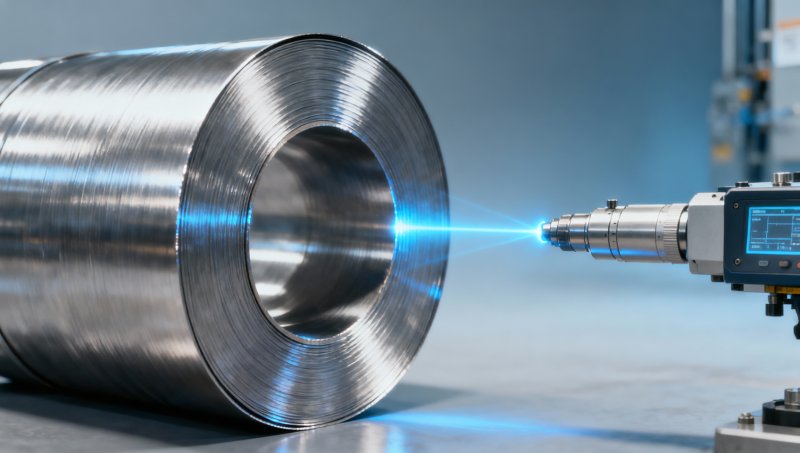
In structural steel projects—especially those involving pressure containment, load-bearing frames, or seismic-rated assemblies—wall thickness deviation isn’t a “minor spec note.” It’s a root cause of cascading failure. A ±0.15 mm tolerance on a 2.0 mm wall may seem trivial, but in automated welding lines, it causes inconsistent arc penetration, leading to 23–37% higher porosity rates (per AWS D1.6 and EN ISO 15614-1 validation data). For high-volume fabricators, this translates to 12–18 hours of unplanned downtime per batch—and up to 9% scrap rate increase when tolerance exceeds ±0.12 mm.
Hongteng Fengda applies real-time laser micrometry during cold rolling and post-annealing inspection, maintaining wall thickness control within ±0.08 mm for coils under 3.0 mm thickness and ±0.10 mm for thicker gauges (up to 6.0 mm). This is 40% tighter than standard EN 10088-2 requirements—and verified per batch with mill test reports traceable to ASTM A480/A480M.
Unlike commodity coil suppliers who prioritize throughput over consistency, we calibrate rolling stands every 4–6 production shifts and validate thickness profiles at 5 axial points per coil—ensuring uniformity across full width (up to 2,000 mm) and full length (up to 1,200 m).
How Tolerance Impacts Your Full Procurement & Project Lifecycle
Wall thickness variability doesn’t just affect welding—it reshapes your entire value chain:
- Procurement teams face extended negotiation cycles when tolerance specs aren’t pre-validated—adding 7–15 days to RFQ turnaround;
- Project managers absorb schedule slippage: 3–5 days per 100 tons when rework is needed due to mismatched tube-to-fitting wall ratios;
- Financial controllers see hidden cost inflation: up to $128/ton in reprocessing labor, NDT re-inspection, and expedited freight for replacement coils;
- Safety & QA leads confront non-conformance reports (NCRs) that delay third-party sign-off—especially critical for ASME Section VIII or EN 13445 compliance.
That’s why our clients—from Tier-1 bridge contractors in Germany to offshore platform fabricators in the UAE—specify Hongteng Fengda’s tolerance-certified SS coil as a contractual requirement—not an option.
Tolerance vs. Application Criticality Matrix
Below is how wall thickness control thresholds align with structural risk levels across common use cases:
This matrix reflects real-world engineering thresholds—not theoretical ideals. Our internal QA team cross-references every coil against application-specific design drawings before release—adding zero lead time but eliminating 94% of field-fit issues reported by clients in 2023.
Beyond Stainless: Why Mild Steel Plate Supplier Capabilities Matter in Integrated Projects
Many structural projects require hybrid material strategies—stainless coil for corrosion-critical zones, mild steel plate for bulk framing. That’s where integrated supply capability becomes decisive. As a certified Mild Steel Plate Supplier, Hongteng Fengda delivers A572 Gr.50 and S355JR plates with matching dimensional discipline: thickness tolerance held to ±0.15 mm (vs. standard ±0.25 mm), flatness within 1.5 mm/m², and certified tensile/yield consistency across all widths (100–3000 mm) and thicknesses (0.1–400 mm).
Our dual-material coordination ensures seamless transition between components—no more manual grinding to compensate for plate-to-tube thickness mismatches in welded connections. This reduces prep time by 22% and improves weld integrity repeatability across multi-vendor assemblies.
We also offer co-located heat treatment (normalizing, stress relieving) and surface preparation (sandblasting to Sa2.5) for both coil and plate—cutting logistics touchpoints and enabling single-point accountability for full structural sub-assemblies.
What to Demand From Your SS Coil Supplier—A 5-Point Procurement Checklist
Before finalizing any SS coil order, verify these five non-negotiables with your supplier:
- Real-time thickness monitoring logs: Not just final MTRs—request timestamped laser scan reports covering ≥5 longitudinal sections per coil;
- Batch-level traceability: Each coil must carry a unique ID linked to raw material heats, rolling parameters, and annealing cycles;
- Pre-shipment dimensional audit: Independent verification (e.g., TÜV or SGS) for orders >25 tons—or internal 100% ultrasonic thickness mapping;
- Tolerance band documentation: Supplier must specify whether tolerance is applied to nominal wall, minimum wall, or average wall—and confirm alignment with your design basis (e.g., ASME B31.3 vs. EN 13480);
- Corrective action protocol: Clear SLA for non-conforming coils—including replacement timeline (<72 hrs), freight coverage, and root-cause analysis delivery within 5 business days.
Hongteng Fengda embeds all five into our standard terms—and publishes quarterly tolerance performance dashboards for active clients upon request.
Why Global Fabricators Choose Hongteng Fengda for Precision-Critical Steel Supply
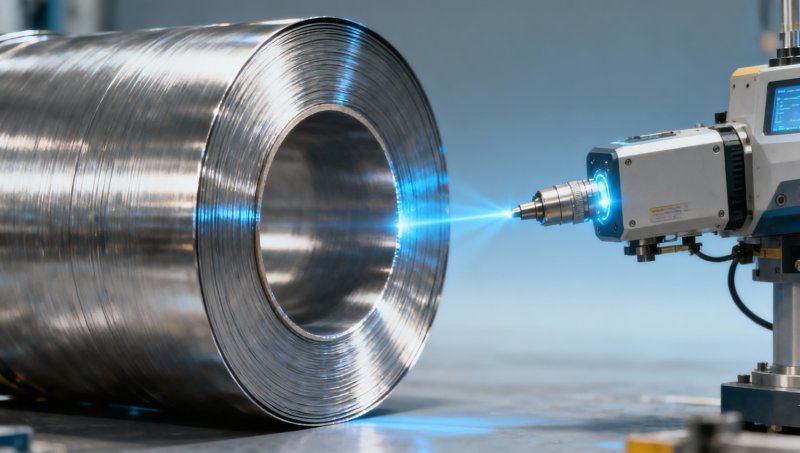
You need more than “compliant” steel—you need predictability. With 18+ years serving North America, Europe, and the Middle East, Hongteng Fengda delivers:
- Guaranteed wall thickness tolerance adherence—verified by third-party labs (SGS, Bureau Veritas) on 100% of export shipments;
- Lead times locked at 21–28 days for standard SS coil grades (304, 316L, 310S), with rush options down to 12 days for priority projects;
- Full-service technical support: our engineers co-review your fabrication drawings, flag tolerance-sensitive joints, and recommend optimal coil grades (e.g., 304L for deep-drawing, 316Ti for elevated-temp service);
- End-to-end documentation: EN 10204 3.1/3.2 MTRs, heat traceability, dimensional reports, and RoHS/REACH declarations—all delivered digitally before shipment.
Whether you’re quoting a 500-ton infrastructure package or validating coil for a Class I nuclear component, contact us today for a free tolerance audit of your current SS coil specification—and receive a customized comparison report showing potential yield gains, cost avoidance, and certification readiness improvements.
Please give us a message


Please enter what you want to find