Understanding ss pipe specifications is essential for technical evaluators who need to verify pressure capacity, dimensional accuracy, material grade, and compliance before sourcing or approving stainless steel piping. From nominal pipe size and wall thickness to pressure ratings and international standards, each parameter directly affects safety, performance, and project cost. This guide outlines the key pressure and size basics to help you compare specifications more confidently and make informed procurement decisions for industrial, construction, and manufacturing applications.
Why ss pipe specifications matter before technical approval
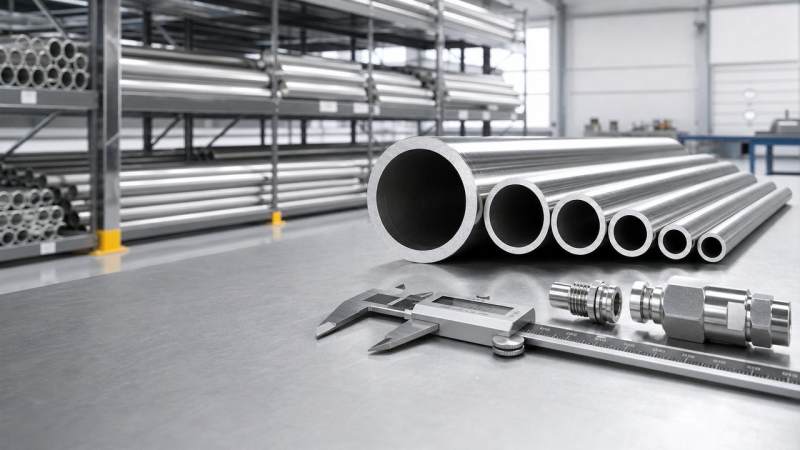
For technical evaluators, ss pipe specifications are not just catalog data. They define whether a pipe can withstand internal pressure, external load, corrosion exposure, fabrication stress, and inspection requirements.
A small mismatch in nominal pipe size, schedule, or stainless steel grade may cause overdesign, leakage risk, welding difficulty, or delayed site installation.
Key questions evaluators should answer first
- What design pressure, operating temperature, and fluid medium will the stainless steel pipe handle during normal and peak conditions?
- Which standard controls the project, such as ASTM, EN, JIS, GB, ASME B36.19M, or ASME B31.3?
- Does the project require seamless pipe, welded pipe, specific surface finish, or documented material traceability?
- Will the pipe connect with structural steel supports, fabricated frames, flanges, valves, or customized assemblies?
When these questions are clarified early, ss pipe specifications become easier to compare across suppliers, quotations, and inspection documents.
How pressure ratings connect with size and wall thickness
Pressure capacity depends on several variables, not size alone. Technical teams usually review outside diameter, wall thickness, material strength, temperature derating, corrosion allowance, and joint type together.
The same nominal pipe size can have different pressure capability when schedule changes. A higher schedule normally means thicker wall, higher weight, and stronger pressure resistance.
The table below summarizes common pressure-related elements in ss pipe specifications and how each item affects sourcing or approval decisions.
A practical review should not approve pressure capacity from schedule alone. The final decision should also consider grade, temperature, corrosion environment, and governing code.
Which stainless steel grade fits the required service conditions?
Material grade is a core part of ss pipe specifications because stainless steel is selected for corrosion resistance, strength, hygiene, or temperature stability.
For general industrial service, 304 and 304L are widely used. For chloride exposure, marine surroundings, or more aggressive chemicals, 316 and 316L are often considered.
Common grade selection logic
- Use 304 or 304L when the environment is moderately corrosive and cost control is a priority.
- Consider 316 or 316L when chloride, salt spray, chemical processing, or coastal installation is expected.
- Check low-carbon grades when welding volume is high and intergranular corrosion risk must be reduced.
- Confirm mechanical properties when the pipe also contributes to structural stability or equipment support.
Technical evaluators should request chemical composition and mechanical property documents that match the purchase standard. This prevents confusion between commercial grade names and certified material identity.
Size basics: what should be checked on drawings and quotations?
Dimensional review is where many sourcing errors occur. Quotations may mention nominal size, while project drawings require outside diameter, tolerance, and end preparation.
When comparing ss pipe specifications, evaluators should identify whether the offer follows metric dimensions, inch-based piping dimensions, or a project-specific conversion table.
The following checklist helps technical teams verify size-related data before purchase approval or supplier nomination.
This approach turns ss pipe specifications into measurable approval criteria. It also reduces disputes between procurement, engineering, and site installation teams.
How ss pipe specifications compare with structural steel sourcing needs
Many construction and industrial projects do not buy stainless steel pipe alone. They also require structural steel supports, frames, reinforcement materials, and customized steel components.
Hongteng Fengda supports global buyers with structural steel products including angle steel, channel steel, steel beams, cold formed profiles, and OEM components.
For projects where piping routes interact with platforms, equipment bases, or pipe racks, coordination between ss pipe specifications and structural steel design is important.
Related steel material support for integrated projects
In midstream procurement planning, evaluators may also review reinforcement and forming materials such as Wire Rod for broader steel packages.
Available models may include GB1499.2 HRB400, HRB500, HRB400E, HRB500E, ASTM A615 Grade 60, BS4449 460B, 500B, 500C, and AS/NZS 4671 500N.
Common material references include carbon steel rebar, Q235, Q235B, Q345, Q345B, Q195, St37, St42, St37-2, St35.4, St52.4, and St35.
With round shape options, lengths from 1–12 m or customer request, and standards such as ASTM, GB, EN, DIN, and JIS, it supports applications from building materials to petrochemical plants.
Its carbon content range of 0.06–0.22% and formability and weldability make it suitable for many general-purpose steel bar requirements where design conditions allow.
Procurement comparison: low price or verified compliance?
A low unit price can become expensive if ss pipe specifications are incomplete. Rework, inspection failure, late documentation, or incompatible dimensions can exceed initial savings.
Technical evaluators should compare total procurement risk, not only price per meter. Documentation quality and manufacturing consistency are especially important for export projects.
This comparison table shows practical decision factors when reviewing offers for stainless steel pipe and related structural steel packages.
The best value is usually achieved by balancing material price, standard compliance, dimensional accuracy, and lead time reliability.
Standards and documents technical evaluators should request
International projects often involve multiple standards. A buyer may specify ASTM material rules, ASME dimensional references, and local acceptance conditions at the same time.
Hongteng Fengda supplies steel products and customized solutions with attention to ASTM, EN, JIS, and GB requirements where applicable to the ordered material.
Useful document checklist
- Material certificate showing grade, heat number, chemical composition, and mechanical properties according to the purchase standard.
- Dimensional inspection record confirming outside diameter, wall thickness, length, straightness, and visible surface condition.
- Packing list and marking details that connect bundles, labels, heat numbers, and shipping documents clearly.
- Project-specific inspection requirements, such as visual inspection, hydrostatic test, nondestructive examination, or third-party inspection when requested.
Clear documentation makes ss pipe specifications auditable. It also helps technical evaluators respond faster to consultant reviews, customs checks, and site receiving inspections.
Common mistakes when interpreting ss pipe specifications
Specification errors often appear simple, but they can create significant downstream consequences. Most problems arise from incomplete communication before quotation confirmation.
Mistake 1: treating nominal size as actual diameter
Nominal pipe size is a designation, while actual outside diameter follows the dimensional standard. Evaluators should always check the standard behind the size.
Mistake 2: ignoring temperature impact on pressure
Pressure rating at ambient temperature may not apply at elevated temperature. Design codes often require temperature-based allowable stress verification.
Mistake 3: comparing grades without application context
A higher alloy grade is not always the best economic choice. The right grade depends on corrosion exposure, welding, cleaning method, and lifecycle cost.
FAQ: practical answers for stainless steel pipe evaluation
How do I choose ss pipe specifications for pressure service?
Start with design pressure, temperature, fluid medium, code requirement, and corrosion allowance. Then confirm size, schedule, grade, joint type, and test requirements.
Are Sch 10S and Sch 40S interchangeable?
Not automatically. Sch 40S has thicker wall than Sch 10S for many sizes, affecting pressure capacity, weight, welding cost, and flow area.
What should I check if the quotation is cheaper than expected?
Check whether the quoted ss pipe specifications include exact grade, standard, wall thickness tolerance, surface condition, testing, packing, and certificate scope.
How long does customized steel sourcing usually take?
Lead time depends on size range, grade availability, order quantity, inspection scope, and export logistics. Early confirmation of specifications helps reduce schedule uncertainty.
Why choose Hongteng Fengda for steel specification support?
Hongteng Fengda is a structural steel manufacturer and exporter from China, serving construction, industrial, and manufacturing projects across global markets.
We help technical evaluators review steel specifications, compare standards, confirm dimensional requirements, and coordinate customized structural steel components for project use.
Our product scope includes angle steel, channel steel, steel beams, cold formed steel profiles, standard specifications, and OEM steel solutions.
If you are reviewing ss pipe specifications together with structural supports or broader steel packages, our team can assist with parameter confirmation and sourcing coordination.
Contact us for a more accurate technical quotation
- Send your required pipe size, wall thickness, pressure condition, grade, standard, and inspection requirements.
- Ask for support on structural steel selection, customized components, or coordinated steel package procurement.
- Discuss delivery schedule, export packing, documentation needs, sample support, and quotation details before order confirmation.
A clear specification review can reduce sourcing risk, control budget, and keep your project moving with fewer technical disputes.
Please give us a message


Please enter what you want to find