Understanding SS Pipe Specifications for High-Pressure Applications
Understanding SS pipe specifications is critical for quality control and safety professionals working with high-pressure applications. These stainless steel pipes must meet stringent material composition, wall thickness, and pressure ratings to ensure reliability in demanding environments. As a trusted structural steel manufacturer, Hongteng Fengda provides SS pipes that comply with international standards, offering the durability and performance needed for critical industrial systems. This guide explores what makes our SS pipe specifications ideal for your high-pressure requirements.
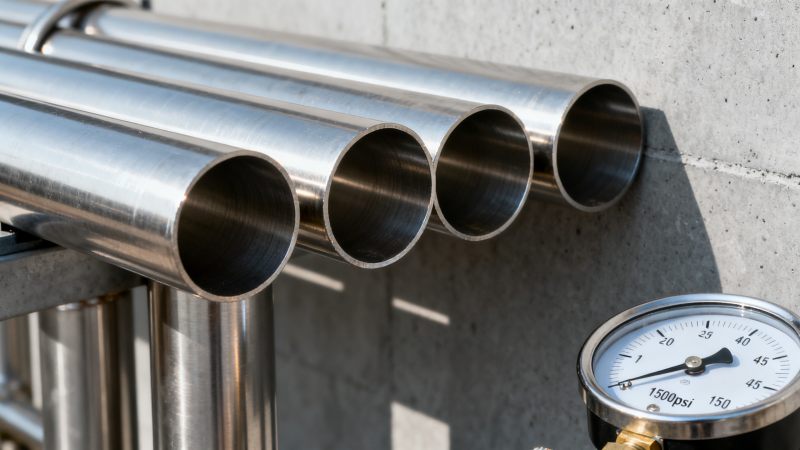
Key Material Properties of SS Pipes
The performance of stainless steel pipes under high pressure depends on three fundamental material properties: corrosion resistance, mechanical strength, and temperature tolerance. Grade 304 and 316L stainless steel are most commonly specified for pressure applications due to their balanced characteristics.
Chromium content (typically 18-20%) provides the primary corrosion resistance, while nickel (8-12%) enhances ductility and high-temperature performance. Molybdenum additions in 316L (2-3%) significantly improve resistance to chlorides and acidic environments.
For ultra-high pressure systems (above 10,000 psi), duplex stainless steels like 2205 may be specified, offering nearly double the yield strength of standard austenitic grades while maintaining excellent corrosion resistance.
Wall Thickness and Pressure Ratings
Pipe wall thickness directly impacts pressure containment capability. The ASME B36.19M standard defines three common wall thickness designations for stainless steel pipes:
- Schedule 5S: Thin-walled for low pressure (typically 100-300 psi)
- Schedule 10S: Standard for moderate pressure (500-1000 psi)
- Schedule 40S: Heavy wall for high pressure (1500-3000 psi)
Actual pressure ratings depend on pipe diameter and temperature. For example, a 2" Schedule 10S pipe has a working pressure of 1,480 psi at 100°F, decreasing to 1,150 psi at 400°F.
Calculating Minimum Wall Thickness
The ASME B31.3 Process Piping Code provides the standard formula for determining minimum wall thickness:
t = PD / (2(SE + PY)) + A
Where P=design pressure, D=outside diameter, S=allowable stress, E=joint quality factor, Y=coefficient, and A=corrosion allowance.
Complementary Solutions for Corrosion Protection
While stainless steel offers inherent corrosion resistance, certain applications benefit from additional protective measures. Our Galvanized Pipe solutions provide enhanced protection for exterior piping or components exposed to harsh environments.
For critical pressure systems, we recommend combining stainless steel pipes with external galvanized supports to create hybrid systems that optimize both performance and longevity.
Quality Assurance and Testing Protocols
Hongteng Fengda implements rigorous testing to ensure SS pipes meet pressure application requirements. Our quality control process includes:
- Material certification verification (mill test reports)
- Hydrostatic testing at 1.5x design pressure
- Ultrasonic thickness verification (±0.1mm tolerance)
- Eddy current or radiographic weld inspection
- Surface finish verification (Ra ≤ 0.8µm for sanitary applications)
All pipes are marked with permanent identification including material grade, heat number, size, wall thickness, and pressure rating for full traceability.
Selecting the Right SS Pipe for Your Application
When specifying SS pipes for high-pressure systems, consider these five critical factors:
- Media Compatibility: Chemical composition of conveyed fluids
- Temperature Range: Both operating and excursion conditions
- Cyclic Loading: Frequency and magnitude of pressure fluctuations
- External Environment: Atmospheric conditions and potential corrosion sources
- Regulatory Requirements: Industry-specific standards (ASME, API, etc.)
For critical applications, we recommend consulting with our engineering team to perform a full system analysis and material selection review.
Frequently Asked Questions
What is the maximum pressure rating for standard SS pipes?
Standard Schedule 40S SS pipes typically have pressure ratings between 1,500-3,000 psi at ambient temperatures. However, actual ratings depend on diameter, wall thickness, and material grade - consult ASME B31.3 for precise calculations.
How does temperature affect SS pipe performance?
Stainless steel maintains strength up to about 800°F (427°C), but allowable stress values decrease with temperature. For example, 304 SS has an allowable stress of 20 ksi at 100°F, reducing to 14.4 ksi at 800°F. Always derate pressure ratings for elevated temperatures.
What certifications should I require for pressure piping?
Minimum certifications should include material test reports (ASTM A312/A358), hydrostatic test reports, and weld procedure qualifications. For critical services, add PMI verification and NDE reports. Hongteng Fengda provides full documentation packages with all pressure-rated piping.
Conclusion and Next Steps
Proper specification of SS pipes for high-pressure applications requires careful consideration of material properties, wall thickness, pressure ratings, and environmental factors. As an experienced structural steel manufacturer, Hongteng Fengda provides technically sound solutions that meet international standards while optimizing cost and performance.
Contact our engineering team today to discuss your specific pressure piping requirements. We'll help you select the optimal SS pipe specifications and provide full technical support from design through installation.
Please give us a message


Please enter what you want to find