Choosing the wrong ss coil pipe size can trigger leaks, fitting issues, pressure loss, and expensive rework on site. For operators and end users, even small mismatches in diameter, wall thickness, or coil length can disrupt installation and delay production. This article explains the most common sizing mistakes, why they happen, and how to avoid them through better specification control and reliable steel supply.
Why small ss coil pipe size errors become big site problems
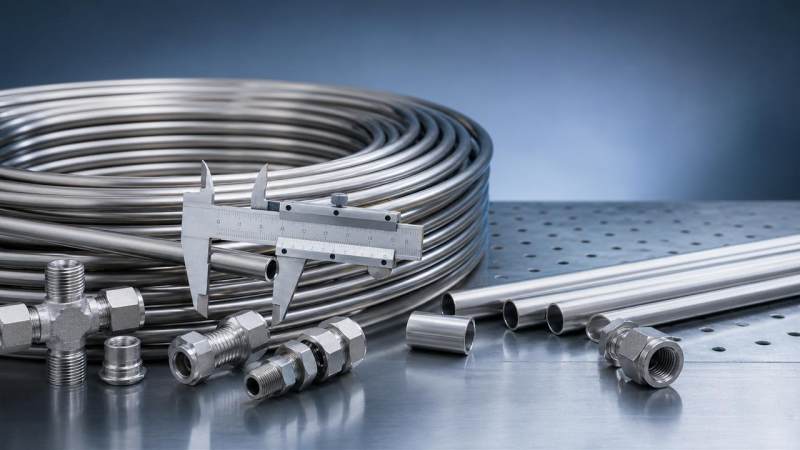
When operators order or install ss coil pipe, the most expensive mistakes usually do not start with poor material quality. They start with size mismatch.
A pipe that looks almost correct can still fail at connection points, create unstable flow, or require unexpected reducers, adapters, and welding changes during installation.
In practical use, three sizing details cause most trouble: outside diameter, wall thickness, and coil length. If any one differs from the actual system requirement, rework follows quickly.
For end users, this is not only a purchasing issue. It affects assembly speed, sealing performance, pressure behavior, operator workload, and production continuity.
The key judgment is simple: the right ss coil pipe is not the one that seems close enough. It is the one matched exactly to fittings, pressure class, bend radius, and installation method.
The search intent behind this topic: users want to prevent avoidable rework
People searching for this topic are usually not looking for a general definition of stainless coil pipe. They want to avoid on-site problems before they become costly.
Most readers in operator or end-user roles are trying to answer practical questions. Will this pipe fit? Will it seal? Will it handle pressure and bending correctly?
They also want to know why a previously ordered size caused trouble, how to check supplier specifications, and which dimensions must be confirmed before production or delivery.
That means the article should focus less on broad industry background and more on error points, inspection steps, decision criteria, and communication between buyer, installer, and supplier.
Mismatch #1: outside diameter does not match fittings or connection standards
Outside diameter is often the first hidden problem. Many installation failures happen because the pipe diameter follows one standard while the fitting follows another.
Even a small difference can prevent proper compression, threading alignment, or ferrule grip. The result may be leakage, weak joint strength, or repeated assembly attempts.
This issue is common in projects involving mixed sourcing. One supplier may produce to ASTM-related dimensions, while another follows metric or local market sizing.
Operators often notice the problem only during installation, when fittings feel tight, loose, or impossible to seat consistently across multiple connection points.
To avoid this, confirm the exact outside diameter in millimeters or inches, not just nominal size descriptions. Nominal labels alone are not enough for reliable matching.
Mismatch #2: wall thickness is correct on paper but wrong for the actual application
Wall thickness affects more than strength. It also changes internal flow area, bending response, pressure performance, and compatibility with selected connectors or support hardware.
A thinner wall may reduce weight and material cost, but it can deform more easily during bending or clamping. A thicker wall may resist pressure better but create fit issues.
In many cases, rework happens because teams specify diameter correctly but treat wall thickness as secondary. On site, that “secondary” detail becomes the reason assemblies fail.
For systems carrying fluid, steam, gas, or chemicals, thickness errors can also affect pressure drop calculations and operating safety margins, especially in long coil runs.
Always verify both nominal wall and tolerance range. If a supplier gives only a general size without tolerance data, the risk of mismatch remains high.
Mismatch #3: coil length does not fit the routing plan
Length mismatch sounds simple, yet it creates major waste in real installations. A coil that is too short forces extra joints. A coil that is too long slows handling.
More joints mean more leak points, more labor hours, and more inspection work. Excess length may require cutting, re-coiling, or awkward routing around equipment frames.
Operators especially feel this problem in compact spaces, where coil routing must follow fixed machine layouts, support positions, or pre-installed connection points.
It is important to order based on actual path length, bend allowance, connection margin, and installation access, not only straight-line measurement between endpoints.
Reliable suppliers can support customized lengths and practical order confirmation. This reduces trimming waste and helps teams install faster with fewer interruptions.
Mismatch #4: bend radius and springback were not considered during sizing
Some ss coil pipe orders look dimensionally correct but still fail during shaping because the minimum bend radius was not considered early enough.
If the selected diameter-to-thickness combination is too stiff for the available bending method, operators may see flattening, wrinkling, cracking, or inaccurate final routing.
Springback also matters. The pipe may not hold the intended angle or curve after bending, especially if material properties differ from what the installer expected.
This becomes a sizing issue because workable bending performance depends on the relationship among diameter, wall thickness, material grade, and coil configuration.
Before ordering, confirm whether the pipe will be manually formed, machine bent, or installed in tight turns. Those conditions directly affect size suitability.
Mismatch #5: pressure class and operating conditions were separated from size selection
Many teams treat size choice as a geometry decision only. In reality, operating pressure, temperature, vibration, and media type should influence pipe dimensions from the start.
A size that physically fits may still perform poorly if internal pressure cycles are high or if the system experiences thermal expansion and repeated movement.
Undersized internal diameter can increase pressure loss. Inadequate wall thickness can reduce service life. Overly rigid selection can transfer stress to joints and supports.
This is why the best sizing process connects design data with operating data. Installation convenience alone should not decide the final ss coil pipe specification.
End users should ask one practical question: is this size proven for my real operating condition, or was it selected only because it was available quickly?
Why these mistakes happen so often in international sourcing
Size mismatch is common in global procurement because specifications are sometimes transferred through too many layers: buyer, trader, workshop, installer, and final operator.
At each step, key information can become simplified. A precise requirement may turn into a shorthand label, and that label may hide critical dimensional details.
Another common issue is assuming that “same grade” means “same usability.” Material grade matters, but installation success depends equally on dimensional accuracy and tolerance control.
Experienced steel exporters reduce this risk by providing clear technical confirmation before production, especially when projects involve international standards such as ASTM, EN, JIS, or GB.
That is why supplier capability is not only about manufacturing scale. It is also about document accuracy, communication quality, and consistency from order to delivery.
How operators can check ss coil pipe sizing before installation starts
Operators do not need to wait for a failure to discover mismatch. A short pre-installation check can catch most problems before labor and downtime increase.
First, compare the pipe outside diameter against actual fitting requirements, not just purchase descriptions. Use measured values and standard references.
Second, verify wall thickness and tolerance with calipers or inspection records. Confirm that pressure requirements, bending plans, and clamp designs still match the delivered material.
Third, check coil length against real routing conditions on site. Include bends, vertical drops, offsets, and the space needed for clean connection work.
Fourth, review labeling consistency across bundles, certificates, and packing lists. If data does not match perfectly, stop installation until clarification is complete.
A practical specification checklist that prevents rework
If you want to reduce rework, your order sheet should be more detailed than a simple product name and nominal size.
Include outside diameter, wall thickness, tolerance, coil length, material grade, applicable standard, surface condition, pressure requirement, and intended connection type.
Add bending method, minimum bend radius, working temperature, and installation environment if the application is demanding or space is limited.
Also request mill test documentation and dimensional inspection details before shipment. This is especially useful when multiple batches must perform the same way.
One clear specification sheet often saves far more money than any small price reduction gained by using incomplete procurement documents.
What to ask a supplier before placing the order
Good suppliers help buyers confirm usability, not just ship material. Before placing an order, ask whether the supplier has handled similar application conditions before.
Request confirmation of production standard, dimensional tolerance, inspection method, and packaging approach to protect coil integrity during transport.
Ask whether custom lengths or OEM requirements are available. For project-based work, this flexibility can significantly reduce cutting waste and site modification.
It is also helpful to ask for lead time stability. Rework risk rises when teams rush replacement orders because the original batch failed to fit.
Manufacturers with strong export experience usually support clearer technical communication and more dependable quality control across international markets.
The value of working with a broader structural steel partner
For many industrial buyers, pipe sizing problems are part of a bigger sourcing challenge: getting multiple steel products from one dependable supplier with consistent standards.
A manufacturer with modern facilities, export experience, and strict quality control can help reduce coordination errors across products, drawings, and project schedules.
For example, some projects that use coil pipe also require structural sections, channels, beams, or related fabricated steel components in the same delivery plan.
In transport, infrastructure, or plant construction projects, buyers may also source products such as Rail for railway or railing applications.
Where such products are involved, details like custom length availability, tolerance control of ±1%, and compliance systems such as ISO9001 can support smoother procurement overall.
How reliable supply reduces hidden installation cost
The direct cost of a wrong-size ss coil pipe is easy to see: scrap, replacement orders, labor delays, and extra fittings. The hidden cost is often larger.
Hidden costs include downtime, team rescheduling, delayed commissioning, quality claims, and reduced confidence in the supply chain for future orders.
When supply is stable and specifications are controlled carefully, operators spend less time adapting materials and more time completing work correctly the first time.
This is where a dependable structural steel manufacturer adds value. Consistent quality and lead times help buyers control risk, not just unit price.
For global projects, that reliability often determines whether installation stays on schedule or turns into a series of corrective actions.
Conclusion: exact sizing is cheaper than on-site correction
Most costly rework linked to ss coil pipe is preventable. The usual causes are not mysterious defects but overlooked size details that should have been confirmed earlier.
Outside diameter, wall thickness, coil length, bend behavior, and pressure suitability all need to match the real application, not just a generic catalog entry.
For operators and end users, the best approach is to verify dimensions before installation, document requirements clearly, and work with suppliers who understand international standards and project needs.
If you treat sizing as a precision decision instead of a basic purchase item, you can prevent leaks, avoid delays, and keep installation costs under control.
Please give us a message


Please enter what you want to find