SPCE steel is widely used in automotive stamping for its balanced yield strength, superior formability, and consistent surface quality—making it ideal for precision body panels and structural components. As a trusted structural steel manufacturer and exporter from China, Hongteng Fengda supplies high-performance materials including SPCE steel, S235JR steel, and API 5L pipe, alongside corrosion-resistant plate and industrial pipes meeting ASTM A106, EN, and GB standards. Whether you're a procurement specialist, quality control engineer, or project manager, understanding SPCE’s behavior under stamping conditions—and how it compares to SPCD steel or fluid pipe alternatives—is key to optimizing production efficiency, part integrity, and cost control.
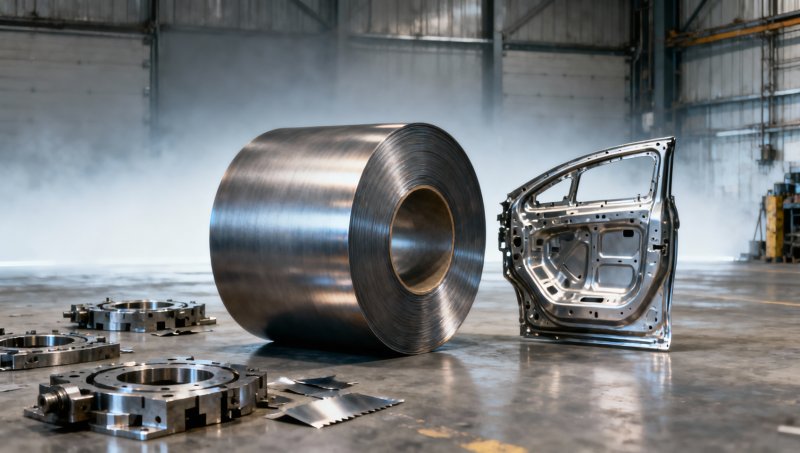
Technical Performance: Why SPCE Excels in Automotive Stamping
SPCE (Stainless-Processed Cold Rolled Extra-deep-drawing) steel belongs to the JIS G 3141 standard family and is engineered specifically for deep-drawing applications. Its tensile strength typically ranges from 270–410 MPa, with a yield strength of 140–280 MPa—low enough to minimize springback yet sufficient to maintain dimensional stability post-stamping. Crucially, SPCE exhibits an excellent r-value (plastic strain ratio) of ≥1.9, indicating superior resistance to thinning during complex draw operations. This directly translates into fewer splits, wrinkles, and rework rates on door inner panels, fenders, and floor reinforcements.
Surface finish is another decisive factor: SPCE is delivered with a matte or bright annealed finish, free from scale, scratches, or oil residue—critical for paint adhesion and Class-A surface requirements. Unlike hot-rolled alternatives such as S235JR steel—which offers higher strength but limited ductility—SPCE delivers predictable flow behavior across large batches, reducing die wear and tool maintenance cycles by up to 30% in high-volume OEM lines.
Comparison Analysis: SPCE vs. SPCD vs. Structural Alternatives
While SPCE and SPCD (Cold Rolled Drawing) share similar base chemistry, their mechanical envelopes differ meaningfully in real-world stamping. Below is a side-by-side comparison highlighting critical performance boundaries:
Quality Control Tips for Consistent Stamping Output
Even minor variations in coil flatness, thickness tolerance, or surface roughness can trigger costly line stoppages. At Hongteng Fengda, every SPCE coil undergoes triple-stage QC: incoming material inspection (including tensile testing per JIS Z 2241), in-process thickness mapping via laser gauges (±0.01mm accuracy), and final surface scanning for micro-defects using AI-powered vision systems. We recommend buyers verify three checkpoints before stamping: (1) Batch-specific mill test reports confirming r-value and n-value consistency; (2) Coefficient of friction (COF) validation between blank and die material; (3) Humidity-controlled storage (<40% RH) to prevent lubricant migration or oxidation.
For project managers overseeing Tier-1 suppliers, requiring certified traceability—such as heat number linkage from coil to stamped part—is non-negotiable. Our ERP-integrated platform enables full lot tracking across ASTM A106 pipe, API 5L pipe, and SPCE shipments, ensuring compliance with IATF 16949 and ISO/TS 22000 frameworks.
Procurement Guide: Matching Material to Application Risk
Procurement professionals often over-specify—ordering S235JR steel for non-structural brackets or specifying corrosion-resistant plate where standard SPCE suffices. The smarter approach? Segment by functional risk. High-visibility exterior parts demand SPCE with tighter flatness tolerances (≤0.3mm/m). Interior structural brackets may use SPCD or even cold-formed C Sections Steel with Q235 grade—offering 22% lower material cost without compromising crash performance. For fluid pipe applications in EV battery cooling loops, ASTM A106 pipe remains preferred over API 5L pipe due to tighter grain structure and hydrogen-induced cracking resistance.
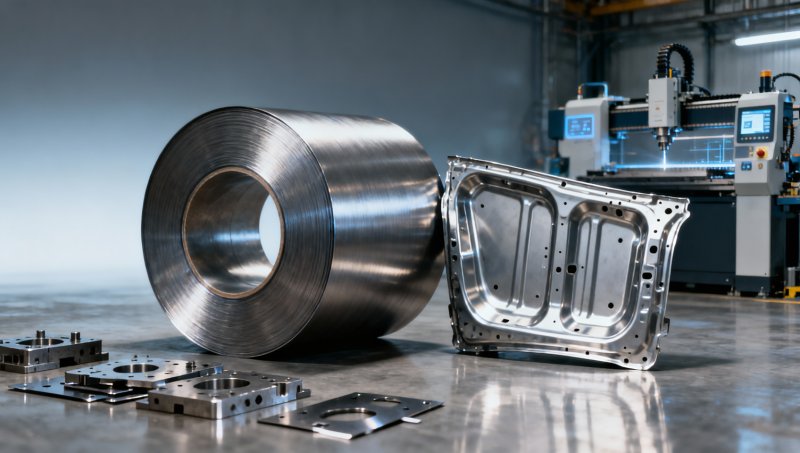
Hongteng Fengda supports this decision-making with free technical consultation, cross-material substitution analysis, and rapid prototyping services—including laser-cut sample blanks for tryout dies. Our export-ready logistics hub in Tianjin ensures 98% on-time dispatch for SPCE coils and API pipe orders across North America and EU markets.
Why Choose Hongteng Fengda?
As a structural steel manufacturer and exporter from China with over 18 years of global delivery experience, Hongteng Fengda bridges the gap between cost efficiency and uncompromised reliability. We don’t just supply SPCE steel—we co-engineer solutions: custom annealing profiles for enhanced stretch-flangeability, dual-certified coils (JIS + EN 10130), and just-in-sequence packaging for Tier-1 assembly lines. Our modern facilities are certified to ISO 9001, CE, SGS, and BV—ensuring every batch of S235JR steel, API 5L pipe, or corrosion-resistant plate meets your exact specification, every time.
Whether you’re sourcing industrial pipes for plant retrofits, evaluating SPCE vs. SPCD for next-gen vehicle platforms, or scaling up C Sections Steel for modular construction—contact our engineering sales team today. We offer dedicated account management, multilingual support, and flexible MOQs starting at 5 metric tons. Let’s build better—together.
Please give us a message


Please enter what you want to find