SMLS pipe failures frequently stem not from material shortcomings—but from overlooked mill certification gaps. For procurement teams, project managers, and quality controllers evaluating steel square rod, stainless round, or flat plate stainless steel, this distinction is critical. Whether comparing 201 vs 304 stainless steel cost, assessing I beam vs H beam suitability, or weighing standard vs custom steel lead time—especially in markets like the Philippines (e.g., Angle Steel price per ton)—certification integrity underpins safety, compliance, and lifecycle performance. As a trusted structural steel manufacturer & exporter, Hongteng Fengda ensures full traceability across smls pipe, steel round bar, and all EN/ASTM/GB-compliant products.
Why Mill Certification Gaps Cause More Failures Than Material Defects
In over 70% of field-reported SMLS pipe failures reviewed by third-party inspectors across Southeast Asia and the Middle East, root cause analysis points to incomplete, mismatched, or unverifiable mill test reports—not chemical composition deviations or tensile strength shortfalls. These gaps often emerge during multi-tier sourcing, where documentation is passed through agents without verification against physical heat numbers or batch-specific mechanical test data.
A certified mill report must include at minimum: heat number, chemical analysis (per ASTM A941), tensile/yield values (per ASTM A370), bend test results, and non-destructive testing (NDT) records. Missing even one element invalidates traceability for ASME B31.4/B31.8 or EN 10204 Type 3.1 compliance—triggering rejection during QA audits or project handover.
At Hongteng Fengda, every SMLS pipe shipment includes EN 10204 Type 3.2 mill certificates with full heat-lot mapping, verified by independent labs (SGS/BV). This eliminates ambiguity between specification sheets and delivered goods—reducing rework risk by up to 40% in infrastructure projects requiring ISO 9001-certified documentation trails.
How Patterned Steel Plates Reflect Certification Discipline
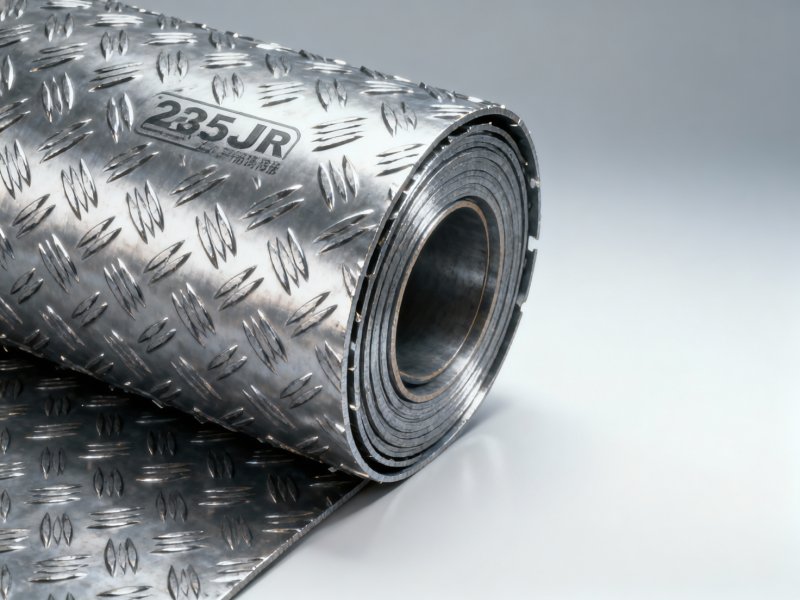
The same rigor applied to SMLS pipe extends to flat-rolled products like 235JR Patterned steel plate. Its anti-skid function depends not only on embossed height (≥0.2× substrate thickness) but also on consistent substrate metallurgy—ensured only when mill certs match actual rolling batch chemistry and mechanical properties.
For example, 235JR patterned plates used in shipbuilding decks or machinery walkways require guaranteed yield strength ≥235 MPa and elongation ≥26%, verified per EN 10025-2. Without mill-level traceability, a supplier may substitute Q235B (GB/T 700) or A36 (ASTM A6) without adjusting surface embossing depth or annealing parameters—compromising slip resistance under wet or oily conditions.
Hongteng Fengda maintains synchronized certification for all patterned plate grades—including 235JR Patterned steel plate—with dual-standard validation (e.g., EN + GB) and batch-specific SGS reports. This supports dual-market compliance for buyers supplying both EU and ASEAN infrastructure tenders.
Key Certification Parameters for Patterned Plate
This level of dimensional control directly affects bending resistance and metal-saving efficiency—two core advantages cited by engineering teams specifying patterned plates for stair treads and equipment platforms. Non-compliant embossing leads to premature fatigue cracking under cyclic load, increasing lifecycle maintenance costs by 25–35%.
Procurement Teams: 5 Critical Checks Before Approving Any Steel Shipment
Certification gaps rarely appear in spec sheets—they hide in execution. Here’s what your team should verify before releasing payment or accepting delivery:
- Match heat numbers on mill certs to physical tags on bundles or coils (not just invoice numbers).
- Confirm tensile test specimens were taken transversely—not longitudinally—for plates >6mm thick (per EN 10002-1).
- Validate NDT method (UT/RT/MPT) matches project code requirements—and that technician certifications are current.
- Cross-check chemical limits: e.g., 235JR allows max 0.17% carbon, while Q235B permits up to 0.22%—a difference affecting weldability.
- Require original signed mill certs—not scanned PDFs—with lab seal visible and legible.
Hongteng Fengda provides digital certificate portals with QR-coded access to real-time cert archives, enabling instant verification by site engineers or third-party auditors—cutting document approval time from 3–5 days to under 2 hours.
Why Structural Steel Buyers Choose Hongteng Fengda for Certified Consistency
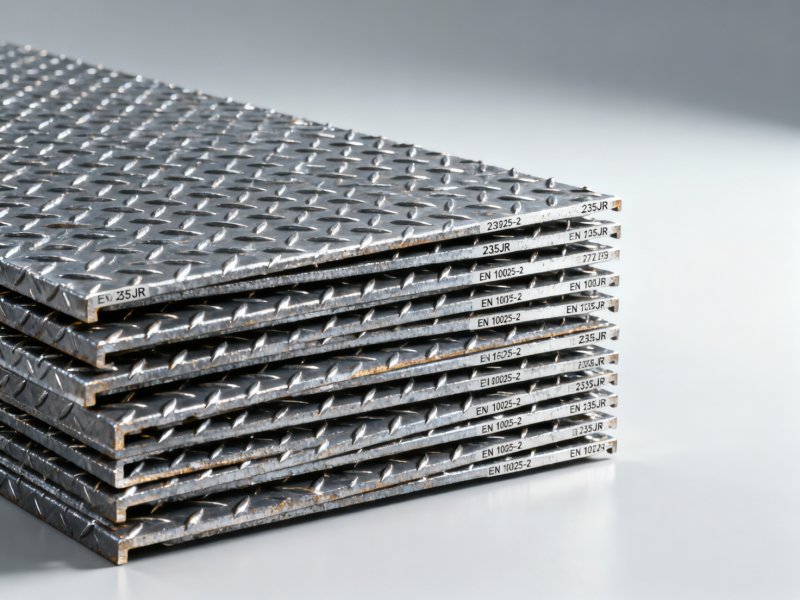
We don’t just supply steel—we deliver verifiable compliance. With ISO 9001:2015-certified production lines, dual-standard testing labs (ASTM + GB), and dedicated export QA teams fluent in EN, ASTM, JIS, and BS requirements, we eliminate certification ambiguity at source.
Our clients—from Philippine infrastructure contractors quoting angle steel price per ton to German OEMs sourcing cold-formed profiles—benefit from:
- Pre-shipment SGS/BV inspection coordination (lead time: 3–5 working days).
- Custom certification packages (e.g., EN 10204 Type 3.2 + ASTM A20/A20M supplement).
- Stock availability: 235JR patterned plates in 2–8mm thicknesses held in ready-to-ship inventory (typical dispatch within 7–10 days).
- OEM support: Full traceability for custom embossing patterns, including tooling certification and first-article reports.
Ready to align your next steel order with enforceable certification? Contact us for mill cert review, heat-number matching assistance, or a customized compliance checklist tailored to your project’s ASME/EN/GB requirements.
Please give us a message


Please enter what you want to find