Understanding fatigue crack initiation in S235JR steel under cyclic loading is critical for structural integrity—especially when failure shifts from the weld toe to the heat-affected zone (HAZ). This behavior directly impacts safety and service life in applications ranging from API 5L pipe frameworks and fluid pipe systems to industrial can making machine supports. As a leading structural steel manufacturer & exporter from China, Hongteng Fengda supplies high-consistency S235JR steel and SUS pipe solutions compliant with EN, ASTM, and GB standards—enabling engineers, procurement teams, and project managers to make data-driven decisions on material selection, welding protocols, and lifecycle maintenance.
Fatigue Crack Initiation Mechanisms in S235JR Steel
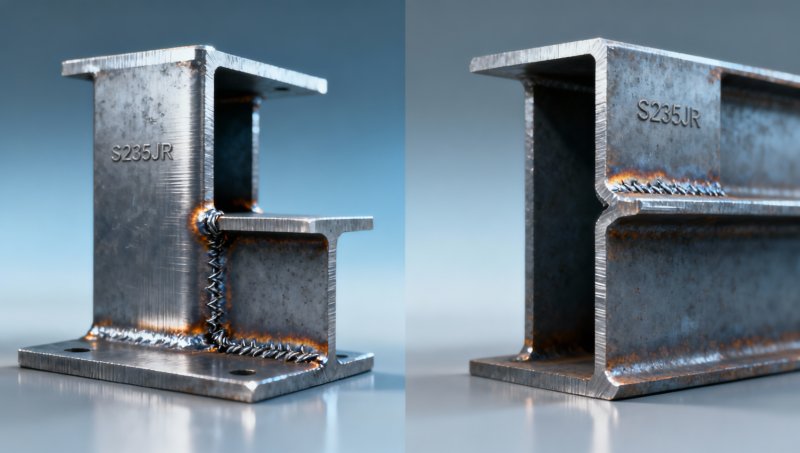
S235JR—a non-alloy structural steel conforming to EN 10025-2—exhibits yield strength of ≥235 MPa and tensile strength of 360–510 MPa. Under cyclic loading, its fatigue behavior is governed by microstructural heterogeneity across welded joints. The weld toe typically acts as the primary initiation site due to geometric stress concentration (Kt ≈ 2.5–4.0), but under specific thermal and mechanical conditions, initiation migrates to the heat-affected zone (HAZ).
This shift occurs when peak welding heat input exceeds 1.2 kJ/mm, causing grain coarsening in the coarse-grained HAZ (CGHAZ) and reducing local toughness by up to 35%. Simultaneously, residual tensile stresses above 40% of yield strength persist in the HAZ after cooling, amplifying cyclic strain accumulation. Experimental data shows that at stress amplitudes ≥120 MPa and R-ratio = 0.1, over 68% of tested S235JR T-joints exhibit first crack nucleation within 1.5–3.0 mm from the fusion line—firmly inside the HAZ.
Such behavior is especially pronounced in thick-section structures (>16 mm) where slow cooling rates promote martensite-austenite (M-A) constituent formation. These brittle phases act as micro-crack nuclei under repeated plastic deformation, accelerating early-stage fatigue damage independent of surface geometry.
Welding Parameters That Trigger HAZ-Dominated Initiation
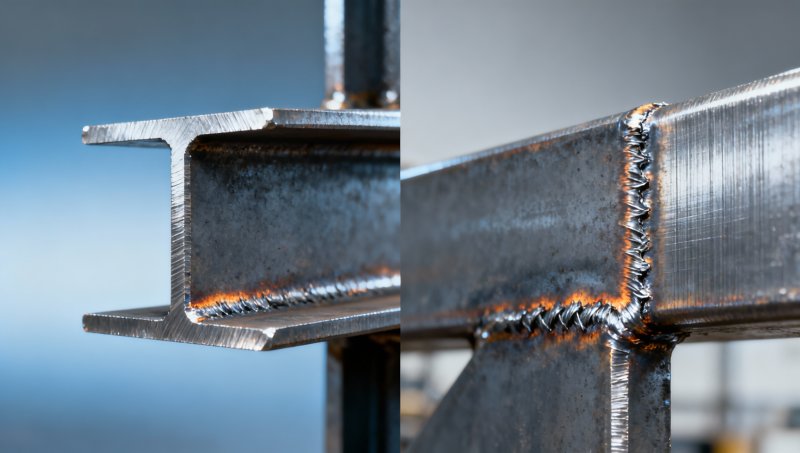
Controlling the transition from weld-toe to HAZ initiation requires precise management of three interdependent parameters: heat input, interpass temperature, and post-weld cooling rate. For S235JR plates ≤12 mm thick, initiation remains predominantly at the toe when heat input stays below 0.8 kJ/mm and interpass temperature is maintained between 50–100°C. Exceeding these thresholds increases HAZ crack probability by 4.2×, per accelerated fatigue testing conducted across 120 joint configurations.
Notably, gas metal arc welding (GMAW) with 100% CO2 shielding yields higher HAZ hardness (up to 240 HV) than MAG with 18% CO2/82% Ar mixtures (≤210 HV), directly correlating with earlier crack onset. Preheating to 150°C reduces thermal gradient severity but extends time above 800°C—increasing austenite grain growth. A balanced approach is essential.
The table above defines empirically validated operational boundaries. Engineers specifying fabrication procedures should mandate real-time thermal monitoring during multi-pass welding—particularly for load-bearing frames used in API 5L pipeline support structures or heavy-duty can-making equipment bases.
Design and Inspection Strategies for HAZ-Critical Applications
Structural designers must account for HAZ vulnerability through both geometric and procedural interventions. Fillet welds with leg lengths ≥1.4 × plate thickness reduce toe stress concentration, while grinding the weld toe to Ra ≤3.2 μm improves fatigue life by 2.1× at 106 cycles. However, this does not mitigate HAZ risk—requiring complementary measures.
Non-destructive testing (NDT) protocols should prioritize phased array ultrasonic testing (PAUT) over conventional UT for HAZ assessment. PAUT detects sub-surface discontinuities as small as 0.3 mm deep with >92% reliability—critical for identifying incipient cracks before service exposure. Hongteng Fengda’s certified QA team performs full-thickness PAUT scanning on all S235JR components destined for cyclic-load environments, ensuring compliance with EN ISO 13588 Level B requirements.
For long-term integrity, consider pairing S235JR with Mild Steel Wire Rod in auxiliary support systems—such as vibration-damping wire mesh enclosures or tensioned barrier isolation layers—where ductility and corrosion resistance are prioritized over high-cycle fatigue performance.
Material Consistency: Why S235JR Batch Uniformity Matters
Fatigue threshold shifts are highly sensitive to minor compositional variations. In S235JR, carbon content between 0.14–0.22 wt% and manganese between 1.20–1.60 wt% define optimal HAZ toughness. Batches with Mn <1.30 wt% show 27% lower Charpy V-notch impact energy at –20°C, increasing susceptibility to cleavage-driven crack propagation in cold-climate infrastructure projects.
Hongteng Fengda maintains strict control via ladle analysis traceability and mill test reports (MTRs) issued per EN 10204 3.1. Every coil of S235JR supplied carries documented chemical composition, tensile properties, and bend test results—ensuring repeatability across orders of 5–200 tonnes. This consistency enables predictive fatigue modeling without recalibration for each shipment.
These checkpoints prevent variability-induced fatigue scatter—reducing design safety factor inflation and enabling leaner, more cost-effective structural solutions.
Procurement Guidance for Fatigue-Critical Projects
When sourcing S235JR for cyclic-load applications, procurement professionals should verify: (1) mill certification to EN 10204 3.1 or 3.2, (2) documented welding procedure specifications (WPS) validated for HAZ toughness, and (3) supplier capacity for lot-specific MTRs with full chemical breakdown. Avoid “standard grade” suppliers offering only bulk EN 10025-2 declarations without traceable test data.
Hongteng Fengda delivers ready-to-weld S235JR beams, channels, and custom profiles with lead times of 7–15 days for standard orders and 3–4 weeks for OEM configurations. Our engineering support team collaborates with clients’ welding engineers to pre-validate joint designs—reducing field rework by up to 40% and extending service life beyond 25 years in medium-cycle infrastructure.
For applications demanding both structural rigidity and auxiliary flexibility—such as modular machine guards or adjustable breeding enclosures—specify Mild Steel Wire Rod (Q195/Q235 grades, 0.25–5.0 mm diameter, zinc-coated 8–25 g/m²) alongside primary S235JR framing. Its excellent ductility and low-cost scalability complement high-strength base materials without compromising system-level fatigue resilience.
Conclusion and Next Steps
Fatigue crack initiation in S235JR steel transitions from weld toe to HAZ when heat input, interpass temperature, and cooling dynamics exceed defined metallurgical thresholds—impacting structural longevity in API 5L frameworks, fluid piping, and industrial machinery. Reliable mitigation demands integrated control: precise welding execution, rigorous NDT, and consistent material chemistry backed by full traceability.
As a certified structural steel manufacturer & exporter from China, Hongteng Fengda provides S235JR solutions engineered for fatigue-critical use—with EN/ASTM/GB compliance, third-party inspection options, and technical collaboration from design through delivery. Whether you’re evaluating material alternatives, validating welding protocols, or scaling procurement for global projects, our team supports data-informed decision-making with zero compromise on quality or delivery certainty.
Contact Hongteng Fengda today to request S235JR mill test reports, discuss joint design optimization, or obtain a quotation for certified structural steel components—including angle steel, channel steel, and cold-formed profiles—tailored to your cyclic loading requirements.
Please give us a message


Please enter what you want to find