Why S235JR Steel Plate Still Matters in a Changing Steel Market
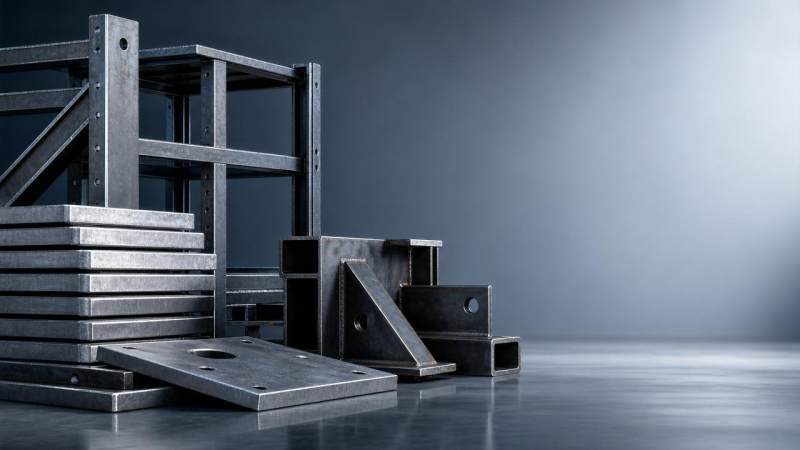
S235JR steel plate remains a practical choice for structural work across global projects.
Its balanced strength, weldability, and cost profile support construction, fabrication, and general engineering needs.
At the same time, project expectations are rising.
Designs now demand better traceability, tighter tolerances, and clearer material selection for different service environments.
Understanding where S235JR steel plate performs well, and where it reaches its limits, helps reduce design risk and sourcing errors.
That is especially important in cross-border steel supply, where standards, processing methods, and end-use conditions can vary.
Market Signals Show More Selective Use of S235JR Steel Plate
The role of S235JR steel plate is not shrinking, but its use is becoming more selective.
In many projects, it remains the default for moderate-load structural parts and welded assemblies.
However, modern engineering increasingly separates general-purpose steel from higher-performance steel grades.
This shift comes from stricter service-life targets, more complex load cases, and closer control of fabrication quality.
As a result, S235JR steel plate is widely used where reliability and economy must be balanced, not maximized independently.
Common Trend Signals in Current Projects
- More value engineering in commercial and industrial buildings.
- Closer review of steel grades for weldability and forming performance.
- Higher attention to coating systems in outdoor environments.
- Stronger demand for standard-compliant export materials.
- Greater use of mixed-material strategies across one project.
Where S235JR Steel Plate Delivers the Best Practical Value
S235JR steel plate is commonly selected for applications that need dependable structural performance without premium-grade cost.
It is suitable for many indoor, low-temperature-neutral, and moderately loaded structures.
Typical Applications
- Building frames, base plates, and connection plates.
- Support brackets, machinery frames, and platforms.
- General welded fabrications for factories and warehouses.
- Transport and equipment components with moderate stress demands.
- Agricultural, storage, and utility steel structures.
Its machinability and weldability also support efficient processing in cutting, bending, drilling, and assembly operations.
That makes S235JR steel plate useful when production speed and fabrication consistency are major priorities.
Why Demand Stays Stable
The Common Limits of S235JR Steel Plate Are Becoming More Important
The most common mistake is treating S235JR steel plate as suitable for every structural environment.
It performs well in many situations, but it is not a universal answer.
Its yield strength level, impact performance range, and corrosion resistance all require realistic review.
Main Practical Limits
- Not ideal for high-load designs needing higher strength-to-weight efficiency.
- Not inherently corrosion resistant in exposed or aggressive conditions.
- May be unsuitable for low-temperature service requiring tougher impact properties.
- May require thickness increases when stiffness or safety margins must rise.
- Needs proper coating, processing, and inspection for outdoor or long-life use.
These limits do not reduce its value.
They simply define where S235JR steel plate should be used carefully and where another grade may be more efficient.
For corrosion-sensitive assemblies, surface protection becomes a parallel material decision.
In such cases, combining structural steel selection with coated steel solutions can improve service life planning.
A related option for non-plate applications is Steel Coil Galvanized.
It offers zinc-based corrosion protection, thickness from 0.12mm to 3.5mm, and widths from 600mm to 1500mm.
Common grades include DX51D+Z, SGCC, and S350GD+Z under ASTM, EN, JIS, DIN, and GB related standards.
What Is Driving More Careful Material Selection
Several technical and commercial forces are pushing buyers and engineers toward more exact grade matching.
How These Changes Affect Projects and Supply Decisions
The growing focus on fit-for-purpose steel influences both design and procurement decisions.
S235JR steel plate is often retained for secondary structures, general frames, and moderate-duty fabricated sections.
But it is reviewed more critically for exposed structures, dynamic loading, and harsh operating environments.
Areas Most Affected
- Specification writing now links grade choice to real service conditions.
- Fabrication planning must consider weld procedure and thickness control.
- Cost comparison includes coating, maintenance, and replacement risk.
- Supplier evaluation increasingly includes quality consistency and standards coverage.
This trend favors suppliers with stable processing ability, export documentation, and multi-standard production experience.
Hongteng Fengda supports this need through structural steel manufacturing, OEM capability, and strict quality control.
Its product range covers angle steel, channel steel, steel beams, cold formed profiles, and customized structural steel components.
Key Points to Watch Before Choosing S235JR Steel Plate
- Check whether the load case truly fits a general structural grade.
- Confirm exposure level, humidity, and corrosion risk before final selection.
- Review thickness, flatness, and cutting needs for fabrication efficiency.
- Match standard requirements across drawings, purchase orders, and mill documents.
- Consider whether a protective coating system is required from the start.
- Assess whether a higher grade lowers total cost through lighter design.
A Practical Way to Judge Suitability
A simple decision path can improve outcomes when evaluating S235JR steel plate.
- Define structural load, service temperature, and exposure conditions.
- Compare required strength and toughness with grade capability.
- Estimate fabrication benefits, including welding and forming ease.
- Add coating, maintenance, and lifecycle cost into material comparison.
- Source from suppliers able to meet standards and delivery consistency.
This method keeps S235JR steel plate in the right role: practical, efficient, and dependable within its intended range.
The Next Step Is Smarter Matching, Not Broader Assumption
S235JR steel plate continues to serve a large share of structural and fabrication demand worldwide.
Its value remains strong because many projects need balanced performance more than premium specifications.
Still, current market conditions reward more precise material decisions.
The best results come from matching grade, environment, fabrication route, and lifecycle expectations from the beginning.
For structural steel supply, customized components, or export-ready manufacturing support, aligning technical needs early can reduce project risk and improve delivery confidence.
Please give us a message


Please enter what you want to find