The structural decision between round and square steel tubing is fundamentally dictated by load paths, torsional demands, and joint geometries rather than mere aesthetic preference. Round tubular sections provide isotropic strength and superior torsional resistance, making them highly efficient for multi-directional loading. Conversely, square profiles excel in uniaxial bending efficiency and planar joint connectivity, offering distinct advantages in orthogonal frameworks. For technical evaluators, selecting the optimal profile requires a rigorous analysis of how the member will interact with its surrounding structure, the specific failure modes it must resist, and the practical realities of fabrication and erection.
Mechanical Behavior Under Flexural and Compressive Loads
When evaluating bending capacity, the distribution of material relative to the neutral axis is the primary determinant of performance. Square steel tubing maximizes its area moment of inertia along its principal axes. By placing more material at the extreme fibers in a specific plane, square sections offer higher bending stiffness and strength for unidirectional loads compared to a round section of equivalent weight. This makes square profiles highly efficient for beams and girders where the primary bending moment occurs in a single, predictable plane.
Round sections, however, possess an identical moment of inertia about any axis passing through their centroid. This isotropic property ensures that the bending capacity remains constant regardless of the load direction. In applications where the load vector may shift, or where multi-axial bending is present, the round profile eliminates the risk of weak-axis failure.
Under pure axial compression, the failure mechanism shifts from material yielding to buckling. The performance of both profiles is heavily influenced by their local buckling characteristics, which are governed by their width-to-thickness or diameter-to-thickness ratios. Square tubing features flat elements subjected to uniform compression. These flat walls are inherently susceptible to local buckling at lower stress levels compared to curved surfaces. Technical evaluations must strictly monitor the $b/t$ ratio of square sections to ensure they remain within the compact or non-compact limits defined by design codes, preventing premature local failure before the full yield strength is utilized.
Round tubing benefits from the inherent stiffness of its curved geometry. The continuous curvature provides significant resistance to local buckling, allowing circular sections to maintain their load-bearing capacity even at relatively high $D/t$ ratios. Furthermore, the uniform radius of gyration in round sections ensures that global flexural buckling occurs simultaneously in all directions, providing a highly predictable and reliable compressive behavior that is critical for primary columns and heavy-duty struts.
Torsional Resistance and Shear Flow Dynamics
Torsional performance represents one of the most significant mechanical divergences between the two profiles. Round steel tubing exhibits exceptional torsional rigidity. In a closed circular section, shear stress due to pure torsion is distributed uniformly across the wall thickness. The polar moment of inertia is maximized efficiently, allowing the tube to resist twisting forces with minimal warping and high structural integrity. This makes round sections the undisputed choice for applications involving significant torque, such as drive shafts, crane booms, and space frame chords.
In contrast, square tubing is highly inefficient under pure torsion. The shear flow in a non-circular closed section is not uniform; shear stress is zero at the midpoint of the flat sides and reaches its maximum at the inner and outer corners. This uneven stress distribution means that the material along the flat walls contributes very little to the overall torsional resistance, while the corners experience severe stress concentrations. Under heavy torsional loads, square sections are prone to warping and cross-sectional distortion, which can lead to premature fatigue cracking at the corner radii. Therefore, square profiles should be strictly avoided in members where torsion is the primary loading condition.
Joint Topology and Fabrication Realities
Theoretical mechanical advantages often collide with the practical realities of fabrication and erection. The geometry of the cross-section profoundly impacts how members connect, which in turn affects the overall cost, schedule, and structural reliability of the project.
Square steel tubing offers a distinct advantage in joint connectivity. The flat surfaces allow for simple, square cuts and provide broad, planar bearing surfaces for welding and bolting. In orthogonal frameworks, such as building columns and beam connections, square tubes can be joined directly face-to-face or using simple gusset plates. This geometric simplicity reduces fabrication time, minimizes the need for complex cutting, and ensures high-quality, easily inspectable welds. The predictable stress transfer through flat connections simplifies the structural analysis of the节点 (joints).
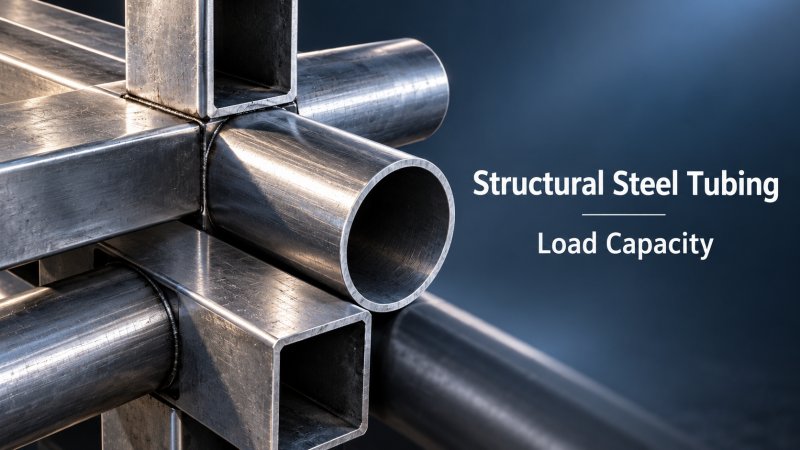
Round steel tubing presents significant fabrication challenges at the joints. Connecting intersecting round members requires complex profile cutting to create matching saddle cuts. The phase-line intersection geometry is mathematically complex, requiring advanced CNC plasma or laser cutting equipment to ensure a proper fit-up. Furthermore, welding round tubes, particularly at the toes of the weld where the curvature changes rapidly, demands higher welder skill to achieve full penetration without creating severe stress concentrations. Poor fit-up in round tube joints can lead to incomplete fusion and hidden defects, which are difficult to inspect using standard non-destructive testing methods. Consequently, the fabrication cost for round tube structures is typically higher, and this must be weighed against their mechanical benefits.
Manufacturing Tolerances and Residual Stresses
Technical evaluators must also account for the manufacturing processes that form these sections, as cold forming introduces residual stresses that affect structural performance. Square steel tubing is typically formed by rolling a flat strip and welding the seam, followed by cold shaping into a square profile. The cold bending at the corners induces significant plastic deformation, resulting in high residual stresses and increased yield strength at the corners due to strain hardening, but reduced ductility. The flat sides, however, retain the base material properties. Design codes account for this by allowing the use of enhanced corner properties in certain capacity calculations, but the residual stresses can reduce the member's fatigue life and stiffness.
Round steel tubing, particularly seamless or electric resistance welded (ERW) varieties, generally exhibits a more uniform distribution of residual stresses around the circumference. The forming process for round tubes involves continuous rolling into a circular shape, which distributes the cold-working effects more evenly. This uniformity contributes to better fatigue performance and more predictable behavior under cyclic loading. When evaluating materials for dynamic applications, the manufacturing method and the resulting residual stress profile of the steel tubing must be carefully reviewed against the relevant standards, such as ASTM A500 or EN 10219, to ensure the specified tolerances for out-of-roundness and wall thickness are met.
Application Decision Logic and Secondary Site Operations
The selection between round and square profiles ultimately crystallizes in the specific application environment. Round steel tubing is the optimal specification for space frames, exposed architectural structures where multi-directional wind loads are prevalent, marine environments requiring uniform external pressure resistance, and mechanical components subjected to torsion. Its smooth surface also minimizes drag coefficients in fluid dynamics and reduces the accumulation of dust or ice in exposed outdoor applications.
Square steel tubing is the standard for building frames, industrial machinery bases, rack systems, and structures requiring numerous orthogonal connections. Its ability to provide flat mounting surfaces simplifies the attachment of secondary cladding, machinery, and equipment. During the execution of large-scale steel tubing structures, primary load-bearing members are often supplemented by secondary site operations. For instance, securing safety netting, binding reinforcement for concrete pedestals, or establishing temporary barrier isolation around the structural footprint frequently requires reliable Galvanized Steel Wire . The ductility and corrosion resistance of such wire products ensure that auxiliary site preparations proceed efficiently without delaying the main structural erection or compromising site safety protocols.
Final Technical Evaluation Criteria
When finalizing the material specification, technical evaluators should adopt a hierarchical decision matrix. First, identify the primary load path. If torsion or multi-axial bending dominates, the round profile is mechanically mandatory. If uniaxial bending and axial compression are the primary forces, evaluate the slenderness limits of the square profile to ensure local buckling will not govern the design.
Second, analyze the joint complexity. If the structure relies on a high volume of orthogonal connections, the fabrication savings and structural predictability of square tubing will likely outweigh the marginal mechanical benefits of a round section. Finally, consider the lifecycle and maintenance. Round sections offer superior corrosion protection in harsh environments due to the absence of water-trapping corners, while square sections require meticulous detailing at the corners to prevent localized corrosion initiation.
By rigorously applying these mechanical and practical filters, engineers can ensure that the selected steel tubing profile not only satisfies the theoretical demands of the structural analysis but also aligns with the economic and logistical realities of fabrication and construction. The optimal choice is never a universal default, but a precise alignment of material physics with project-specific constraints.
Please give us a message


Please enter what you want to find